

Skip to content
Search

Latest Stories

cipherbrief

Welcome! Log in to stay connected and make the most of your experience.

Input clean

The Cipher Brief: National Security news, analysis and expert commentary.
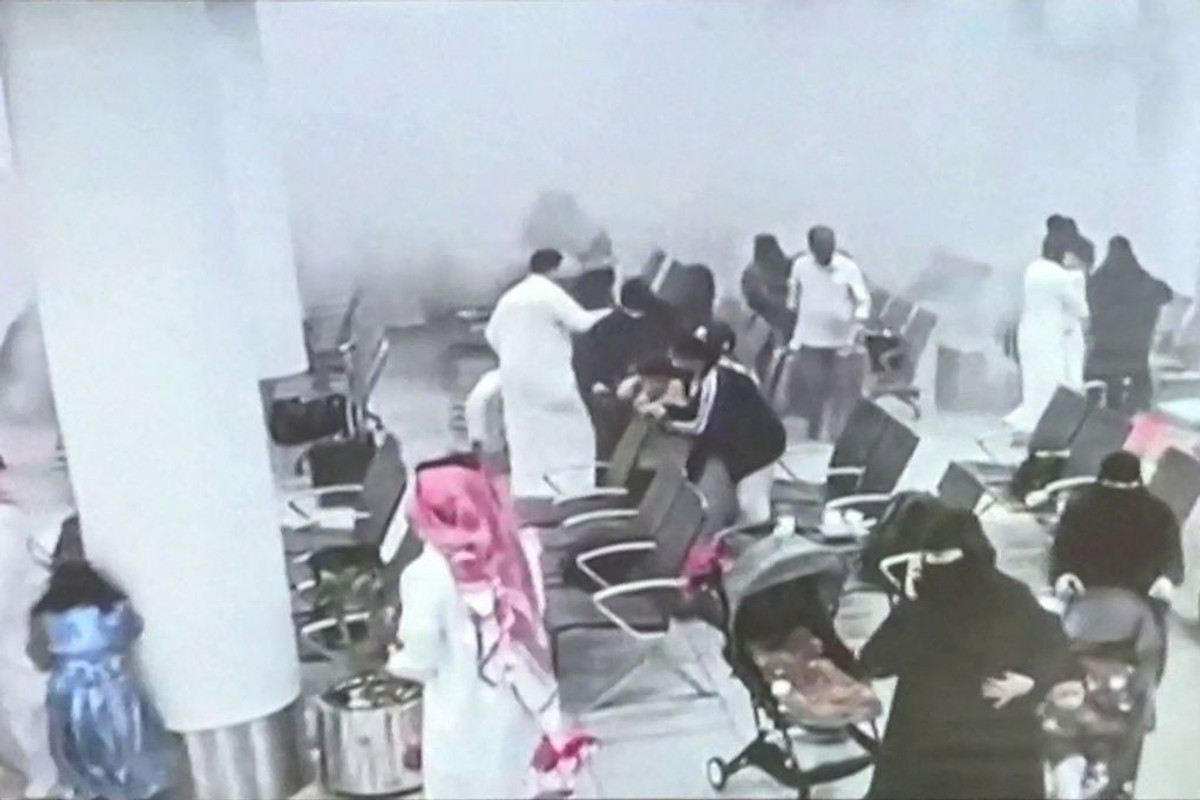
Blockade by Permission: How Iran Determines Who Gets Through Hormuz

Rather than shutting the Strait of Hormuz outright, Iran is selectively allowing favored vessels through - turning one of the world’s most vital energy chokepoints into a tool of geopolitical leverage.

Blockade by Permission: How Iran Determines Who Gets Through Hormuz

For roughly two weeks, the Karachi, a Pakistani-flagged Aframax tanker loaded with crude at Das Island in Abu Dhabi, sat waiting for a signal that [...] More

Open Source Report logo

The Open Source Report

<span>Global Intelligence Report for Monday, March 30, 2026</span>

Global Intelligence Report for Monday, March 30, 2026

Trump reportedly weighing military operation to extract Iran’s uranium

Russia mapping US assets to help Iran, Zelensky says

U.S. reverses course on Cuban oil blockade, allows Russian tanker carrying crude to pass

Journey to the Moon ‘Starting to Feel Real’ for NASA’s Artemis II Crew

Access Today’s Report

Expert Insights

Cipher Brief Experts bring context to today’s global events

Trump’s Cyber Strategy Is a Strong Playbook, but It’s All in the Execution

Sophie McDowall
Rear Adm. (Ret.) Mark Montgomery

OPINION — The White House is making a significant effort toward putting the nation’s cyber house in order. A newly released National Cyber Strategy represents a big step in the right direction for U.S. national security [...] More

Why the ‘Day After’ Is The Most Important Day in the Iranian Conflict

Paul Miller

OPINION — The countries that get held up as models for this kind of US led attack are worth looking at closely, because they’re instructive in the wrong direction.Iraq fell in twenty-one days in 2003, but Saddam Hussein [...] More

News & Analysis

Ukrainian drone operators in Zaporizhzhia direction

From Kyiv’s Skies to the Persian Gulf: How Ukraine’s Drone Technology Is Reshaping Global Defense

As Iranian-designed Shahed drones struck critical infrastructure across the Persian Gulf in early March, military planners in Washington confronted [...] More

Opinion

Romania Pays the Cyber Price for Backing Ukraine. Where is the EU?

OPINION – When ransomware groups hit Romania’s national water agency, its largest coal-fired power producer and oil pipeline operator all in recent [...] More

What’s on The Cipher Brief’s Digital Channel

Book Reviews

GRU COLONEL'S COVERT ANT COLONY BECOMES A CASUALTY OF WAR: The Insider, the Latvia-based Russian investigative outlet that has made a cottage industry of unmasking GRU operatives, published a gem this week involving Iran, air defense radar, and roughly 1,000 ants. Yes, ants. GRU Lt. Col. Yuly Deryabin was posted to Tehran to advise Iran on Russian radar systems. Then the U.S. and Israel reportedly wiped out most of Iran’s air defenses on Day One, including the systems Deryabin was there to protect. A career setback, to say the least.But the real story is the ants. The Insider says that Deryabin, who apparently inherited a [...] More

Get The Drop

Events

Live Events

The Cipher Brief 2026 HONORS Awards

The Cipher Brief 2026 HONORS Awards

Join us for the third annual Cipher Brief Honors Dinner, the evening of March 13, 2026. This Black-Tie event is invite only, please apply here for a [...] More

Previous Event: 13 March, 2026

Podcasts

State Secrets

A mass-casualty attack at Sydney’s Bondi Beach in December 2025 shattered assumptions about the decline of ISIS - and raised urgent questions about what comes next.

In this episode of State Secrets, Suzanne Kelly speaks with terrorism experts Levi West and Andrew Zammit to unpack what made this attack different: months of planning, coordinated tactics, and a clear alignment with evolving ISIS strategy.

The discussion reveals a troubling shift - from isolated, impulsive attacks to more deliberate, semi-organized operations fueled by sophisticated propaganda and global events like the Gaza conflict. The group also examines how ISIS is leveraging English-language messaging, rebuilding momentum across regions like Afghanistan and the Sahel, and blurring the line between “inspired” and “directed” attacks.

Most importantly, they explore what this means for U.S. and allied security services at a time when counterterrorism is no longer the top global priority.

Bottom line: ISIS may look diminished - but the threat is adapting in ways that are harder to detect, disrupt, and defeat.