


Following their summit, Xi and Putin issued a joint statement criticizing what they called “irresponsible” U.S. foreign policy, including a direct reference to Trump’s planned “Golden Dome” missile defense program. Xi also described China-Russia relations as being at an “unprecedented high,” reinforcing the message that Beijing sees its partnership with Moscow as central to its broader challenge to U.S. influence.
For Trump and Xi, the diplomatic track is expected to continue, with a potential Xi visit to the White House in September.
But the Beijing summit left unresolved the larger question at the center of U.S.-China relations: whether a shared interest in stability can meaningfully reduce the risk of confrontation, particularly over Taiwan.
Xi Tries to Show the World China Is America’s Equal
The larger message Xi appeared intent on sending throughout Trump’s visit was that China is no longer a junior power-seeking accommodation from Washington, but a peer competitor that expects to be treated as an equal leader of global order.
Chinese state media framed the summit as a diplomatic win for Beijing, emphasizing that the relationship now operates “on a more equitable basis” and portraying Xi as an equal - if not a more disciplined and strategic - counterpart to Trump. Beijing’s growing confidence in its own position was evident throughout the visit. Xi did not appear compelled to offer major concessions and instead used the moment to reinforce China’s position that the world’s two superpowers have a shared responsibility to manage competition and preserve stability.
That message drew heavily on the logic of the “Thucydides Trap” - the idea that conflict between a rising power and an established power is not inevitable but becomes more likely if rivalry is mismanaged. Xi’s public emphasis on competition, cooperation and “strategic stability” was designed to present Beijing as both confident and restrained: prepared to compete with Washington, but eager to avoid open confrontation.
The rhetoric was notable because it marked a shift from Beijing’s posture just a few years ago, which during the Biden-Xi summit appeared more resistant to the idea of “managed competition”. Like the Trump-Xi summit, the Biden-Xi dialogue similarly sought to establish guardrails to prevent strategic rivalry from escalating into direct military conflict, but at the time, Beijing rejected that framework as a veiled effort to contain China. Xi’s willingness now to publicly embrace the language of competition and strategic stability suggests that Beijing may see advantage in adopting the terminology - particularly if it reinforces the perception that China is negotiating with the United States from a position of parity.
Against that backdrop, we asked two Cipher Brief experts and longtime China watchers how they interpreted the Trump-Xi summit, particularly Xi’s willingness to publicly accept the language of “competition,” and what the summit signaled on the critical question of Taiwan.

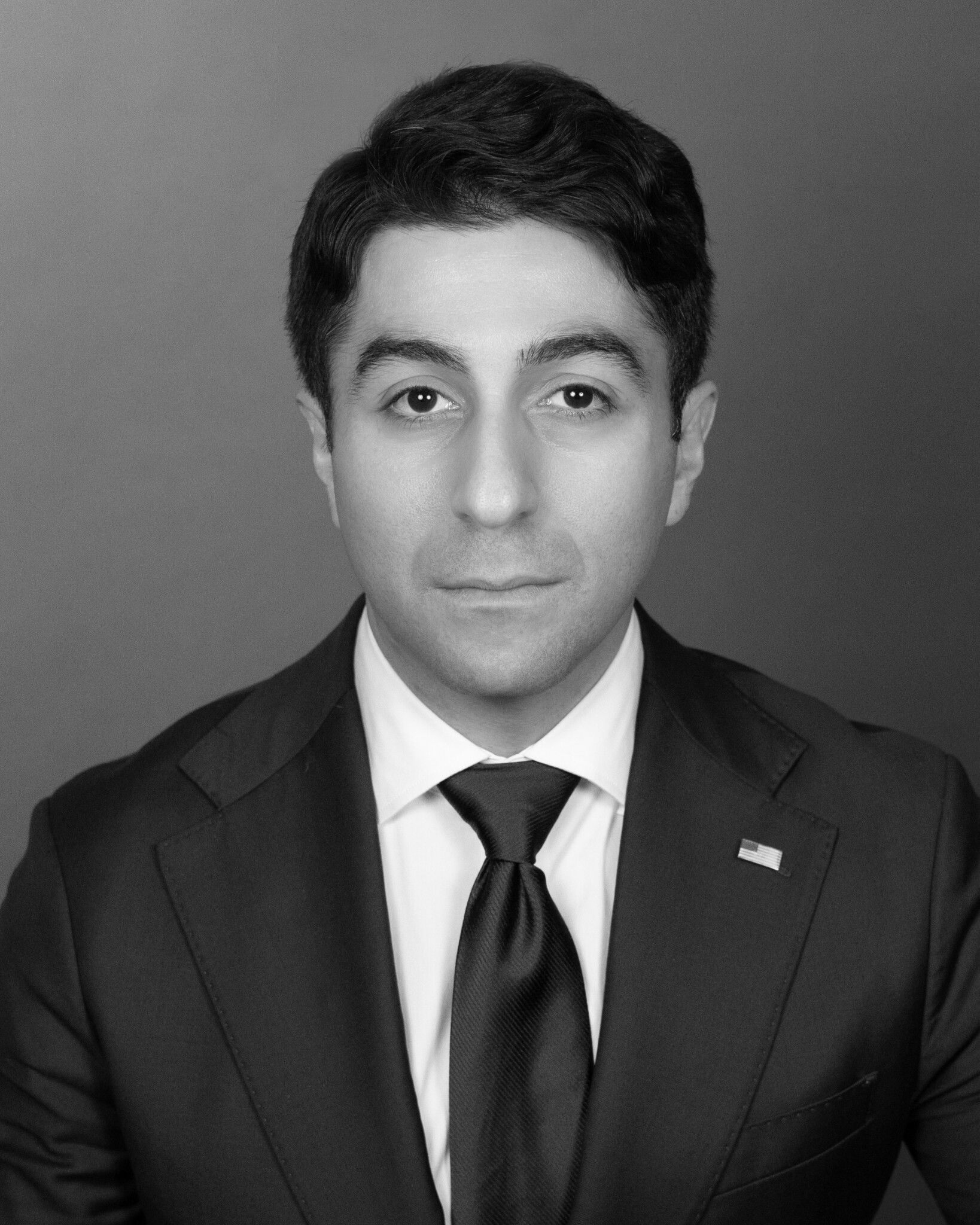
Ambassador Joseph DeTrani
Ambassador Joseph DeTrani served as the U.S. Representative to the Korea Energy Development Organization (KEDO), as well as former CIA director of East Asia Operations. He also served as Associate Director of National Intelligence and Mission Manager for North Korea, was the Special Envoy for the Six-Party Talks with North Korea, and served as the Director of the National Counter Proliferation Center, ODNI. He currently serves on the Board of Managers at Sandia National Laboratories.

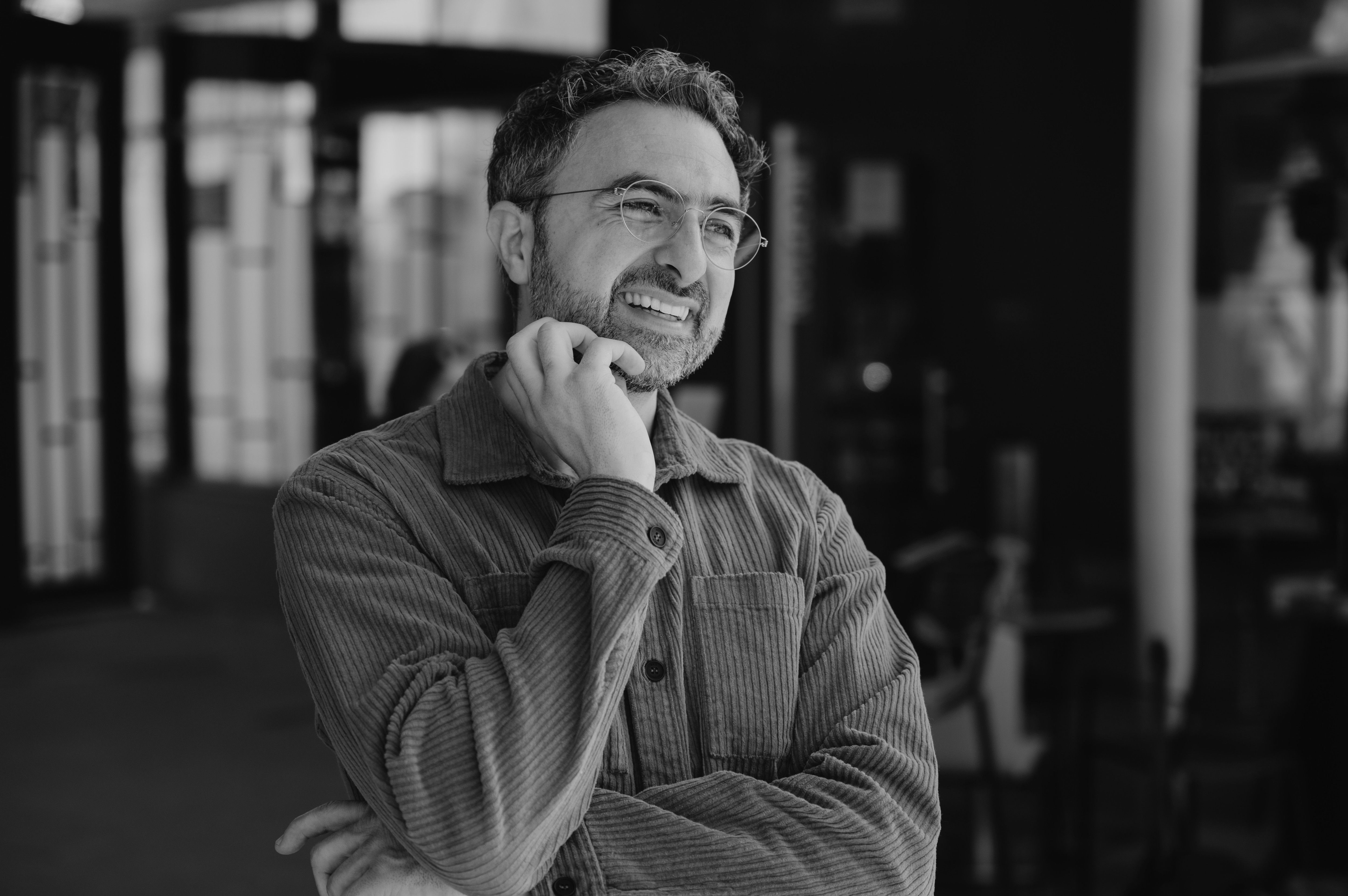
Rear Adm. (Ret.) Mike Studeman
Rear Adm. (Ret.) Mike Studeman was former Commander of the Office of Naval Intelligence. He also served as Director of the National Maritime Intelligence-Integration Office (NMIO) and as principal advisor to the Director of National Intelligence as National Intelligence Manager-Maritime, as well as the Director of Intelligence (J2) at U.S. Indo-Pacific Command, Honolulu and Director of Intelligence (J2) at U.S. Southern Command, Miami (2017-2019.)
On the US-China Relationship
What is your overall reaction to the summit and is Xi now more confident in China’s relationship with the U.S. and less concerned about whether that is interpreted as trying to contain China?
Detrani
I think Xi Jinping and China feel very good about the summit. I think we should feel relatively good about the summit. I think the president managed it well. We don't have the particulars on what was discussed. We did see very clearly that Xi Jinping prioritized Taiwan, but we don't have the particulars on our side. But I think overall, the summit went well.
Studeman
The CCP remains perennially allergic to allowing any other power, especially the U.S., dictate the language describing the Sino-U.S. relationship. For the Chinese, words carry great meaning. Whoever crafts the narrative, controls their destiny. Naming things is information superiority in action. The key phrase Xi used is "moderated competition," which is designed to show that Beijing is willing to absorb more friction in the U.S. relationship to protect its interests. The new verbiage essentially recognizes U.S. attempts to derisk, diversify, and distance itself from a deleterious overreliance on China. Xi's "moderated competition" signals his effort to stop the death spiral of unrestrained weaponization of interdependence and prevent any hasty departure from China by corporate America. The Chinese idea is to keep clinching the U.S. economically (intertwining like boxers trying to prevent the other from swinging a free arm), while not letting the increasingly tough choices that Washington and Beijing are forced to make spill over into outright confrontation. Using the word "competition" also makes it seem as if the superpower contestation is governed by transparent rules and fair play, which of course it isn't given Beijing's model of a state-driven market and other consequential distortions of global trade practices, including continued massive intellectual property theft. The CCP hopes American journalists, commentators, and political leaders begin adopting the "moderated competition" phrase, which would be a huge psychological warfare win for Beijing, particularly if it tranquilizes the White House into softening its strategic choices related to the Sino-U.S. rivalry.
The US-Taiwan-China Relationship
Taiwan emerged as the most consequential issue of the summit. Analysts note that despite the friendly nature of the talks, Xi’s warning to Trump on Taiwan underscores the longstanding rivalry between Washington and Beijing on the issue of Taiwan.
Following meetings with Xi, Trump declined to clearly commit to future U.S. arms sales to Taiwan or direct military defense of Taiwan in a cross-strait conflict. When questioned by reporters if the U.S. would defend Taiwan if it came to it, Trump answered, “I don’t want to say that. I’m not going to say that” adding later that, “I’m not looking to have somebody go independent, and we’re supposed to travel 9,500 miles to fight a war. I’m not looking for that.”
A $14 billion arms sale to Taiwan is also currently awaiting Trump’s approval. Following the Beijing Summit, Trump described the potential arms sale as a “very good negotiating chip” with China, adding that he needs to speak with the President of Taiwan, Lai Ching-te. He revealed that he and President Xi talked at great length about Taiwan, and notably, the Taiwan arms package. Trump said he would “make a determination over the next fairly short period” on whether he would approve the deal. When asked about the Six Assurances, the 1982 agreement that the U.S. would not consult with China on U.S. military support to Taiwan, Trump downplayed the longstanding norm observed by all previous U.S. presidents, saying, “So what am I going to do? Say ‘I don’t want to talk to you about it?’ Because I have an agreement that was signed in 1982? No, we discussed arms sales.”
This is a familiar practice Trump has used with allies before- framing an issue as more transactional than ideological. His emphasis on maintaining “the status quo” rather than backing Taiwanese independence reinforced concerns in Taipei and among U.S. allies that Taiwan could in fact become a bargaining chip in broader U.S.-China negotiations. Following Trump’s remarks, Taiwan’s government issued a statement reiterating that not only are arms sales to Taiwan a matter of security and deterrence for the U.S., but they are also stipulated in the Taiwan Relations Act.
Trump’s foreign policy messaging is obviously much less predictable than that of previous administrations, but what it means in terms of Taiwan and whether it points to the White House potentially prioritizing short-term U.S.-China stability over steadfast support for Taiwan remains to be seen.
US-Taiwan Relations Following the Trump-Xi Summit
How do you assess the impact to US-Taiwan relations following the Trump-Xi summit? What’s your reaction to Trump breaking with norms and discussing potential U.S. military arms sales to Taiwan, with Xi Jinping?
Detrani
I think the president handled it well enough and I think understandably he responded to Xi Jinping's comments on it. I think Xi understands very clearly the six assurances that President Ronald Reagan memorialized 1982. This was to reassure the [US] Congress and the American people and Taiwan that the United States would be there for Taiwan. This was President Ronald Reagan making it very clear, we're not walking away from arm sales. And this is between the United States and Taiwan. So, it's a very powerful memorialized document in the archives. But I think the president responded to Xi Jinping and I think Xi skillfully brought this up because this was the one issue Xi wanted to pursue with vigor during his summit discussions with President Donald Trump.
Overall, I don't think there were any big surprises. Although Xi made it very clear that there's one primary issue between the U.S. and China, and that's Taiwan and he made that the core element of the summit. So, I think China and Xi feel very good about the summit. I think they've accomplished what they wanted to accomplish. Xi is on the world stage, he's got the President of the United States saying some very nice things about him and the U.S. relationship with China. Xi made it very clear that Taiwan is something that the two sides must get right, otherwise we can have conflict, and we can go to war.
Studeman
Readouts from the summit indicate the President told Xi he did not support Taiwan independence or a change in the status quo, which aren't new policy positions. Multiple Presidents have said the same. But in a significant breach of one of the longstanding 1982 Six Assurances to Taiwan developed under President Reagan, specifically that the U.S. "has not agreed to consult with the PRC on arms sales to Taiwan," Trump flung open the door to letting the CCP negotiate down any foreign military sales deals with Taipei. Trump's aim is to use the Taiwan arms sales issue as a bargaining chip for a better trade deal and China's help in pressuring Iran to end the war. This shift in policy represents one of the biggest wins for China from the summit. China already leveraged its KMT proxies in Taiwan's Legislative Yuan (parliament) to weaken Taiwan's defense bill from $40B to $25B over the next five years, and now China is in the driver's seat to extract further arms sales concessions. These "inside out" and "outside in" successes for Beijing will only end up weakening Taiwan relative to rising PLA capability and presence around the island, in turn reducing strategic deterrence against Chinese aggression in any form.
The US, China and Artificial Intelligence
Despite the attendance of several U.S. tech CEOS, there were no breakthroughs on tech, and little evidence of a concrete technology framework or export-control agreement. The U.S. and China remain firmly positioned on the competitive side of emerging technology. Trump did state that the two sides “talked about possibly working together for guardrails” on AI, describing them as “standard guardrails that we talk about all the time”. During the visit, China’s Foreign Ministry and Chinese media portrayed the U.S. and China as equally leading in AI models, computing power, and ecosystems.
Just before the Beijing Summit, Washington approved the sale of Nvidia’s advanced H200 chips to China, a move that has long been contested by national security and China hawks. However, China has not yet signaled any commitment to buy H200 chips. U.S. Trade Representative Jamieson Greer said it was up to Beijing whether Chinese companies would make more purchases from the American chip giant.
How should we interpret the US decision to sell H200 chips, and the Chinese decision, so far, not to buy them?
Detrani
I think China is feeling good about their progress on artificial intelligence and the work they're doing and now they have the option of purchasing these H200 semiconductors which would be very helpful to them with their work on artificial intelligence. I think, Xi Jinping's strategy on artificial intelligence competition with the U.S. may be to show the world that this is not the China of the 19th century or the 20th even, but this is the new China. I think the Nvidia chips announcement is something Xi has in his pocket now and he probably feels that this is an option that he can use whenever he needs it.
Studeman
The PRC is becoming more self-reliant in indigenizing its key industries, including by stealing tech secrets and coopting foreign engineers, steadily eroding the chip gap. Given its paranoia about backdoors, dead switches, or info tech corruption of any sort, the PRC remains leery of becoming dependent on distrusted foreign suppliers as it rushes to catch up on raw compute power. At the same time, the PRC has achieved scale in less capable chips and is achieving tangible progress in developing more advanced ones. If China buys more Nvidia chips, it will be more likely to curry favor with the U.S. and keep an open door to future tech transfers.
Annabelle Darby contributed to this report
The Cipher Brief is committed to publishing a range of perspectives on national security issues submitted by deeply experienced national security professionals. Opinions expressed are those of the author and do not represent the views or opinions of The Cipher Brief.
Have a perspective to share based on your experience in the national security field? Send it to Editor@thecipherbrief.com for publication consideration.
Read more expert-driven national security insights, perspective and analysis in The Cipher Brief