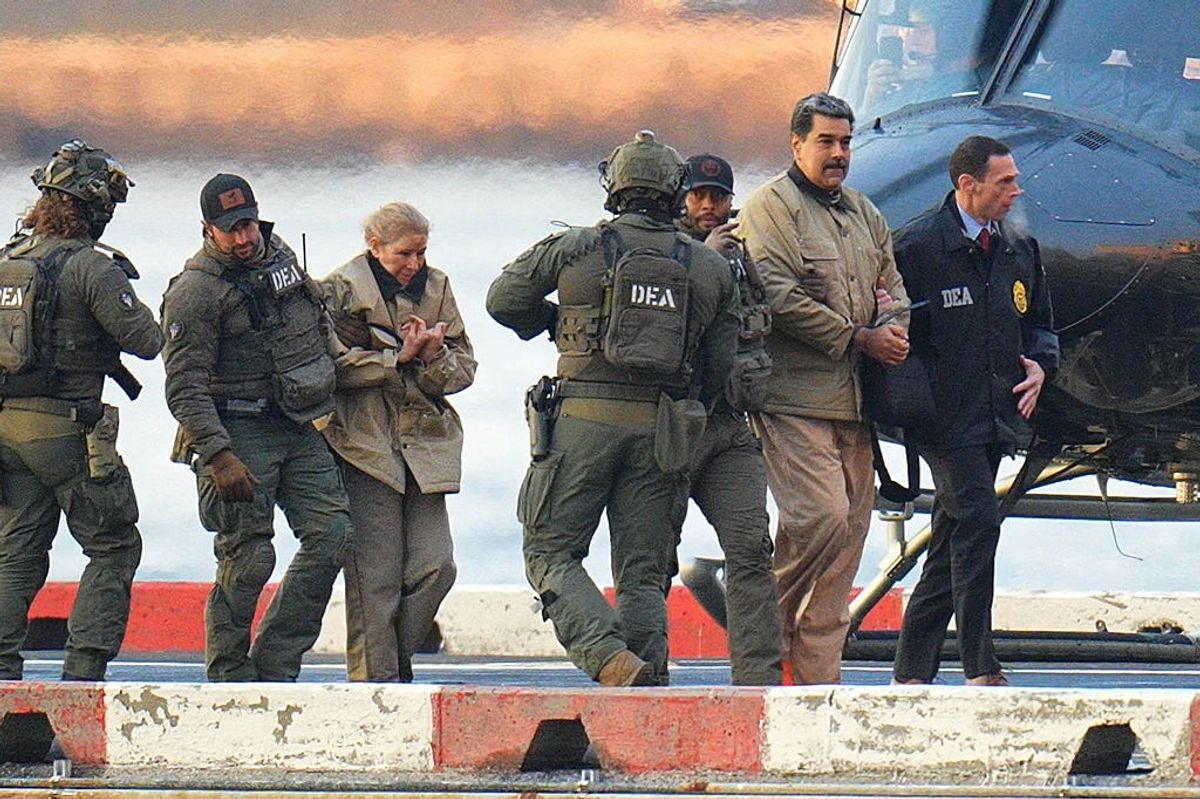

“I knew the possible danger. It was a very dangerous operation. It was amazing that we had a few injured, but all are in good shape right now, but I knew there was great danger. You got off a helicopter. The helicopters were being shot out. They got on the ground amazing talent and tremendous patriotism, bravery. The bravery was incredible…They got off the helicopter and the bullets were flying all over the place. As you know, one of the helicopters got hit pretty badly, but that we got everything back. Got everything back and nobody killed,” meaning Americans.
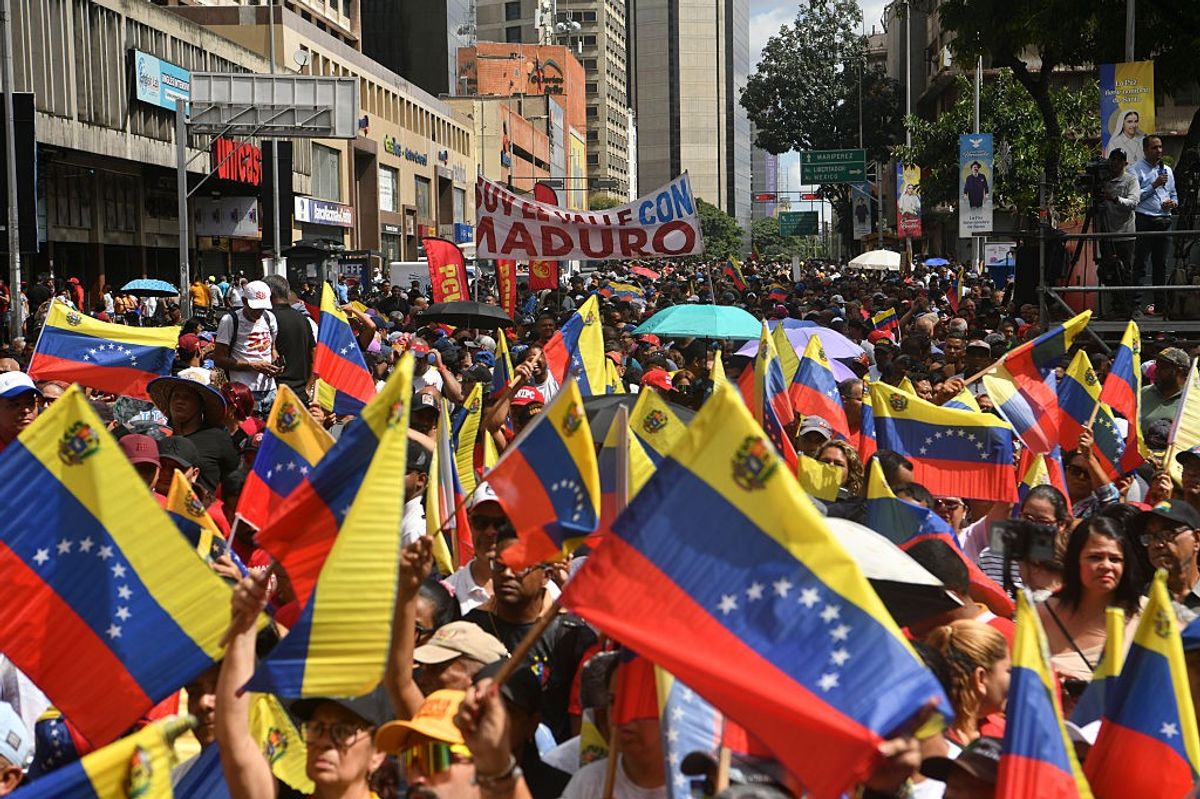
That was President Donald Trump speaking Sunday aboard Air Force One on the way back from Florida about what he observed watching the early Saturday morning U.S. raid in Caracas that captured Venezuelan President Nicolas Maduro and his wife.
While events in Venezuela are still unfolding and I will discuss some below, I use that quote because it illustrates that deaths of American service members is one thing I believe is high in Trump’s mind as he has in recent months undertaken a series of worldwide military actions.
Trump almost regularly points out that no Americans have been killed in the four months the U.S. has been blowing up alleged narco-trafficking boats. No Americans were lost in the bombing of Iran nuclear facilities.
And despite Trump’s threat that he could put U.S. boots-on-the-ground if needed to “run” Venezuela, there is no immediate indication he has plans to do that.
Instead, it appears Trump’s plan is to “run” Venezuela using what remains of the corrupt Maduro military/police hierarchy as long as they do what Trump wants. To me it recalls Trump as a builder working with questionable union leaders and construction firms to get jobs done.
The Cipher Brief brings expert-level context to national and global security stories. It’s never been more important to understand what’s happening in the world. Upgrade your access to exclusive content by becoming a subscriber.
Just why has President Trump spent time and money, first to negotiate with Maduro to get him to leave, and finally to dramatically oust the Venezuelan President from office?
I divert for a moment.
On Friday, the original beginning of this column was, “Most fentanyl and methamphetamine trafficking into the U.S. occurs through official ports of entry along the southwest border, according to DEA (Drug Enforcement Agency).”
That was a quote from a Government Accountability Office (GAO) report entitled, “Illicit Synthetic Drugs: Trafficking Methods, Money Laundering Practices, and Coordination Efforts,” that was sent to Congress and released publicly December 18, 2025.
The GAO’s report, including the finding cited above, focuses attention on fentanyl primarily coming into the U.S. through land ports of entry while the Trump administration made its anti-fentanyl focus on attacking narco-trafficking swift-boats initially from Venezuela, claiming they were headed for the U.S.
More recently, the attacks, and killing of those aboard, have been those in the eastern Pacific.
The New York Times published a story by Carol Rosenberg that discussed what happens when U.S. Coast Guard cutters intercept narco-trafficking boats, seize drugs and capture those aboard – but not kill 115 on 35 speedboats as the U.S. military did last year.
Putting together the December GAO report and the Times story raised some serious questions about the rationality of the Trump administration’s so-called anti-drug program.
Up to that time, interception of drug-carrying boats and interrogation of the crews gave valuable information on drug routes.
However, as The Times noted, “Attorney General Pam Bondi directed [U.S.] prosecutors in February to mostly stop bringing charges against low-level offenders in favor of bigger investigations.” According to The Times, “For the most part, people captured by the Coast Guard in the same smuggling routes the U.S. military is bombing are being repatriated -- either directly, before reaching the United States, or through deportation after briefly being questioned near U.S. ports.”
The Times noted that many earlier captured crew members were “poor, undereducated farmers or fishermen [who] would reach cooperation agreements that offered details of their engagement at the bottom rung of the drug smuggling business in exchange for possible leniency.”
The Times quoted Tampa-lawyer Stephen M. Crawford, who in the past had been assigned to represent defendants captured by the Coast Guard, who said the killing of crew members without prosecution amounted to very dangerous “political theater.”
I could say the same today for what I consider today’s ill-thought-out Trump actions in Venezuela.
What national security news are you missing today? Get full access to your own national security daily brief by upgrading to Subscriber+Member status.
As many others have pointed out, returning democracy to the Venezuelan people was not uppermost in Trump’s mind.
On Saturday, in announcing the raid, Trump told reporters he had not been in contact with Venezuelan Opposition leader and Nobel Peace Prize laureate María Corina Machado. He then went on to say, "I think it'd be very tough for her to be the leader. She doesn't have the support or the respect within the country. She's a very nice woman but she doesn't have the respect."
What I believe Trump meant was that the Maduro power structure – the Venezuelan Army, Bolivarian National Police and urban paramilitary networks known as colectivos -- remain active and it is they that don’t “respect” Machado.
They are also probably the reason there are no U.S. boots-on-the-ground.
Instead, Trump seems to believe that by keeping major U.S. military forces near Venezuela, he can threaten additional military attacks to keep the ex-Maduro crowd in line.
As Trump put it Sunday on Air Force One, “Venezuela thus far has been very nice, but it helps to have a force like we have. You know, we were ready for a second wave. We were all set to go, but we don't think we're going to need it.”
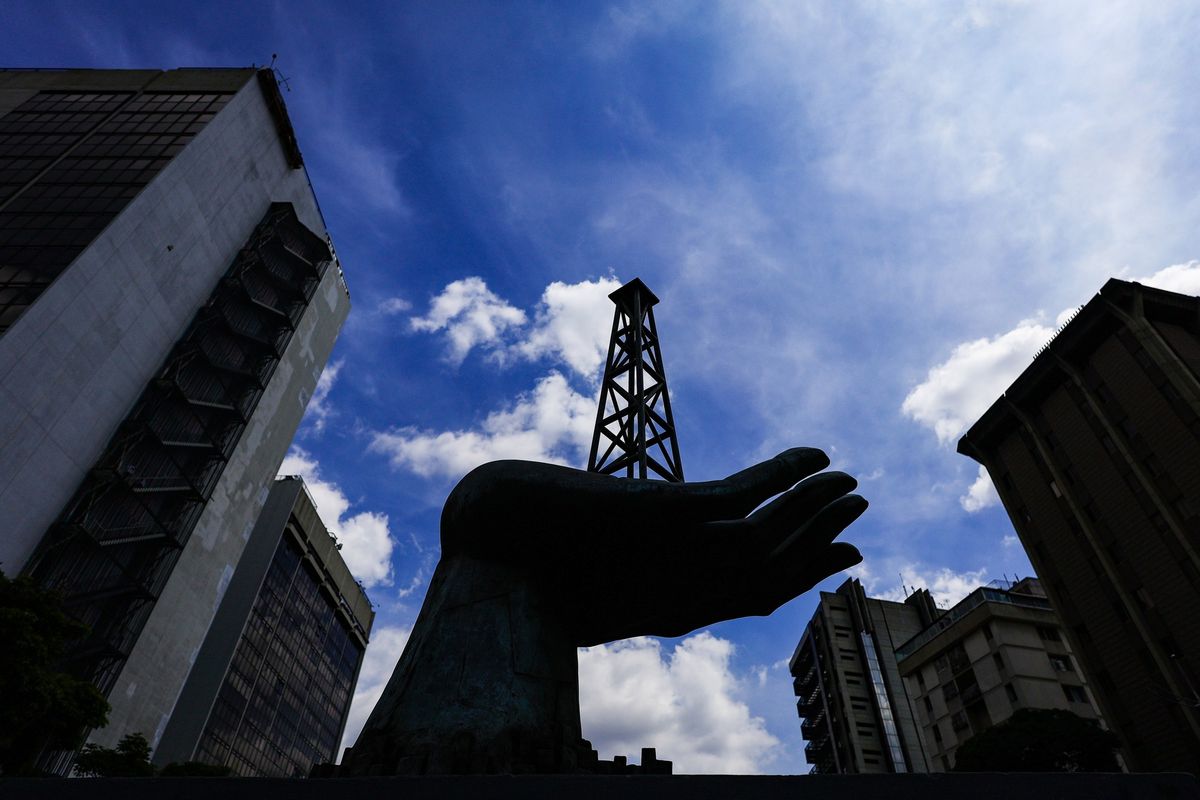
Apparently it is Venezuela’s oil which is primarily on Trump’s mind.
As with other matters, Trump seems to be living in the past as illustrated when he told reporters over the weekend, “We [the U.S.] had a lot of oil there [in Venezuela]. As you know they threw our companies out, and we want it back.”
Nationalization was the culmination of a decades-long effort by Venezuelan administrations of both the right and the left to bring under government control an industry that an earlier leader had largely given away.
American oil companies, including Exxon and Mobil, which merged in 1999, and Gulf Oil, which became Chevron in 1984, were hit hardest. The Dutch giant Shell was also affected. The companies, which had accounted for more than 70 percent of crude oil production in Venezuela, lost roughly $5 billion in assets but were compensated just $1 billion each, according to news stories from that period.
On Sunday, Trump said, “The oil companies are ready to go. They're going to go in, they're going to rebuild the infrastructure. You know, we built it to start off with many years ago.
They took it away. You can't do that. They can't do that with me. They did it with other presidents.”
According to several sources, major oil companies are not eager to spend the years and money at the present time to revive the Venezuelan oil industry, but as with much about the Venezuelan situation, there’s little yet that is predictable.
One potentially dangerous outcome, looming already, is how Trump reads what he so far considers his military success.
On Sunday he made open threats to both Colombia and Cuba.
He called Colombian President Gustavo Petro “a sick man who likes making cocaine and selling it to the United States. And he's not going to be doing it very long, let me tell you?”
And as for Cuba, Trump said, “Cuba always survived because of Venezuela. Now, they won't have that money coming in. They won't have the income coming in.”
He then went on to point out, “You know, a lot of Cubans were killed yesterday. You know that. A lot of Cubans were killed…There was a lot of death on the other side.”
But then Trump quickly added, as I have pointed out before, “No death on our side.”
The Cipher Brief is committed to publishing a range of perspectives on national security issues submitted by deeply experienced national security professionals.
Opinions expressed are those of the author and do not represent the views or opinions of The Cipher Brief.
Who's reading this? 500K+ dedicated national security professionals. Have a perspective to share based on your experience in the national security field? Send it to Editor@thecipherbrief.com for publication consideration.
Read more expert-driven national security insights, perspective and analysis in The Cipher Brief because national security is everyone’s business.