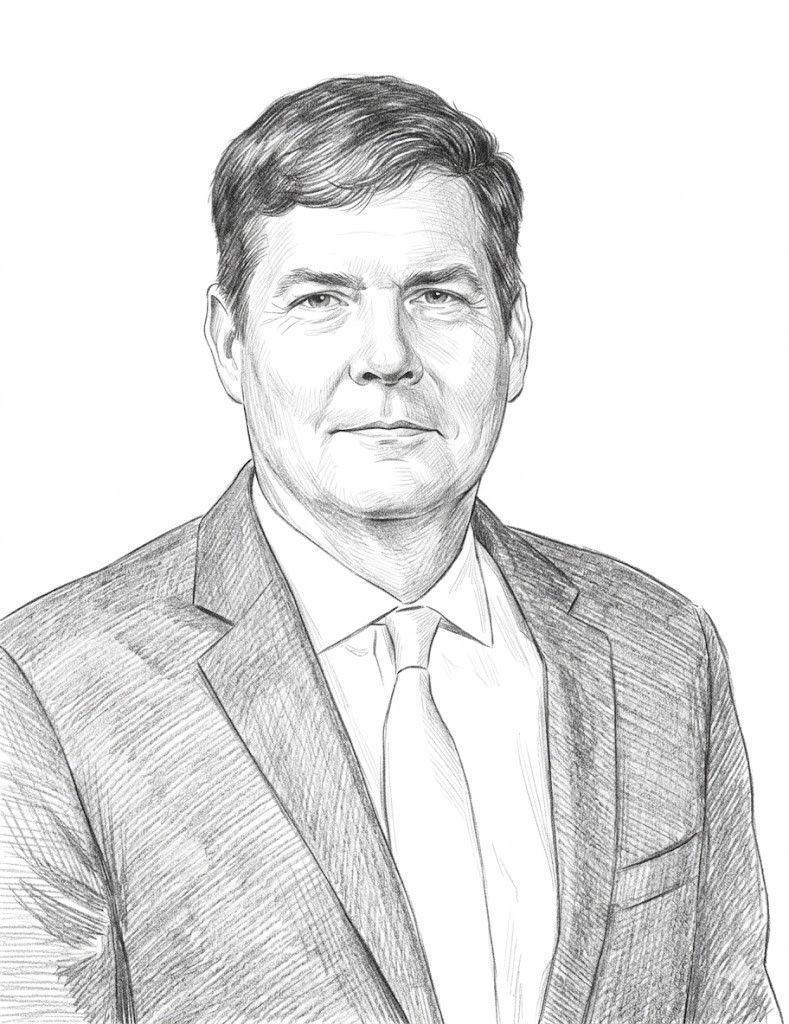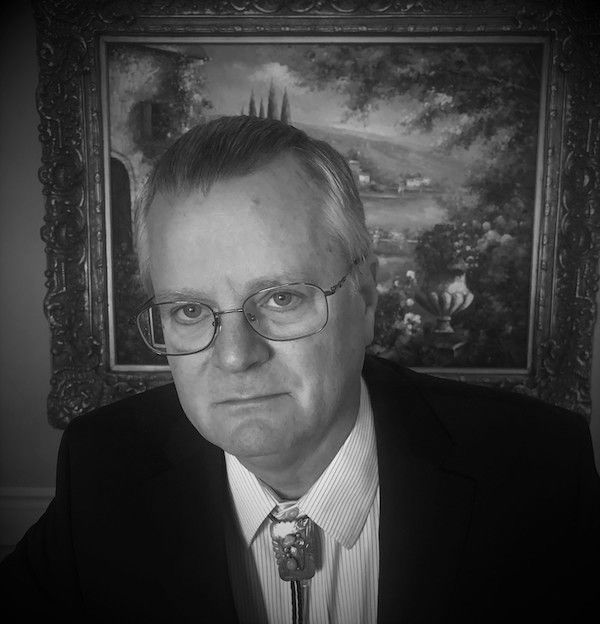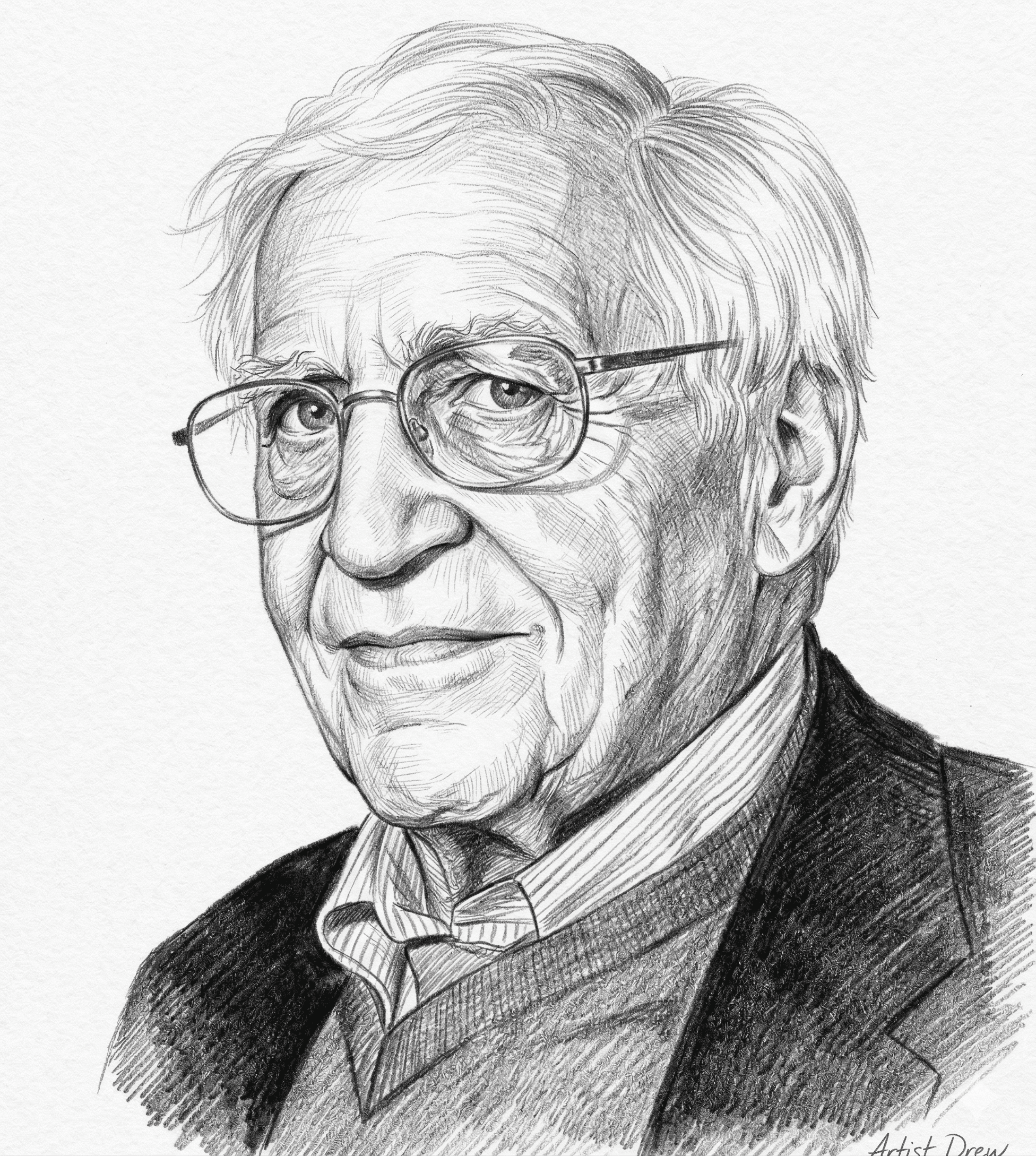

The recent release of President Trump’s new National Security Strategy (NSS), with its emphasis on “the Trump corollary to the Monroe Doctrine,” and its resultant challenges, such as border security, migration, and narcotics trafficking, offer us an opportunity to closely examine leaders to watch in 2026. While previous similar columns in The Cipher Brief by this author had focused on adversaries such as Russia’s Putin, China’s Xi, North Korea’s Kim, and Iran’s Supreme Leader, today’s evolving geopolitical landscape (as described in the new NSS) suggests looking more closely at the motivations and leadership style of Venezuela’s adversary President Nicolas Maduro, Russia’s diplomatic emissary Kirill Dmitriev, and the deeply influential, newly elected Pope Leo XIV. And the gray zone is alive and well --- there are lots of ‘black swans’ flying around!
The influence of Pope Leo XIV, who has already shown himself to be a transformational Pope, is easily misunderstood. When Stalin famously quipped, “How many divisions does the Pope have,” today’s answer would be, 1.4 billion. Observers forget that the Vatican has one of the world’s oldest and formidable diplomatic and intelligence services. Several weeks ago, when Pope Leo visited the headquarters of the Italian Intelligence Service, he spoke eloquently, stating that intelligence professionals are entrusted with “the serious responsibility of constantly monitoring the dangers that may threaten the life of the Nation, in order above all to contribute to the protection of peace.”
Pope Leo – whose first words to the flock upon his appointment to the Papacy were “Peace be with you,” has shown himself to be an adept diplomat. American-born, raised, and educated, he then spent several decades in Peru, as well as 20+ years in Rome. Fluent in English, Spanish, and Italian, he is a true citizen of, and Pope for, this world.
His initial diplomatic meetings and trips, as well as his daily commentaries on Instagram and Twitter, have showcased his nuance, spirituality, faith, and promotion of diplomacy and interfaith dialogue as solutions to the world’s conflicts. In his first overseas trip to Turkey and Lebanon, he met with Turkey’s President Erdogan and emphasized Turkey’s role “as a bridge between East and West, Asia, and Europe.” The Pope’s statement highlights Turkey’s – and Erdogan’s – role (enhanced by his experienced Foreign Minister and former intelligence chief Hakan Fidan) as a potential mediator in conflicts such as Gaza and Ukraine.
Pope Leo has also weighed in on the current conflict between the United States and Venezuela, stating that President Trump should avoid a military solution, and instead utilize diplomatic and even economic pressure to resolve the conflict. Such statements are crucial, as earlier in the year, Pope Leo had met with Vice President J.D. Vance and Secretary of State Marco Rubio (both are Catholic) shortly after his election. Given the Pope’s vast influence, President Trump and his national security team should thereby borrow a page from President Ronald Reagan’s 1980s playbook and forge a new ‘Holy Alliance’ with Pope Leo and the Holy See, to seek peace in Ukraine, Venezuela, and the Middle East.
What national security news are you missing today? Get full access to your own national security daily brief by upgrading to Subscriber+Member status.
What most media and think tank commentary has missed with respect to Kirill Dmitriev’s role in diplomatic negotiations between Russia and the U.S., is why Russia’s President Putin would utilize Dmitriev in such a role, and what this portends for Russia’s negotiating posture and future in a post-war Ukraine and Europe. Dmitriev, who is young and Ukrainian-born, spent nearly 20 years in the United States as a high school student and subsequent graduate of Stanford University and Harvard Business School. Later, he worked on Wall Street for Goldman Sachs, McKinsey, and Delta Capital, a U.S. government-funded investment fund, which later became the U.S.-Russia Business Fund. American businessmen whom I know who have worked with Dmitriev, describe him as brilliant, focused, and quite knowledgeable about the United States. In 2011, the latter entity became Russia’s Direct Investment Fund, which Dmitriev heads. It’s fair to say that this fund functions de facto as Putin’s ‘family office.’ This, along with Dmitriev’s closeness to Putin and his inner circle (Dmitriev’s wife and Putin’s daughter Katerina Tikhonova are close friends), along with his prolific use of social media (X), suggests a high level of trust, as Dmitriev has led delicate Ukraine peace negotiations with President Trump’s special envoy Steve Witkoff and Jared Kushner. Putin’s use of Dmitriev in his current diplomatic role may hint at Putin’s aspirations of a renewed, strategic, post-war relationship with Russia and the United States, one focusing on a variety of business deals. I’d argue that it goes further, and that Dmitriev is being groomed for more senior leadership roles in a post-Putin Russia. So, he is most definitely a figure to watch in 2026.
Following America’s recent designation of Venezuela’s Cartel de los Soles as a foreign terrorist organization (as was done earlier with respect to the Venezuelan transnational criminal organization, Tren de Aragua), President Trump has adopted a forceful approach towards Venezuela’s leader, President Nicolas Maduro. With the largest U.S. military buildup in the Caribbean since Panama (1989), as well as a covert action authorization, President Trump has also hinted at the possibility of a diplomatic resolution to the conflict between Venezuela and America; President Maduro has suggested diplomatic talks. This begs the question whether Maduro – the leader of Venezuela since 2013 - can be negotiated with. The answer to this question – yes, in my opinion – requires a keen understanding of Maduro’s leadership style.
Maduro’s history is well-known. As a high school graduate with socialist roots, he came up through party ranks early in his career, working first as a bus driver and unionist. Numerous media reports also note his close association with Cuba and his linkages to Cuban intelligence services. After the late Hugo Chavez’s failed 1992 military coup, Maduro became linked with Chavez, Venezuela’s President from 1998-2013, and was ‘anointed’ by the charismatic, populist Chavez as his successor, winning a narrowly contested election in 2013. Maduro has often been seen as lacking in personality, charisma, or gravitas, as compared to Chavez. And many have missed his ruthlessness, cleverness, cunning, resilience, and cruelty, as he became a dictator, overturning the results of last year’s 2024 election, won by Venezuela’s opposition, led by the courageous Nobel Laureate – known as Venezuela’s ‘Iron Lady’ – Maria Corina Machado. And his incompetent socialist economic and political policies led Venezuela – once the thriving gem of Latin America, with its democratic spirit, oil riches, natural resources, and a thriving middle class - to economic ruin, penury, and a brain drain of over eight million Venezuelans. Maduro now leads a vast ‘narco state’ and criminal enterprise, funded by drugs, rare earths, minerals, gold, and oil, and beholden to criminal elements in the military, intelligence services, and transnational criminal networks, as well as his close ties to America’s adversaries such as Iran, Cuba, Russia, and China. Maduro’s criminality – America has even put a $50 million bounty on him - is what now keeps him in power.
Subscriber+Members get exclusive access to expert-driven briefings on the top national security issues we face today. Gain access to save your virtual seat now.
Maduro’s negotiation skills merit attention. Earlier this year, he showcased his negotiating prowess in releasing six American hostages after meeting with Trump’s special envoy Richard Grenell. Maduro has even written a recent letter to Pope Leo IV (who has called for dialogue and peace in Venezuela), stating, “I have great faith that Pope Leo, as I stated in the letter I sent him, will help Venezuela preserve and achieve peace and stability.”
President Trump has often shown a combination of negotiating flexibility with ‘Reaganesque’ strategic deterrence. Maduro must also be given an absolute deadline to shut down the Iranian drone base and to insist that all Iranian, Cuban, and Russian military and intelligence ‘advisors’ leave Venezuela within 24 hours --- or else! President Trump’s vast military buildup, military strikes on drug boats, seizure of Venezuela’s ‘shadow’ fleet of oil tankers, and designation of Venezuelan criminal organizations as foreign terrorist entities have boxed Maduro into a very tight corner. And America’s bold ‘exfiltration’ of Venezuela’s brave, courageous opposition leader and Nobel Laureate Maria Corina Machado sent a powerful, symbolic message to Maduro: we can get her out, and we can bring her back in, at will.
President Trump, as a former real estate CEO, can appreciate that regime change bears similarity to evicting a difficult tenant. Often, they must be bought out. Fortunately, there is ample precedent in American diplomacy in this regard. In 1991, America, working closely with the late Israeli diplomat Uri Lubrani and Ethiopia’s late Kassa Kebede (a former foreign minister and Ambassador to the UN/Geneva), paid $35 million ($83 million in 2025 dollars) – which was never fully accounted for! - to Ethiopia to allow 15,000 Beta Israel refugees to depart Ethiopia for Israel, and Ethiopia’s dictator Haile Mengistu to go into exile. Similar considerations might be considered with respect to Maduro, especially when America has spent over $1 billion USD in its current military buildup in the Caribbean.
So as 2026 approaches, all eyes are on President Trump. It’s his move. Given his and America’s prestige on the line, there is no margin for error.
The Cipher Brief is committed to publishing a range of perspectives on national security issues submitted by deeply experienced national security professionals.
Opinions expressed are those of the author and do not represent the views or opinions of The Cipher Brief.
Have a perspective to share based on your experience in the national security field? Send it to Editor@thecipherbrief.com for publication consideration.
Read more expert-driven national security insights, perspective and analysis in The Cipher Brief, because national security is everyone’s business.