
CIPHER BRIEF EXPERT Q&A -- Deposed Venezuelan President Nicolás Maduro is scheduled to appear in a U.S. courtroom on Monday for the first time since being brought to New York to face narco-terrorism charges. The brief hearing will formally begin what is expected to be a lengthy legal battle over whether he can be prosecuted in the United States.
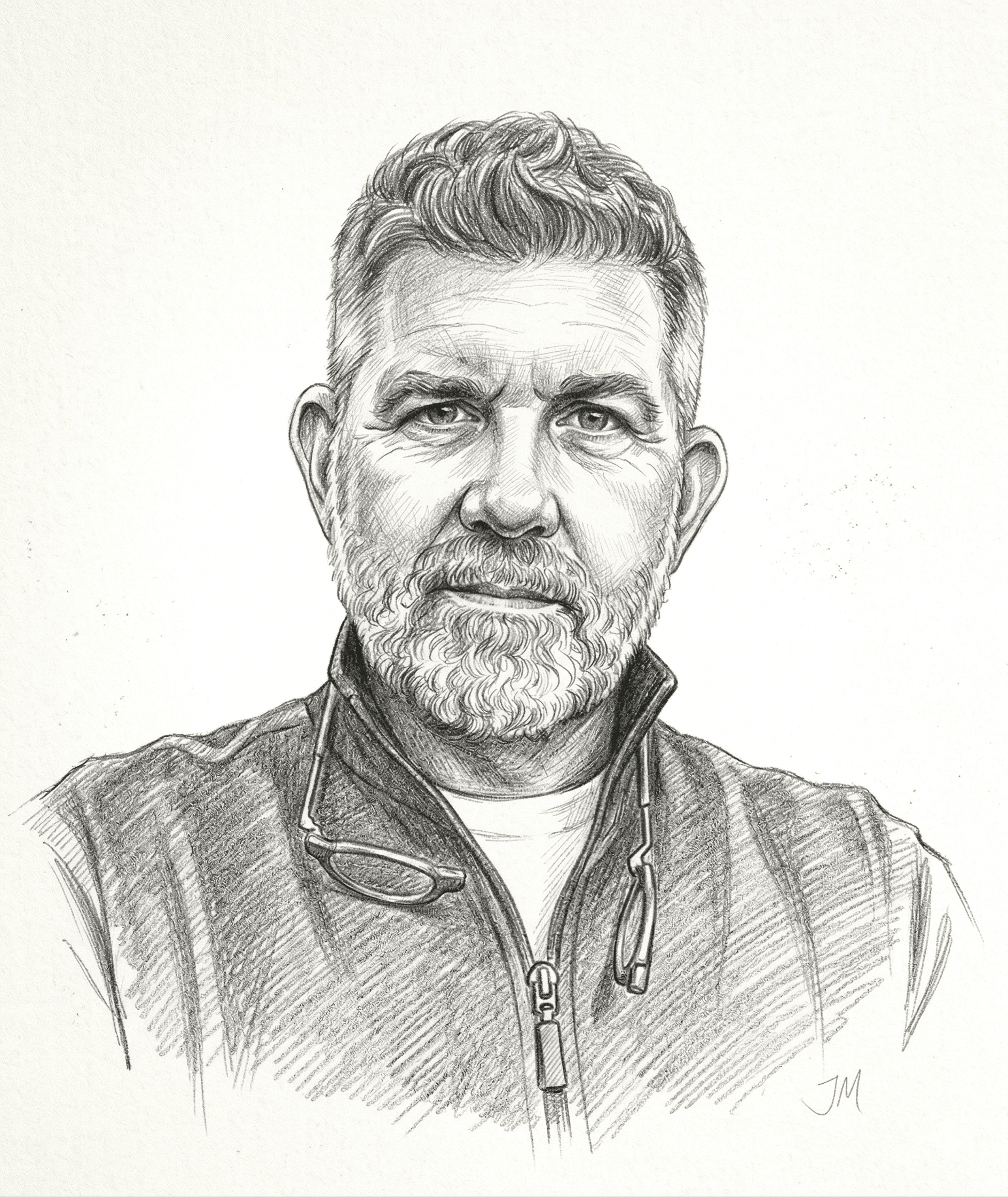
This, as intelligence professionals are considering what the seemingly flawless U.S. military operation to detain Maduro could mean for what’s next in the region. Cipher Brief Executive Editor Brad Christian spoke with former CIA Senior Executive Glenn Corn about the impact of the Venezuelan operation and what we still don’t know. Their conversation has been lightly edited for length.
Christian: Talk us through how you're reacting to the news of the last 72 hours.
Corn: If I had a hat, I'd take it off to our former partner colleagues in the intelligence community and the special operations community. I mean, great operation. Well planned and executed. I'm sure that the intelligence had to be very good. Honestly, I'm proud because it's good to have a reminder that the U.S. can do this kind of thing. I don't want to go into the international law piece. I'm not a lawyer. But really a great operation and thanks to the people that put it together. You probably remember that we talked recently about the importance of the Western Hemisphere and reasserting some of our influence there and reminding people that, this is our backyard. This administration has made the Western Hemisphere a priority and I think it's a good thing. And here's an example of something that the president is willing to do. I give the president credit - this is a pretty bold move. And the timing was interesting. The other thing I'll say is no leaks, right? Which is also very, very good news because we have a problem in Washington with leaks, and the administration was able to keep this one under wraps. I was completely surprised.
Who’s Reading this? More than 500K of the most influential national security experts in the world. Need full access to what the Experts are reading?
Christian: What do you think are going to be some of the things that you're going to be watching most closely? President Trump has said that the United States is going to be involved in administering Venezuela in the near term. There's been a lot of talk about reviving Venezuela's oil industry. Obviously, that's not surprising. There's been some reaction from American adversaries, but everyone's still in a watch and wait mode yet for how China and Russia is going to respond to this. What are you paying attention to in terms of signals for this week?
Corn: The president's comments about some type of U.S. administration, at least in some kind of transitory period were interesting. I immediately am reminded of Iraq where the military operation was well done and we removed Saddam Hussein pretty quickly in 2003, but then what came after was not great. So, I hope we've learned that lesson and we're not going to repeat the mistakes we made there. Hopefully there is a plan in place. The president indicated that some people in the administration are going to be giving roles also to help administer.
And it’s interesting that President Maduro and his wife were detained, but it looks like everybody else is still in their roles which may be an indication that they learned the lesson from Iraq and our experience there.
By the way, if you're the Iranian supreme leader, you probably have to be very nervous right now. I went to bed thinking about Iran and what's happening there. And the president's comments that the U.S. will support those people that are coming out to peacefully protest and if they're... I forget his exact words, but basically, "We will punish those who use force against them or who killed protestors."
Christian: The way I interpreted that was that the U.S. was prepared to intervene militarily to protect the protestors.
Corn: And we may still be. Last week, I was very focused on Iran, then all of a sudden over the weekend, this operation went down. Now, whether that's the intent or not, I don't know, but it’s really interesting timing. What comes next will be very important. I've been saying for a while that this administration has had some very good foreign policy successes in the last year, since coming to office. Generally, I think they're doing well on the foreign policy front. They've done some bold things. Syria, Azerbaijan, Armenia. Now what comes next is important, and then consistency is important. Do we have the ability to see it through? We’ll have to see.
Christian: Russia is considered an ally to Venezuela. How might this impact Moscow’s foreign policy in the Western hemisphere, to include their planning and their ongoing operations as it relates to Venezuela or perhaps other parts of the Western hemisphere?
Corn: I think Putin has backed himself into a corner when it comes to a lot of these countries that he's aligned with. We saw that with Syria where he was overspent, and he really didn't have anything to help former President Bashar al-Assad when Assad was in crisis. And one of his main allies in the Middle East is no longer there.
In Venezuela, the Russians have come out with some statements in support of Caracas, of Maduro, but they really haven't done much. There was some reporting last year, that Moscow was shipping more air defense systems and weapons to Maduro and the regime as we were ratcheting up our military activity in the Caribbean. But none of that seems to have made a real difference. Putin has to understand right now that he's been unable to come to Assad's assistance and with Maduro, his ally has just been removed and detained. So, he's got to be watching Iran very nervously because that's his other main ally in the Middle East and they've invested a lot in that relationship, and it seems like the Supreme Leader is in trouble right now. The regime is in trouble.
With the President of the United States making bold comments about what the U.S. will do if the regime goes after protestors in Iran, it’s clear that Putin's influence is waning all over the world and he's eventually going to be unable to stand.
The Cipher Brief applies expert-level context to national and global security stories. Grant yourself full-access to Cipher Brief expert insights, analysis and private briefings in the new year by becoming a Subscriber+Member.
The Russians used to like to brag that they stand by their allies when the U.S. abandons them. Actually, it's looking now like the Russians are abandoning their allies. And I assess that's partly because of this quagmire that Putin got himself into in Ukraine.
Maybe some of the Venezuelans who are celebrating the removal of their dictator should think about Ukraine and what the Ukrainians have done for them by stopping the Russian military the way they've done so effectively.
It also seems at first blush, that the intelligence services of Russia failed because it looks like this operation went down without any real warning to Maduro. And one would assess that if Putin is an ally of Maduro, he'd have tipped him off about the operation, which the Russians have tried to do in other circumstances in the past.
By the way, the Cuban bodyguards, what happened to them? Someone was telling me last week, that Maduro's main security force was made up of Cubans.
I think Putin has painted himself into a corner because I think he's afraid to really upset Trump because he knows that if Trump comes down hard on him on the Ukraine issue, he's in big trouble.
He's already in trouble. And many of us have assessed for a while that if President Trump decides that it's time to really ratchet up the heat on Moscow and the Kremlin, that will probably be a serious, serious blow to Putin and his power.
Christian: Do you believe that President Putin thinks he's backed into a corner in the way that you describe? And is it likely that there are people around him who may be telling him that?
Corn:. I don't even want to try to put myself in his head space. I've said for a long time, going back 10 years, that he's put himself in an information vacuum or echo chamber. So, who knows what he's thinking. But my guess is that he feels like he's backed into a corner. If you saw when the U.S. announced sanctions on Gazprom and Lukoil, the first thing Putin did was send a delegate to the United States in a rush. That showed me panic and fear. And I'm sure that people around Putin are upset and worried.
Now, let's watch Iran. I think Iran's a big piece on the chess board, and we should see what happens there. I don't think that the Russians are going to be able to help much if the Iranian regime starts to collapse.
Christian: The critics of the operation in Venezuela are saying things like, "This is a bad precedent to set. Other leaders around the world may decide, 'Okay, well, if the U.S. can do something like this...'" And obviously the criticism of this operation is it violates Venezuela's sovereignty. Do you worry about the knock-on effect and the second and third order effects of an operation like this being conducted by the United States, regardless of who's president, and being used in ways that may cause further instability in the world or being used by autocratic leaders or America's adversaries?
Corn: No, I think that ship sailed a long time ago. This is not the first time the United States has done something like this. This is not the first time other countries have done something like this. Countries have made land grabs, have assassinated leaders or tried to remove leaders, overthrow governments. So, there's nothing new here. There's no new precedent here that I see. We've already started down this very ugly road. And to me, now, what's important is to make sure that our national security structure and our intelligence community and armed forces are fully armed and capable of dealing with any threat to U.S. interests and to our allies.
Christian: At our most recent Cipher Brief Threat Conference in October, there was a lot of talk about global conflict. Some people use the phrase World War III. Do you believe it’s started and how are you thinking about 2026 from a national security standpoint?
Corn: Deterrence is critical right now. The U.S. has been deterred too much in the past, and we've been unable to deter our adversaries. It's very important that the U.S. maintains and demonstrates an ability to deter adversaries when they threaten our interests. The president is talking about U.S. oil companies going into Venezuela, rebuilding the infrastructure, reviving the Venezuelan oil industry, energy industry. I think this goes along with the administration's approach with commercial diplomacy, getting the U.S. business community actively involved around the world to help promote U.S. interests, which I support but you have to make sure that happens because you don't want vacuums to be created. A year ago in Syria, everybody was very excited about the opportunities, but those opportunities have been very hard to develop because of the realities on the ground. So, you need sustainment. You need the ability to really sustain and be patient and invest in taking advantage of opportunities and bringing some kind of economic development to regions that have suffered for a long time and are in very bad shape that are producing either jihadists or narco traffickers - probably because a lot of those people have no other choice to survive.
You and I have both served in countries where that is the case, where the majority of people are not bad people, but they have no choice. There's really no option. We want to give them something better, right? But we have to do it. And that's going to be the big challenge.
Again, kudos to the administration. This is part of a bigger game. I go back to the Reagan administration and the kind of rollback approach to the Soviet Union when Russia was challenging us around the world and Reagan finally responded to that by challenging them and calling out the Soviets where they were trying to poke on our interests.
I would say that the Trump administration seems to be doing that, which is good, but we've got to be very, very cognizant of the fact that it's going to take a lot of investment and a lot of persistent attention to do it.
If the Iranian regime collapses tomorrow, that could create a great opportunity or a vacuum. There’s a great opportunity in Venezuela right now. Let's take advantage of it.
Are you Subscribed to The Cipher Brief’s Digital Channel on YouTube? There is no better place to get clear perspectives from deeply experienced national security experts.
Read more expert-driven national security insights, perspective and analysis in The Cipher Brief because National Security is Everyone’s Business.