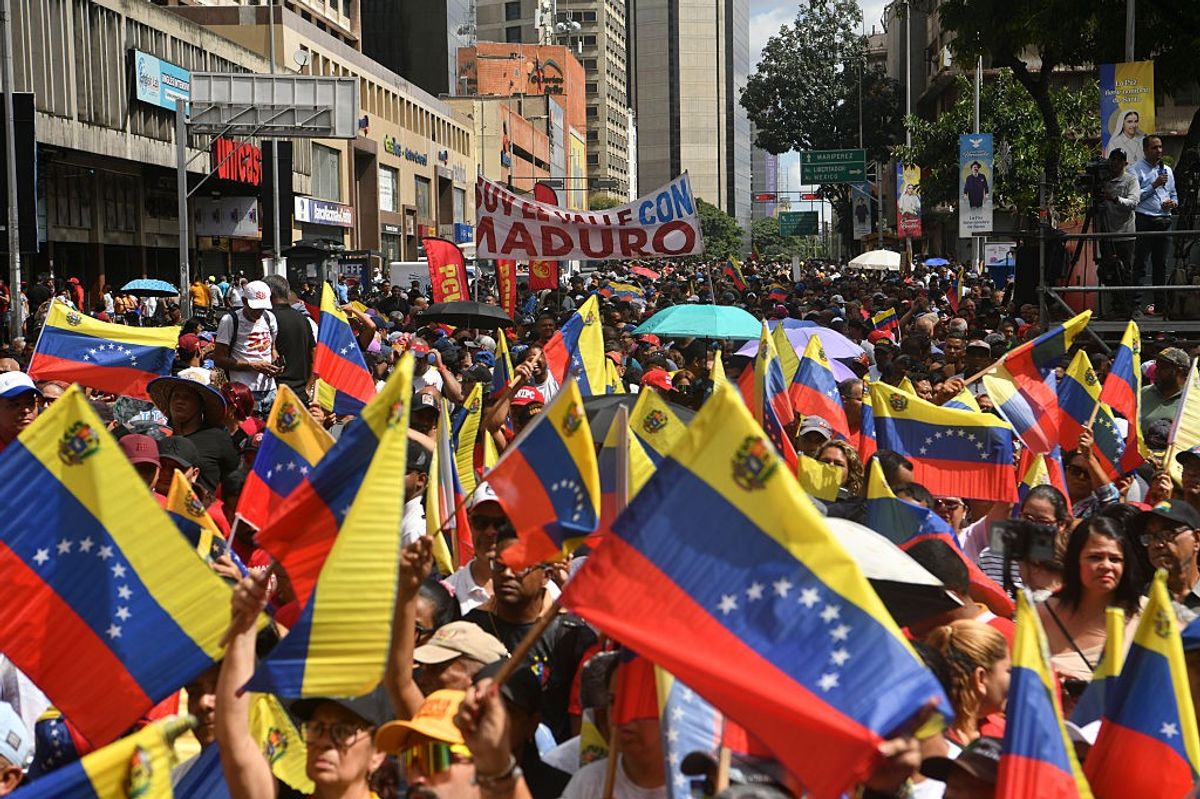



CIPHER BRIEF EXPERT INTERVIEW – While the U.S. operation to detain Venezuelan president Nicolas Maduro took just hours to execute, a full assessment of its global impact will take weeks or months to fully understand in part, because of the complicated dynamic connecting the country’s assets, allies and oil.
“Venezuela is what I would call one of those hyphenated accounts,” says Norm Roule, a global energy expert who also served as former National Intelligence Manager for Iran at ODNI. “Venezuela in and of itself is important, but it's also Venezuela/oil, Venezuela/Russia, Venezuela/China, Venezuela/Cuba. There are a lot of different accounts and issues that must be taken into consideration.”
Venezuela’s partners depend on it for various strategic reasons: Cuba for economic support, Iran for political alignment in Latin America, and China for a notable share of its oil imports. The United States, meanwhile, is signaling a major shift in how it intends to assert influence in the Western Hemisphere.
Cipher Brief Executive Editor Brad Christian talked with Roule, a leading global consultant on Middle East and Energy issues, about what is likely to happen next as the U.S. signals a major shift in how it intends to assert influence in the Western Hemisphere. Their conversation has been lightly edited for length and clarity.
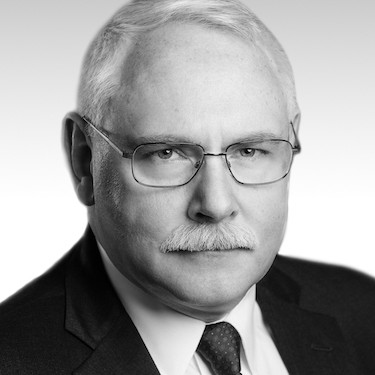
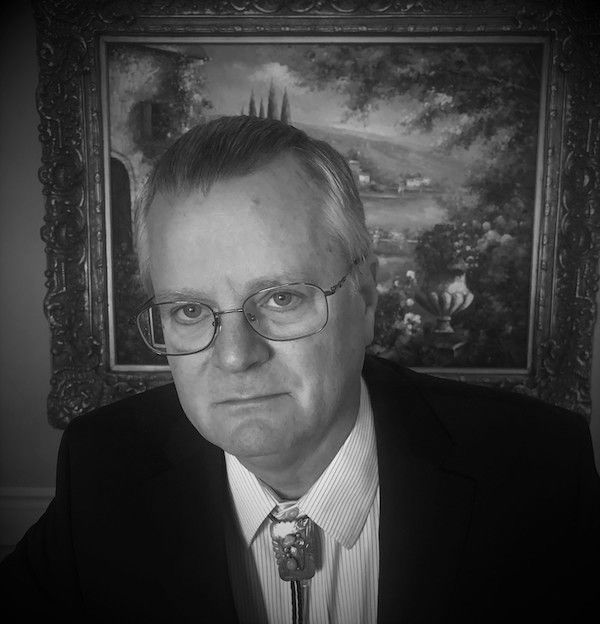
Norman T. Roule
Norman Roule is a geopolitical and energy consultant who served for 34 years in the Central Intelligence Agency, managing numerous programs relating to Iran and the Middle East. He also served as the National Intelligence Manager for Iran (NIM-I)\n at ODNI, where he was responsible for all aspects of national intelligence policy related to Iran.
THE INTERVIEW
The Cipher Brief: The Trump administration recently released an updated national security strategy that weighed heavily on the Western hemisphere. Are we seeing perhaps the first kind of inclination that this is going to actually be something to pay close attention to?
Roule: Absolutely. And I think the national security strategy is something that every one of the Cipher Brief's readers and listeners should pull out today. Look at it again, because I can assure you that policymakers around the world - in both our partner and adversary countries - are certainly doing so. If you look at events in Venezuela and read that national security strategy, a number of themes come forward.
The U.S. will be the dominant power in the Western hemisphere. In Venezuela, we saw a display of massive U.S. power and skill in the form of our military intelligence and technology. This is very similar to the display that the world witnessed in Iran last June. So, this is coming very, very close to two sets of actions. And I think this is meant to be seen also, as the president alluded to in his press conference, as a visible reset of what he described as a previous erosion of U.S. military power in his predecessor's administration.
This is also showing that the U.S. is now capable of executing what was described by the Chairman of the Joint Chiefs of Staff as an extraordinarily large and complicated military and intelligence operation, without being leaked. This did not require foreign partners. And it also did not require the disruption of regional commercial air operations. If you listen to what the chairman talked about, this involved 150 aircraft from multiple locations descending upon another country. And other than closing the airspace for a short period of time, commercial air traffic was not disrupted. But you're seeing some other things that are also notable. The U.S. will undertake regime change when it perceives that the existing regime threatens core U.S. national security interests.
This also represents another U.S. blow against a Chinese partner in the Western hemisphere following the Trump administration's actions in Panama. The operation also took place on the anniversary of the killing of Iranian Quds Force leader General Qassem Soleimani in 2020 as well as the surrender of Manuel Noriega in 1990.
These are both examples of the long arm of the U.S. government. And certainly, the United States may have thought that the selection of this date would dampen any commemorations by the Iranian government for Soleimani's death in Tehran. Which would have been difficult enough given the ongoing demonstrations in Tehran. But the ripples from this Venezuela operation will be global. And I think the national security strategy puts some meat on the bone with this operation.
The Cipher Brief: Just looking at the intelligence that was needed to pull off an operations like this for a moment, what do you think this says about U.S. intelligence and what would have gone into that for this particular operation?
Roule: Well, it tells you a couple of things. It tells you that first, the intelligence was exquisite and up to date. But it also tells you that the intelligence was integrated into the military operation with an intimacy, with care, so that our military personnel were able to move with extraordinary speed to get to the location as quickly as humanly possible. We've seen this in the past with the operation against Osama bin Laden. This is just another example of the close integration between the U.S. intelligence communication and our amazing and extraordinary special forces personnel. I can't speak highly enough of those extraordinary and humble operators.
This also shows you the breadth of that intelligence community. The intelligence agencies that were cited included, the National Security Agency (NSA), the Central Intelligence Agency (CIA), and the National Geospatial-Intelligence Agency (NGA). So, you're getting a sense of some very broad intelligence capabilities which were brought to bear and then integrated.
The president, I believe, also mentioned that a house had been built in advance. I mean, you're just watching some incredible intelligence capability that was brought to bear by people on the ground over many months. It shows courage, it shows tenacity, it shows you the resources that were pulled together. And it also shows an ability to compartment this information and to prevent a leak. The U.S. government is doing what it's supposed to do. And in a world where we're often complaining about government, the American people and our partners should be gratified that our tax dollars are being well spent. And that the U.S. intelligence community and the military are performing superbly.
Need a daily dose of reality on national and global security issues? Subscriber to The Cipher Brief’s Nightcap newsletter, delivering expert insights on today’s events – right to your inbox. Sign up for free today.
The Cipher Brief: There's a lot of connective tissue between Venezuela and the rest of the world when you consider the oil industry, including China. As an energy expert, can you share what’s top of mind for you on the broader impact on the oil and energy markets?
Roule: Maybe the best way to answer that is to just explain a little bit about the Venezuelan oil system. First, the operation did not occur near Venezuelan oil production. Upstream oil operations are not located near Caracas, although exports and storage are highly sensitive to obviously, as you correctly put it, a U.S. maritime enforcement of a U.S. embargo.
Most of Venezuela's oil production, about two thirds, is derived from what is known as the Orinoco belt. And oil production from this Orinoco belt had fallen to about 498,000 barrels by the end of December, which is about a 25% drop from just a couple of weeks earlier. And it's been shutting down because they're running out of storage space because Venezuela can't export oil because of the blockade. So, they're trying to put the oil anywhere they can. They've put it in their own storage, they've put it in ships that are docked. They're putting it in almost in teacups at this point because they are running out of space to store the oil that they're producing.
Let's talk about the oil that is produced in Venezuela. They produce it from tar sands. It's extra heavy. It's a heavy type of crude oil and there are relatively few refineries that can process this grade of oil. It's difficult to extract. It's expensive to extract. Chinese refineries in 2025 tended to get a majority of Venezuelan exports. That amount ranged from 75 to 90% depending upon the amount. But even here, the Chinese tended to put much of that oil in their own storage. And China and Russia tend to be the two big players in Venezuela. For China, it is transactional. Chinese buyers look at it as a way to purchase cheap oil that they again put in storage. It's about 4% of China's exports and China again, has used a shadow fleet of intermediaries to purchase this oil. If China were to lose access to this, it's a problem. But because much of this has gone into storage and there are other suppliers out there in Saudi Arabia and other places, they could make this up.
Russia's a different story. Russia is an enabler of the Venezuelan oil industry. Because Venezuela's oil is so tar heavy, in essence, they need to import naphtha from Russia and this dilutes the ore and eco output and makes it blendable and then shippable. So, Russia sends in naphtha, it blends the stuff down and then stuff can then be exported. What would happen if suddenly Venezuela is opened up? Well, a couple of things.
First, because the oil market is relatively well supplied, people would look at it and ask, ‘where are the investment opportunities?’ If you look at the places where the world has changed suddenly and investment opportunities occurred, production didn't dramatically change. Let's take Iraq and Libya for example.
In Iraq, it took about a dozen years to get back to the level of pre-Saddam. And at that point, China was a major player. The U.S. is now returning to Iraq. In Libya, we're now a number of years after the fall of Gaddafi, and they are still about 25% below production levels under Gaddafi.
And again, the U.S. is returning. Much of it does depend upon the security of the country and the stability of the country. So, the president's comments about running Venezuela the right way really does strike at the heart of what happens in the oil industry.
The Cipher Brief: Devil’s Advocate here: how does it compete with Texas’ output? What does the U.S. do with that oil? Is it going to be sold to China?
Roule: The president and the Secretary of State have talked about stolen oil. What does this refer to? Is there a U.S. case there? I'll leave it to others to talk about the amounts and so forth but when this is talked about, this refers to a 2007 Venezuela expropriation of what I believe was then Conoco Phillips or ExxonMobil investments. That Venezuela did indeed expropriate. So, there is indeed a legal case of Venezuela nationalization of U.S. assets for which the U.S. was not compensated. If Venezuela's government did change and if U.S. oil companies were to go in, could the oil industry be dramatically changed? Yes, but it would depend upon security.
Maybe my final comment would be that Chevron has been heavily invested there, and they have maintained a very mature and stable outlook for the country. If you hear Chevron’s CEO speak about Chevron's investments, they've been very levelheaded and unflappable about national security events. So, I think you're going to see them stay there as well. And I think when you listen to the president's comments about how the U.S. would run Venezuela, he seemed fairly confident that the U.S. oil industry would play a role there. Which makes one think that there have been some sort of discussions in this regard playing out in some way in the background.
The Cipher Brief: At the most recent Cipher Brief Threat Conference, there was a lot of discussion around the idea of global conflict and some people believe that we are at the precipice of World War III. Certainly everyone agrees that global disruption is at fairly unprecedented levels. What is your thinking on this?
Roule: We are in a different world, but we're in a world of permanent gray zone conflict. But gray zone is defined and very, very differently. Gray zone was once defined by Iranian militias and it was defined by drone attacks or cyberattacks that were non-attributed. But we now have drone attacks or drone flights in Europe that come from God knows where, but they're Russian. We have Chinese routine harassment for more than a decade in the South China Sea. We have routine theft of intellectual property by China and North Korea, which in and of itself is a type of attack against our economy. But it's not necessarily a traditional gray zone attack. Because the people who are often involved in gray zone operations only see a certain number of colors on the palate. But the theft of intellectual property is just another form of attack.
We're in that kind of a world and the people who are running the countries, they don't need to launch a war per se. They need to launch a series of short, sharp conflicts. Or short, sharp attacks. Now they said these could lead to a war if people believe we don't care about certain areas. And I do think there is the issue of what could happen in Taiwan in 2026. That should be a worry for everyone.
Are you Subscribed to The Cipher Brief’s Digital Channel on YouTube? There is no better place to get clear perspectives from deeply experienced national security experts.
Read more expert-driven national security insights, perspective and analysis in The Cipher Brief because National Security is Everyone’s Business