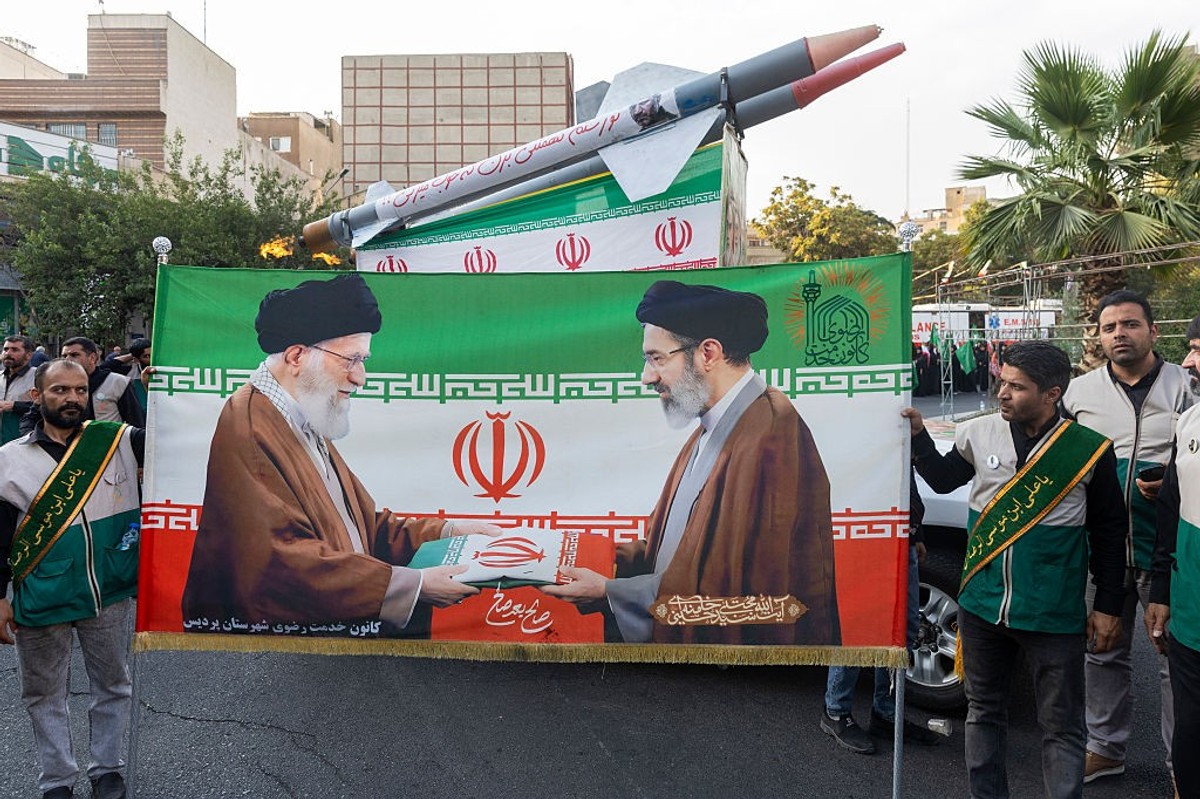


Over the past month, U.S. and Israeli operations have killed Iran’s senior leadership, destroyed over 155 naval vessels and roughly 300 ballistic missile launchers, and degraded elements of Iran’s nuclear infrastructure. But scorch marks and craters do not equal a strategic victory.
Operation Epic Fury’s initially stated goals were sweeping and maximalist: to fully destroy Iran’s nuclear infrastructure, missile forces, navy, Iranian Revolutionary Guard Corps, and proxy networks. Yet in pursuing these objectives, the Trump administration has constrained itself to accommodate political realities, employing means short of the full-scale occupation typically required to secure such objectives. The problem is compounded by a second, related challenge: even when strikes appear successful, the United States has limited ability to verify whether its objectives have actually been achieved.
This dynamic, of seeking maximalist ends with politically constrained means, creates a strategic tension that precision strikes can’t resolve. While B-2s and Tomahawks can destroy targets, ensuring the dismantlement of a nation’s military capacity has historically required forms of commitment that Washington is reluctant to undertake.
Understandably, Washington appears unwilling to occupy territory in order to follow through completely on its stated aims. The Trump administration, perhaps emboldened by its easy victory in Iran last June, and Venezuela this January, has walked into a trap of its own making. As history shows, half-measures deployed in service of total victory have often proven disastrous — perpetuating conflict, resolving little.
The verification problem
Through the first month of Epic Fury, the U.S. and Israel have conducted thousands of strikes, all geared toward addressing the operation’s stated end goal. Reports suggest that these attacks have been tactically effective, degrading various forms of Iranian nuclear and military infrastructure. But assessing the true damage, and the irreversibility of that damage, presents a logistical problem that remote methods can’t solve.
The U.S. is equipped with the world’s most sophisticated surveillance architecture. America’s toolbox of satellites, drones, and artificial intelligence allow for rapid assessment of the battlespace and the damage wrought. This sophisticated surveillance architecture paints a flattering picture of objectives nearly or fully achieved, but the actual picture remains incomplete.
Remote surveillance cannot determine whether underground nuclear facilities were destroyed; whether mobile missile launchers survived; whether covert logistics chains still flow; and whether proxy militias remain operational. To truly gauge the effectiveness of Epic Fury, the United States would need to inspect tunnels and warehouses, rooting out hidden stockpiles and underground enrichment facilities - feats that can’t be accomplished from afar. Even under the 2015 nuclear deal, the Joint Comprehensive Plan of Action, verification depended on intrusive, on-the-ground inspections, underscoring the limits of remote surveillance in dismantling complex programs.
Battle damage assessment (BDA), which is used to gauge the effectiveness of Epic Fury, measures only the visible destruction at the point of impact but offers limited insight into the resilience of the targeted system. A crater where a nuclear enrichment facility once stood is an encouraging piece of intelligence. But it leaves questions unanswered, like whether critical components from that facility were moved before the strike, or whether redundant systems exist elsewhere, or whether the brainpower that animated the facility lives on.
The limits of BDA are especially present against Iran, which has spent years hardening and dispersing its military infrastructure in preparation for this long-anticipated attack, all in the hopes of remaining intact enough to regenerate.
The tension at play in Epic Fury - between ambitious objectives, constrained means, and limited visibility - has been present in past U.S. conflicts. After Operation Desert Storm, in which President George H.W. Bush stopped short of wreaking total destruction on Saddam’s regime, Washington believed that Iraq’s military capability had been crippled. But uncertainty persisted, resulting in a long standoff, which finally culminated with the disastrous 2003 invasion.
Afghanistan is also instructive. During Operation Enduring Freedom, the U.S. shifted from airstrikes and special forces to a strategy deeply invested in remote counterterrorism. This limited, drone-dependent remote presence failed to eliminate militant groups who were mobile and embedded. The result was a two-decade resource drain, America’s longest war, which ultimately failed to achieve its objectives and concluded with the resurgence of the Taliban.
The takeaway, from both Iran and Afghanistan, is that half measures don’t work for maximalist strategic goals. The lesson, which should have been applied to Epic Fury, is not that the U.S. should have committed more force, but that it should adjust its objectives to the resources it is willing to commit - before the first Tomahawk is ever launched.
Yet, through the opening month of Operation Epic Fury, Washington appears on the verge of repeating its familiar, post-Cold War pattern of half measures. The administration’s sweeping aims - to dismantle Iran’s nuclear program, missile production, IRGC, proxy networks, and navy - are not achievable or verifiable under the constraints Washington has (correctly) imposed on the campaign.
The current methods deployed against Iran threaten to leave behind persistent strategic ambiguity. Without physical verifications, Iran may well retain, or quickly replenish, the missiles and drones and fissile material that inspired Epic Fury in the first place, which in turn could inspire a lingering half-measured U.S. commitment.
In other words, Epic Fury could lock the United States into a repetitive cycle of sporadic violence (what the Israelis call “mowing the lawn”), with each round triggered by signs that Iran is regenerating capabilities that were never fully eliminated. The prospect of a third 21st century quagmire should give warplanners pause - especially given the uncertain strategic value of Epic Fury itself.
The Cipher Brief is committed to publishing a range of perspectives on national security issues submitted by deeply experienced national security professionals. Opinions expressed are those of the author and do not represent the views or opinions of The Cipher Brief.
Have a perspective to share based on your experience in the national security field? Send it to Editor@thecipherbrief.com for publication consideration.
Read more expert-driven national security insights, perspective and analysis in The Cipher Brief