

The Pentagon’s push to overhaul its slow, specification-driven procurement system is an overdue acknowledgment that our defense industrial base has become too narrow, too fragile, and too dependent on foreign supply chains. America’s defense establishment is finally waking up to a critical weakness that has metastasized in recent decades: we have drifted away from the industrial might that once formed the bedrock of our economy and allowed us to out-produce any adversary in the world.
While there are many warning signs, one symptom of the problem is unmistakably clear: the United States is not producing what it needs at the speed and scale modern conflict demands. Recent reporting shows the U.S. Army is still struggling to meet its 155mm artillery-shell production goals after years of effort. Across the spectrum—from advanced missile interceptors to something as basic as black powder—we are falling dangerously behind in both production capacity and supply-chain resilience. For now, these shortfalls are appearing in conflicts that don’t directly involve American troops, but the truth is that a major war will see the United States forced to ration materials and munitions, deploying untested prototypes on the battlefield while the defense industrial base races to catch up. We must act now to prevent this from happening.
If we are serious about winning the next war—or better yet, deter it—we must rethink both how we buy military equipment and weapons, and how fast we can make them. We don’t need another half measure or a fully government solution. Instead, the government should leverage the private sector to build a nationwide network of multifaceted, resilient manufacturing nodes that can surge production of everything from drones, vehicles, and body armor to medicine, munitions, and microelectronics in times of crisis, while sustaining production lines for commercial products in peacetime. The power of the U.S. economy can, and should, be leveraged to solve this problem.
This network of production centers, or campuses, would bring together startups and established manufacturers in the same ecosystem, enabling the kind of rapid prototyping, pilot production, and full-rate manufacturing the Pentagon is urgently seeking. Each of these campuses would be designed for flexibility, with modular production capabilities that can be rapidly upgraded, and shared heavy infrastructure such as test beds, utilities, and analytical systems. Furthermore, these facilities would be part of a connected national network, leveraging the regional strengths of each part of the country while avoiding the single points of failure commonly found in today’s highly concentrated manufacturing hubs.
Sign up for the Cyber Initiatives Group Sunday newsletter, delivering expert-level insights on the cyber and tech stories of the day – directly to your inbox. Sign up for the CIG newsletter today.
Today, the gap between a successful prototype and real-world production is often a chasm in the defense industrial base. Major firms are often tied up maintaining legacy systems while cash-strapped startups cannot afford to build compliant, capital-intensive factories without production contracts. These startups are often told that contracts won’t come until they prove they can manufacture at scale. So promising technologies stall in a chicken-or-egg limbo while delays snowball. The Pentagon’s renewed embrace of OTAs helps, but money alone won’t fix a physical bottleneck. We need places where cutting-edge firms can scale quickly, and affordably.
A national network of industrial campuses is designed to fill this gap. Under this model, companies wouldn’t pay construction costs up front; lease payments would begin only after they move in and start generating revenue. Layering into the model a certain number of shared facilities—initially funded by the Pentagon—would reduce risk, accelerate development, and dramatically shorten production timelines. Young companies gain room to grow. Established firms gain access to fresh innovation - and taxpayer dollars go further.
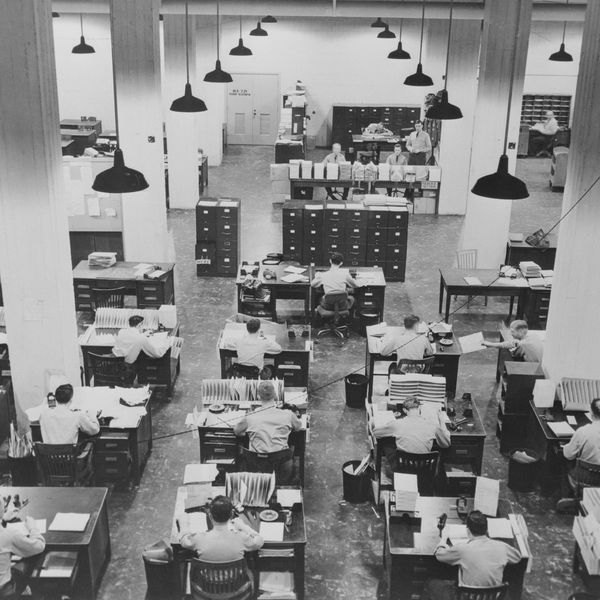
This is not a radical idea. It is an evolution of the model that once made America unstoppable. In World War II, factories across the economy—automotive, textile, consumer goods, and more—transformed to support the war effort. That surge capacity happened because the United States had an existing industrial ecosystem ready to mobilize. Today, we no longer have one.
Decades of offshoring, consolidation, and a fixation on short-term efficiency have left our industrial base brittle and full of holes. COVID-19 made that painfully clear when the world’s largest economy found itself dependent on foreign suppliers for PPE and basic supplies. Semiconductor shortages still slow defense and automotive lines. Meanwhile, our adversaries are turning basic industries into warfighting assets. Russian bakeries are producing drones and China is treating its manufacturing capabilities as a strategic weapon while in America, we’ve been treating our manufacturing base like an accounting exercise.
The Cipher Brief brings expert-level context to national and global security stories. It’s never been more important to understand what’s happening in the world. Upgrade your access to exclusive content by becoming a subscriber.
The government must shift course. Manufacturing is a strategic asset—every bit as important as ships, planes, satellites, or submarines. Washington should fund shared industrial infrastructure, de-risk private investment, and let market forces drive efficiency.
The math is simple. In some cases, companies piloting these programs have delivered 4:1 to 25:1 returns on tax dollars, generating major gains for minimal government investments. With a defense budget exceeding $800 billion, the Pentagon can easily afford to invest a sliver of that—well under one percent—to send a clear, unambiguous demand signal to the private sector that America is rebuilding its industrial backbone, and doing it now.
History shows what happens when we do. Modest seed capital during World War II and the Apollo program unlocked massive private investment and generated hundreds of innovations that have come to define the modern age. These campuses would be more than factories—they would be hubs where manufacturers, universities, investors, and federal partners build self-sustaining ecosystems capable of accelerating innovation, fostering talent, and producing critical goods at scale. They would restore American industrial depth, innovation, and flexibility—our most reliable, most underestimated tools of deterrence.
America is racing into the next complex era of great-power competition with a defense industrial base limping along from the last era; one that is simply too small, too fragile, and too slow. We can invent extraordinary technologies, but what use are they sitting in a lab if we can’t produce them at scale? If that doesn’t change, the United States risks discovering—too late—that innovation without industrial power is a hollow advantage.
Rebuilding American manufacturing will be difficult. But the cost of inaction is far higher. A nation with a deep, flexible industrial base can surge production, absorb economic shocks, and outlast any adversary, on the battlefield and the home front. A nation without one is forced to ration weapons, delay deployments, and scramble to keep its supply chains functioning.
We can build this network now or we can wait for a crisis to expose, once again, how fragile our industrial base has become. In the next conflict, the world’s strongest military must be able to depend on its factories to keep up.
The Cipher Brief is committed to publishing a range of perspectives on national security issues submitted by deeply experienced national security professionals.
Opinions expressed are those of the author and do not represent the views or opinions of The Cipher Brief.
Have a perspective to share based on your experience in the national security field? Send it to Editor@thecipherbrief.com for publication consideration.
Read more expert-driven national security insights, perspective and analysis in The Cipher Brief, because national security is everyone’s business.