

One of the things I loved about LEGO as a child was the ability to mix and match an endless amount of parts to create unique builds. Children (and some adults) gather around a bin of parts to create something new. Imagine being asked: “Build 10 houses in 30 minutes.” Everyone would come up with unique designs using various parts. Now, imagine a constraint: “You may only use red, 2x4, 2x2, and 1x2 bricks, white windows and doors, and it all has to fit on a green 32x32 baseplate.” Quickly, the limited supply causes a frantic scramble.
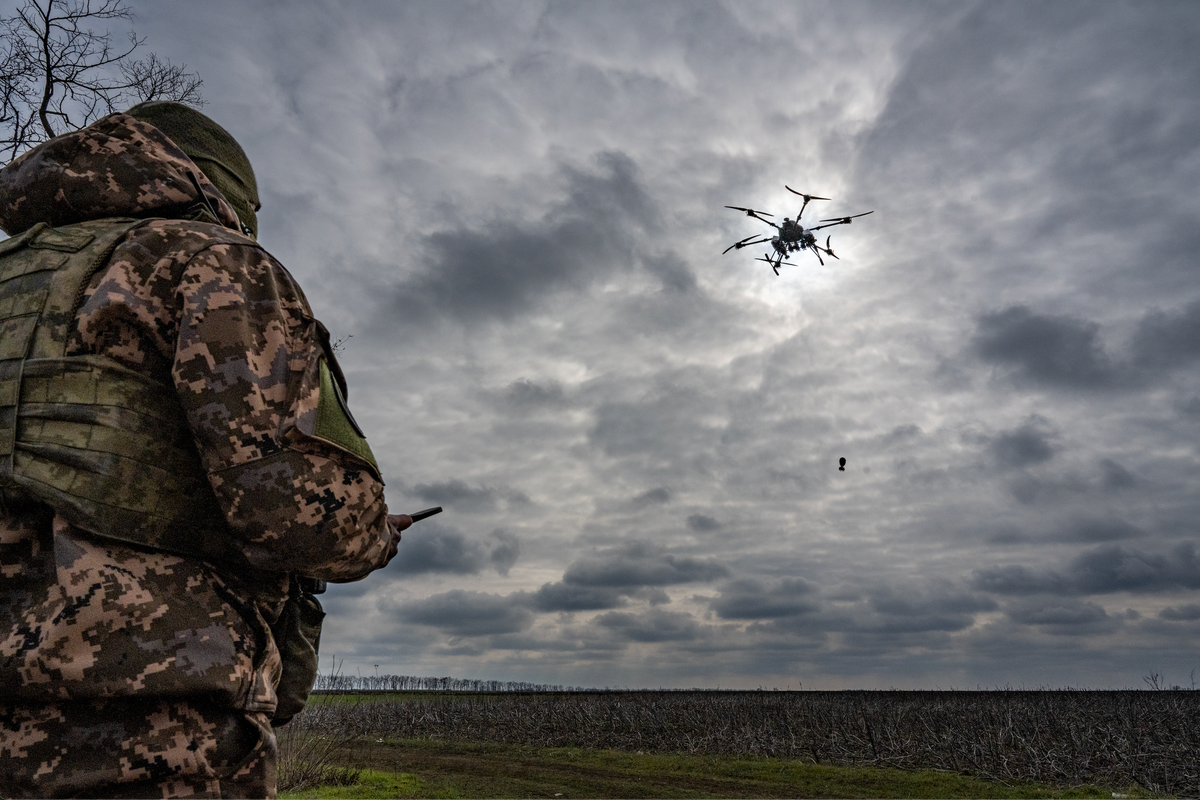
This scenario mirrors the recent call by the Department of War to field 300,000 drones over two years. The conflict in Ukraine exposed the U.S.'s lack of preparedness to equip forces with Purpose Built Attritable Systems (PBAS) at the scale of its peer competitors. Further, manufacturers are restricted by the requirement for critical components to be NDAA / BlueUAS compliant and, as of December 22nd, even more restrictions which demand non-critical components be U.S.-manufactured. The defense industrial base is struggling to meet unprecedented demand.
While numerous startups and giants have stepped up, the U.S. supply chain cannot sustain the required pace. Existing suppliers’ manufacturing capabilities are quickly surpassed as companies scramble to design, build, and market the requested systems.
sUAS are fundamentally basic, consisting of a flight controller (FC), electronic speed controller (ESC), motors, propellers, camera, radio/video transmitters, receivers, and a frame. The main problem is the availability of parts and, more critically, sub-components needed to make them. Manufacturers are all reaching into the same scarce “bin,” forcing suppliers to seek materials with increased vigor.
Motors, for instance, require neodymium and copper. The majority of motor production occurs outside of the U.S., where technology is mature, labor costs are lower, and the supply chain exists. However, the sUAS industry accounts for less than 8% of neodymium consumption in the U.S. Returning to the LEGO analogy, if a child asks for more 1x1 red bricks to make houses, LEGO, which (in this scenario) makes over 90% of its money on other parts, has little incentive to retool for large-scale 1x1 brick production.
Similarly, most FC and ESC boards are produced in Taiwan. While this was permissible under the original NDAA and BlueUAS frameworks, the new requirement for U.S. production necessitates standing up domestic manufacturing, likely to ensure production continues in the event that trade with Taiwan is disrupted. However, standing up U.S. companies, sourcing materials, hiring labor, and developing technology all create significant costs that are passed to the consumer. Since PBAS systems must remain attritable (affordable enough to be lost in combat), a higher cost per unit will force warfighters to be more judicious.
What national security news are you missing today? Get full access to your own national security daily brief by upgrading to Subscriber+Member status.
Given the intense demand and additional domestic constraints, how can the U.S. remain competitive? There are a few ways.
Incentivize existing global manufacturers to stand up U.S.-based manufacturing. Companies with existing technology, design, manufacturing, and supply chains should be incentivized to establish domestic production of like products.
Encourage raw material companies to invest upstream. Critical material mining companies (e.g., for lithium and neodymium) currently lack incentive to ensure stable, consistent supply to manufacturers. Encouraging investment upstream offers supply chain guarantees for domestic manufacturing and additional revenue for investors.
Establish a “strategic reserve” of raw materials. The U.S. maintains strategic oil and gas reserves. For future conflicts, a strategic reserve of critical sUAS materials is vital given the global stranglehold countries like China have on the market to enable rapid manufacturing scale-up even if trade is disrupted.
Increase throughput of BlueUAS and NDAA compliant components from outside the U.S. Maintaining U.S. connectivity to the global sUAS marketplace is important. While the restrictions are righteous, isolating U.S. production strains the raw material supply chain, causes allies to follow suit, and increases the overall cost per unit, reducing attritability. The U.S. should use the BlueUAS framework, with increased throughput, to identify compliant vendors across a wide section of allies and trade partners.
Expedite current NDAA compliant components manufactured overseas through BlueUAS processes. As manufacturing shifts to the U.S., the U.S. could provide ‘provisional’ BlueUAS certifications with limited durations to cover companies during the transition.
Sign up for the Cyber Initiatives Group Sunday newsletter, delivering expert-level insights on the cyber and tech stories of the day – directly to your inbox. Sign up for the CIG newsletter today.
Without a temporary easement or an adequate transitional period, the U.S. drone market is likely to shift abruptly. Many companies cannot afford to stand up U.S. production, or the cost of compliance would render their price points untenable. This situation would likely result in defense giants acquiring the IP/technology from smaller companies at a steep discount, leveraging their supply networks, lobbying, and significant capital advantage to continue development and manufacturing under their umbrella, returning the U.S. defense ecosystem to its former exclusive state, prior to the recent tranche of reforms.
The U.S. is at a critical inflection point in its quest for American Drone Dominance. The foundation it establishes will define its final strength and resilience. Care must be taken to avoid supply chain degradation, continue providing affordable solutions for the warfighter, and remain flexible and responsive in future crises. Incentivizing domestic production without isolation will ensure the U.S. has all the pieces it needs to build successfully, brick by brick.
The Cipher Brief is committed to publishing a range of perspectives on national security issues submitted by deeply experienced national security professionals.
Opinions expressed are those of the author and do not represent the views or opinions of The Cipher Brief.
Who's reading this? 500K+ dedicated national security professionals. Have a perspective to share based on your experience in the national security field? Send it to Editor@thecipherbrief.com for publication consideration.
Read more expert-driven national security insights, perspective and analysis in The Cipher Brief because national security is everyone’s business.