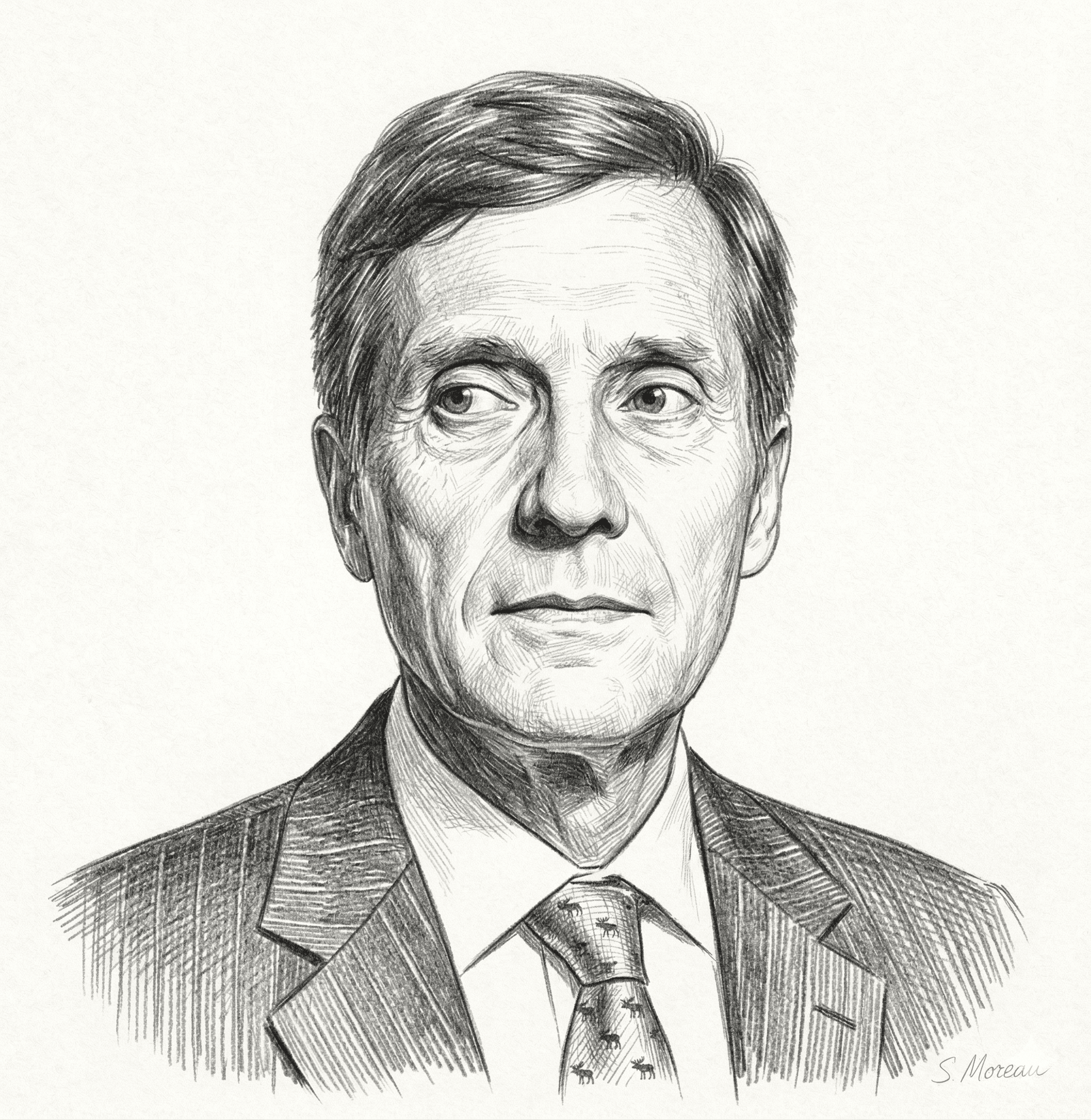

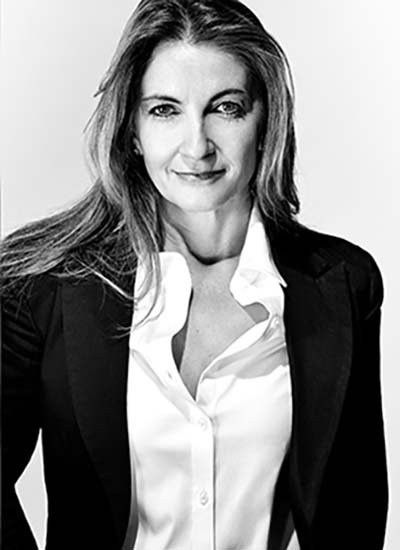
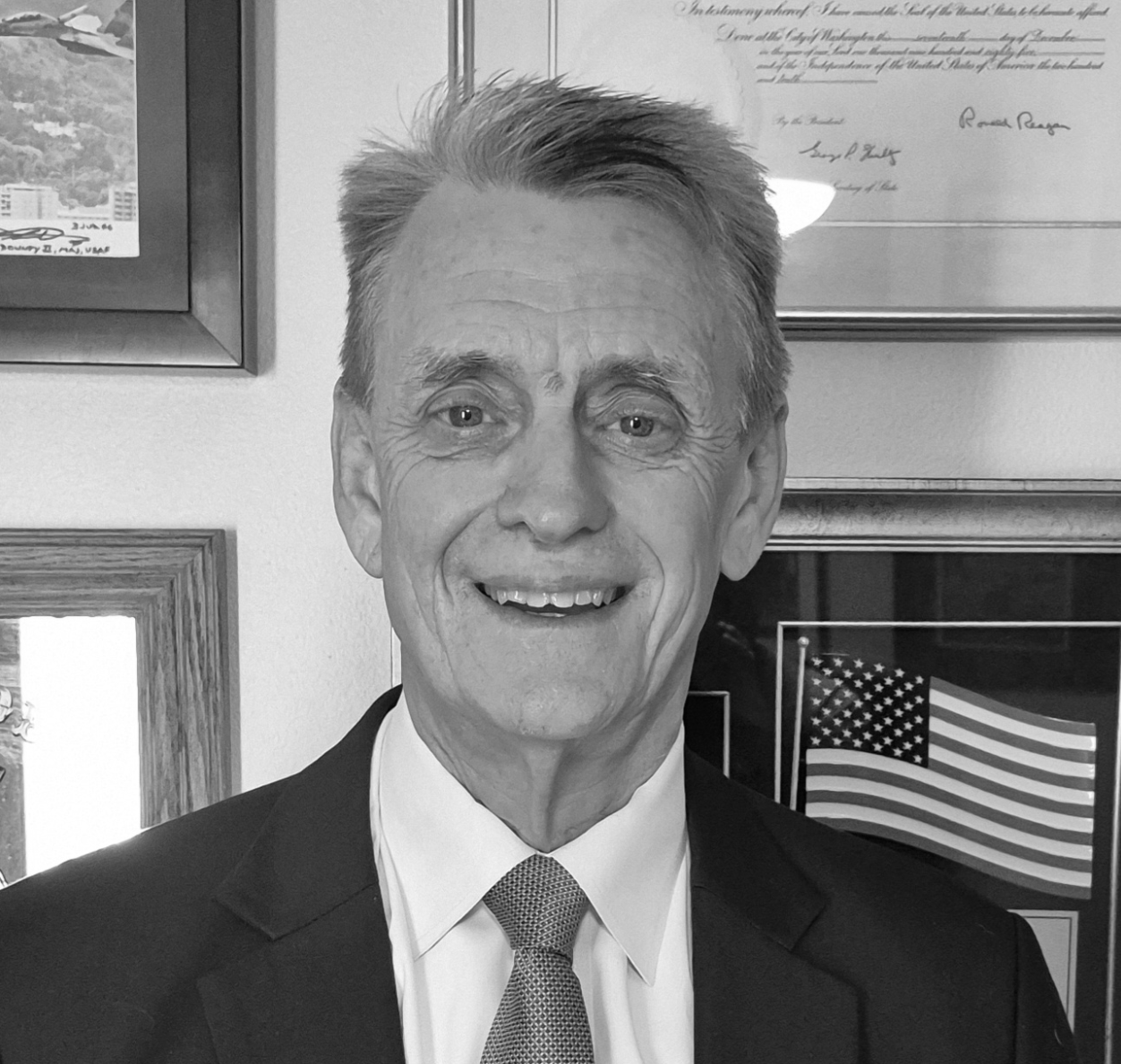
David Fitzgerald
A 37-yr. CIA veteran, David Fitgerald retired in 2021 as Chief of Station in a Middle Eastern country, which hosted CIA’s largest field station. As a seven-time Chief of Station, Fitzgerald served in numerous conflict zones to include Africa, Latin America, the Middle East and South Asia. He also held senior HQS positions that included Latin America Chief of Operations and Latin America Deputy Division Chief. He also served as the senior DCIA representative at U.S. Military’s Central Command from 2017-2020, where he participated in several tier 1 operations as the intelligence advisor to the commander.
The Cipher Brief: How are you looking at Venezuela at this moment through a national security lens? What do you see as the next real challenge the U.S. is likely to face there?
Fitzgerald: As President Trump has said, the U.S. intends to run Venezuela. I'm still waiting for how the U.S. government intends to define 'running Venezuela'. I'm going to assume, and I hate to assume, but I'll assume that the goal will be to work closely with the current Venezuelan government to transition to a democracy and allow elections, something like that. So that will just be my assumption in lieu of any comments or any guidelines coming out of the White House.
The Cipher Brief: You understand the history, the politics, the culture of Venezuela better than most Americans. Where do you think some of the bumps in the road will come as the U.S. tries to figure out and define, as you put it, what running Venezuela really means?
Fitzgerald: It's a very diverse country. It's an incredibly rich resource country. People talk about the oil and the petroleum, but it's not only that. It could be one of the largest gold producers in the world. It's amazing the amount of natural resources that Venezuela has, yet 25 years after President Chávez was elected as president, it's one of the poorest countries in Latin America.
I think one of the hurdles that they're going to have is the brain drain. You don't have a strong cadre. A great example is Pedevesa, [Petróleos de Venezuela], the state run oil company. Back in the 90's, Pedevesa was considered one of the most efficient and best run oil companies in the world. Compared to even the private companies, it was a machine because they owned everything from downstream to upstream. They owned the drilling, they owned the pipelines, they owned the refineries, they owned the oil tankers, they owned the refineries in the U.S., they owned the distribution through their Citco company here. It was just an amazing company, and it was always held up as a model for state run companies. Of course, with the election of President Hugo Chávez, and then in 2002, the general strike when he just fired all of the Pedevesa members - even today, if you look around at the Chevrons, Exxons, the BPs, you'll find a large amount of former Pedevesa employees because they all migrated to the private petroleum companies because they were that good.
So, one of the biggest challenges is that Venezuela's going to need the financial means to really rebuild itself. I was last in Venezuela in 2013, and I'd been there in the early '90s, and it looked exactly the same. The infrastructure was terrible. Nothing had been modernized or built. So instead, what the Maduro and the Chavez government had done, was basically used Pedevesa as their cash cow to really distribute that money to themselves, steal the money, or distribute it to their followers. There was no effort to modernize the infrastructure or to do the necessary maintenance in the oil fields. That's why I think they're producing maybe 10% to 15% of the amount of oil they were at their peak.
So for me, that's really the key. How do you get Pedevesa up and running so it becomes a profitable company again that can actually provide the necessary resources for the country to rebuild itself?
Need a daily dose of reality on national and global security issues? Subscribe to The Cipher Brief’s Nightcap newsletter, delivering expert insights on today’s events – right to your inbox. Sign up for free today.
The Cipher Brief: If you were looking into your crystal ball, and you had to guess, will there be enough political stability with the U.S. involvement to be able to allow for this infrastructure to be rebuilt? How difficult is that political component going to be?
Fitzgerald: I think it's twofold. Not only the political component, but the security component. How do you transition from basically a dictatorship to some form of transparent democracy, which I think is the White House's goal. You do that via Delcy Rodríguez and the current Venezuelan government. As you know, the PSUV, which is the United Socialist Party of Venezuela, which is Maduro's party, they control every apparatus of government, whether it's the Supreme Court, the judicial branch, the legislative branch, the executive branch, it's owned by them. There is no transparency right now. How do you get away from that? How do you rebuild these institutions so they become functional again and in some type of democratic transparent manner? That has to be a principal goal.
Number two, the security situation. You have maybe 20% to 25% of the population supporting Maduro and the PSUV. I would argue most of these people are supporting the party because they benefit from the party. They're either on the payrolls, they have some type of sweetheart deal, or they're able to conduct their illegal activities. The security forces are not hardcore ideologues. I think with the death of Chávez in 2013, he was the last ideologue you had as far as the Bolivarian revolution. My experience working with these people is that they're just in it for their own self-enrichment. Nobody really drank the Kool-Aid and said, "I want to be a Bolivarian revolutionary." I mean, this might have happened during the earlier stages when Chávez was first elected, but through the decades, it's become just an empty suit. Nobody really believes in any type of revolution.
On the security side, getting back to that, you have a disruptive element. You have this organization called the Colectivos, which is kind of a non-official goon squad that is supported by the government, basically comprised of criminals and local bullies. During demonstrations, they're the ones who go out there and start beating people and stuff like that. But you have the security services themselves as well. The rank and file. I think if you can do something like we did maybe in the Haiti occupation and in Panama where we actually formed an interim security force — I can't talk about the Haitian National Police nowadays as an effective force — but at the time in 1994, they became an effective enough security force, which provided security to the populace. That led the whole population to believe that there was hope.
I think that's going to be key along with the political transition. Can you provide security? Can you provide faith that people will adhere to the rules and regulations? How you do that? It's a good question.
Venezuela's a little different than most Latin countries. There is no national police force, other than the National Guard, which currently, if you talk to our DEA colleagues they'd probably say it's one of the largest drug cartels on the continent right now. Like the United States, Venezuela is divided into the state and municipal police forces.
For example, Caracas has two major police forces. You have the city of Caracas Police Force, and then you have the Miranda State Police Force, which is about maybe a third of Caracas, and then the rest is by the city of Caracas. Then you go out to the different states in Venezuela. They each have their own police force, and the large cities all have their police force. Years ago, they tried to form this Bolivarian national police agency. We're trying to incorporate this. It's never really worked because these police forces are all influenced and run by the local politicians.
So, that could work to our advantage as far as being able to work independently of the government and work with these local institutions to not only enhance their capability, but kind of vet them, cleanse them.
The Cipher Brief: How do you think Russia and China are assessing what''s next in Venezuela? What are the losses here and what are the opportunities here for each of them?
Fitzgerald: Let's talk about China first because that's probably going to be the most important for Venezuela. China must be extremely careful about how they handle this because they have literally billions and billions of dollars in loans that they provided the Bolivarian government. And one of their concerns, no doubt is that if you have a new democratic government, they could come in and say, "You know something? These loans that you signed with China, we don't consider them valid. We think they're illegal, and we're going to nullify all the loans." And right now, China's getting paid back in petroleum. So, China's got to be worried.
That means that if you're China, you're going to make nice with any new government because you don't want to be in a situation where they just say, "We consider these agreements you made with former government officials as illegal, and we will no longer honor them." So I don't see China being a spoiler. I see them willing to work with any new government coming into power because they have a lot of financial stake in what happens in Venezuela.
Russia, on the other hand, has very little commerce here. Russia's main trade with Venezuela is in arms. Venezuela's never even been able to pay back the loans or the purchases they made on some of the weapons systems they bought. Iran's another one. Iran's been there for decades now. It's entrenched. They've been allowed to work pretty much without limits in Venezuela, going back to, I think it was 2012, and the assassination attempt on the Saudi Ambassador in Washington. That was all being run out of, or being facilitated by, the Iranian embassy in Caracas.
So, it's going to affect all of their relationships. Iran's been more important than they realize for their oil industry as far as providing the parts and the 'know how' to maintain the oil fields and some of their refineries. A lot of that's coming from Iran. The big thing here that people don't realize is that there's one ingredient that's important for Venezuelan petroleum and if you don't have this, you really can't produce the amount of petroleum you need. Even at today's rate, you can't produce it. So Iran's been a major provider of this substance.
Are you Subscribed to The Cipher Brief’s Digital Channel on YouTube? Insights so good, they should require a security clearance.
The Cipher Brief: How are drug cartels likely looking at this? And what about Cuba?
Fitzgerald: I would love to be in Cuba right now and listen to what they're saying about this. I mean, this really must be a shocker for them. Number one, for their security service. They just had a major failure because it's very well known that all of President Maduro's inner security was being provided by the Cubans. They're the only people he trusted. To a greater extent, they're out of security. Plus all their security services were being managed by the Cuban CI officers. The Cubans don't do it for free. So Venezuela pays the tab for that, and no doubt it's a greatly enhanced bill that they were getting from the Cuban government for President Maduro's security.
On the other end, as you know, Suzanne, the petroleum is just as vital to the Cuban economy. It's not all of it, but it's a major percentage of the petroleum that Cuba uses to include refined products that are provided by Venezuela at incredibly reduced rates that Venezuela knows Cuba will never repay. So, they have billions of dollars in debts to Venezuela and although they're technically selling the petroleum to Cuba, there's pretty much an understanding that it's not going to be repaid. So that's going to be a big blow to Cuba right now.
The Cipher Brief: What are the indicators that you're going to be watching for next that give you some clue as to where things might be headed?
Fitzgerald: Well, my big indicator is what's the plan? I'm sure they're huddling together both in the IC and in the State Department and the White House trying to figure out, 'Okay, how can we transition the current government to some type of viable democratic government and allow for a free election?' And there's probably been a million plans thrown out there. They just haven't figured out which one they're going to use. So I think that's what I'm waiting for is what the administration intends to roll out as their plan and how they intend to run Venezuela.
I think one of the big things here as far as Venezuela goes, is how to actually rebuild the country. It's going to require the private sector. The U.S. government is not going to be some nation builder like we tried to do in Iraq. And the great thing is that Venezuela has the resources that are quite sought after in the world where I think you're going to get a lot of interest from the private sector.
For example, a friend of mine asked the other day about the construction that would be needed. You're going to see some of the major construction companies needed to go in there and just rebuild the cities and the streets and everything. It's just the infrastructure there that hasn't been really modernized or updated in decades. So I think there is going to be a lot of interest in that. I think that interest by the private sector will also encourage the government to become as transparent and as democratic as it can be. So look for that too. And it's just not all about oil — it's minerals, construction, and the electric grid - it's across the board.
The Cipher Brief is your place for expert-driven national security insights. Read more in The Cipher Brief because National Security is Everyone’s Business