


After meeting with the president in Washington this week, Israeli Prime Minister Benjamin Netanyahu is less optimistic about a deal, telling reporters on Thursday that “...I expressed general skepticism about any agreement with Iran, but I said that if an agreement is reached, it must include the elements that are important to Israel: not only the nuclear program, but also the ballistic missiles, and also the Iranian proxies.”
Meanwhile, Iran’s national security chief Ali Larijani is warning that Tehran would strike U.S. bases in the region if it is attacked.
The Cipher Brief spoke with former National Intelligence Manager for Iran at ODNI Norm Roule about what is likely to come next. Roule, who is also a Cipher Brief Expert, travels regularly to the region for meetings with senior leaders. We spoke with him in this exclusive interview about the risks and opportunities facing the U.S. with regard to Iran and what he believes Iran is likely to do first if the U.S. does launch a military attack.

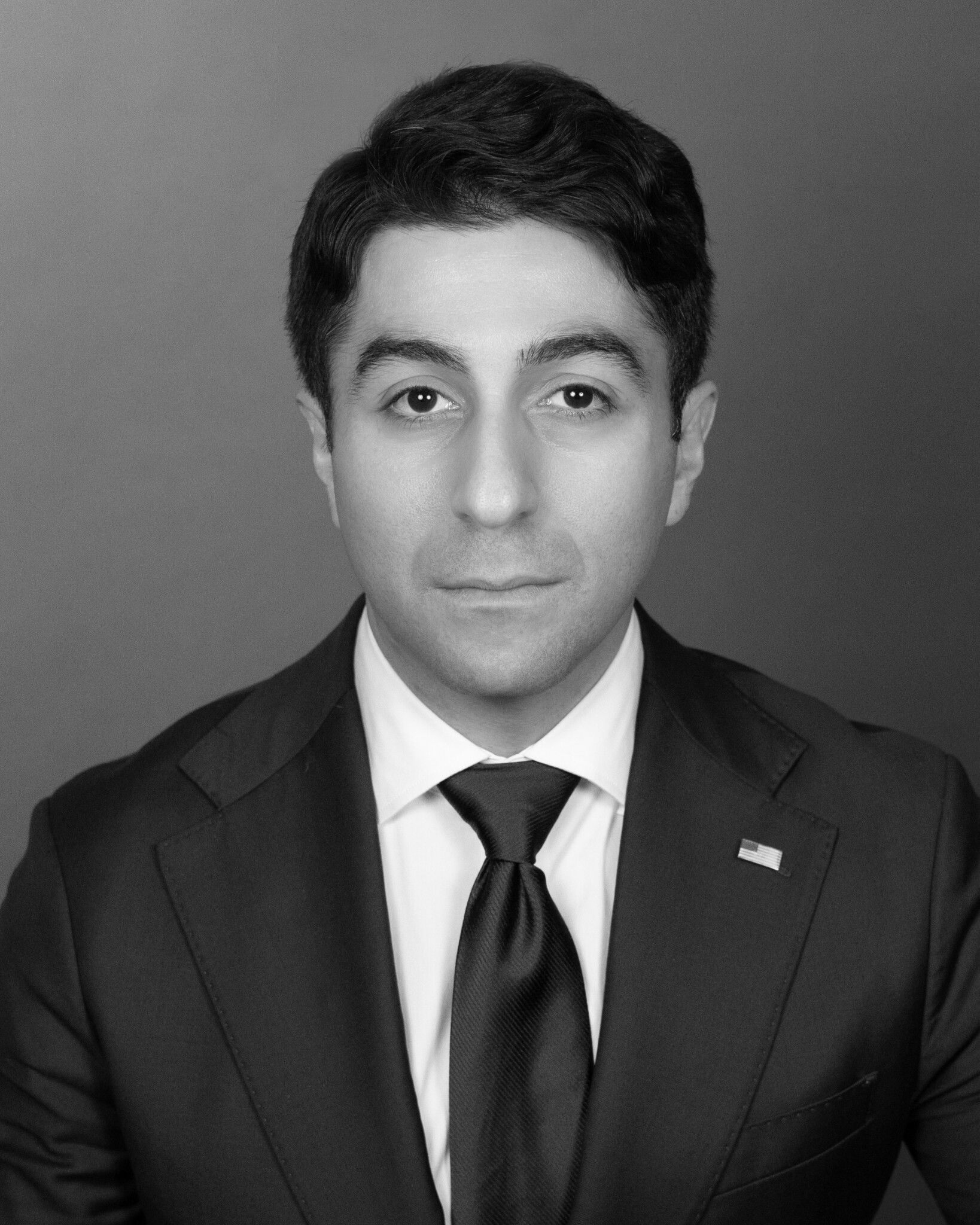
Norman T. Roule
Norman Roule is a geopolitical and energy consultant who served for 34 years in the Central Intelligence Agency, managing numerous programs relating to Iran and the Middle East. He also served as the National Intelligence Manager for Iran (NIM-I)\n at ODNI, where he was responsible for all aspects of national intelligence policy related to Iran.
THE INTERVIEW
The Cipher Brief: The U.S. is continuing to deploy military assets to the Middle East. How are you assessing the opportunities given where talks with Tehran are at the moment? What do you see as realistic U.S. objectives?
Roule: You’re correct to start with a focus on objectives. This will give us targets to assess risks and opportunities, as well as the report card against which the success of any strategy must be judged.
A number of these are included in the Trump Administration’s December 2025 National Security Strategy: avoid involvement in a costly regional war or nation-building, ensure that regional sea lanes and choke points remain open, and maintain stable energy markets.
Regarding the Islamic Republic, every Administration – indeed the entire international community – has agreed that Tehran must cease the oppression of its people, must not be allowed to develop a nuclear weapon, its missile programs must be constrained, and its malign regional adventurism and support for terrorism must end. This latter set of ambitions has been part of not only this administration’s Iran strategy but also of the first Trump administration's strategy. Former Secretary of State Mike Pompeo’s May 2018 Twelve-Point Speech on Iran highlighted each of these goals.
However, the current approach addresses areas where there are different views on the balance between nonproliferation and broader regional issues, and on whether to resolve the nuclear issue first and address other issues later, or to handle them together.
Former Secretary of State Condoleezza Rice once famously reminded a group that policymaking is done in a reality where we must remember that we are a country and not an NGO. National interests, security, and power drive foreign policy.
Humanitarian goals will be important in our policies, but they won’t be the primary driver. Ours is not the first generation to face the challenge of how far we should go to encourage and militarily support those who courageously stand against tyrants.
Woodrow Wilson faced this dilemma as White Russian armies fought the Bolsheviks in 1918-1920. Several presidents were pressed to respond as Germans, Czechs, Hungarians, and other protestors valiantly stood up against heavily armed Soviet occupiers in the 1940s, 50s, and 60s. It’s easy to say we should do more, but these decisions are never clear. In this case, there have been many calls for military action, and it is easy to understand the rationale, watching the regime’s cruelty against the courage of Iranian protestors. But it is also unclear exactly what we are to attack, for how long, how we would measure success, whether the results would justify the ramifications of dealing with Iran’s military retaliation and lastly, whether the moment for such action has passed. Every presidential advisor would try to address these questions.
But if policy choices regarding Iran involve profound risks, the events of this month show that kicking the can down the road is no less dangerous. Inevitably, the can gets heavier with every kick and the road gets shorter. There is absolutely nothing regarding the Iran threat today that hasn’t been predicted for years. The international community refused to risk the price of hard actions against Iran, and elected to use repeated attempts at diplomacy, corrosive sanctions (which were effective in limiting Iranian capabilities) and until June 2025, increasingly empty threats of military action to constrain Iran.
In terms of opportunities, the Administration has been consistent in its focus on four priorities with regard to Iran. The most recent has been humanitarian and involves the U.S. threat of military action against the regime if it continues using widespread murderous force against Iranian protestors. No one can deny the horrific and bloody crimes committed by this regime during the recent unrest. The violence has subsided along with the protests, albeit widespread arrests and detentions continue. The President has claimed that his threats of military action limited Iran’s use of violence and stopped Iran from hanging large numbers of protestors. Some certainly argue that we should have used military action to aid the protesters, but this raises the question I mentioned earlier and related issues about whether we had sufficient assets in the area to address potential “Day After” consequences. This is a question with no single clear answer. However, our use of diplomatic, economic, and military pressure to prevent regime violence against protesters is appropriate and consistent with our national values.
The Cipher Brief: The White House is now focused on Iran’s nuclear, missile, and regional threats. Talk to us about why this is a priority and whether the current moment is an opportunity.
Roule: Let’s start with Iran’s nuclear program. The June 2025 Twelve-Day War severely degraded – at least for now – Iran’s nuclear weapons capability. But that capability can be rebuilt, and if Iran has any enrichment capacity, especially one not under international supervision, they can try to produce weapons-grade enriched uranium. But if Iran doesn’t agree diplomatically not to rebuild these capabilities and to provide the International Atomic Energy Agency with the access it requires, we should steel ourselves to the requirement that the Israelis or we will need to repeat the June 2025 military strikes when Iran chooses to rebuild.
Next, we have the Iranian ballistic missile threat. The unclassified May 2025 Defense Intelligence Assessment stated that Iran’s space-launch vehicle program could give it the capability to build as many as sixty intercontinental ballistic missiles (ICBMs) by 2035.
Iran’s repeated use of ballistic missiles against multiple countries makes it reasonable for Israel to be concerned about the long-term size and direction of this program as well. Iran’s missile program is not currently a threat to Western Europe. If Iran builds ICBMs, this, of course, changes. The idea that anyone would allow a country with Iran’s political, military, and nuclear history to build dozens of potentially nuclear-tipped ICBMs within nine years should not be acceptable. It would also be too easy to imagine a scenario in which Iran and North Korea joined forces to threaten the U.S. Homeland. So, we either compel Iran to change the course of its ballistic missile program, work with Europe to build a costly missile shield, or destroy that program militarily now.
Last, Iran’s Quds Force remains operational and has begun to repeat what will be a several-year campaign to reconstitute its regional proxy program. This is not the first time the Quds Force has been required to rebuild a regional program amid great risk to the regime. In fact, it’s the third time since 2003.
By any traditional measure, the Islamic Republic represents a failed revolutionary state ruling a disillusioned and angry population. In many ways, it resembles the final years of the Soviet Union: an ossified regime whose ideology is dismissed even by its most ardent supporters. The regime retains power through repression, coercion, corruption, and a multi-layered system of lucrative patronage that its most potent supporters would lose in any reformed government.
The administration’s rhetoric and actions make a reasonable case that the current moment should be tested to see whether, with further pressure – which could include military action – the regime would sacrifice these malign activities in exchange for sanctions relief that would allow the Islamic Republic to survive. This won’t satisfy those who seek regime change, but it does parallel Washington’s approach to Venezuela.
The Cipher Brief: How would you assess Iran’s losses to date?
Roule: By any measure, Iran’s losses have been extraordinary, consequential, and unprecedented in modern history for a country of its size, regional influence, and global economic impact in the energy market. The last two years have been crowded with examples of the collapse of its political, economic, and national security architecture.
In terms of leadership, the regime has endured the death of President Ebrahim Raisi, who was highly likely to be Supreme Leader Khamenei’s choice. His passing was followed by a historic low turnout in elections that led to the Pezeshkian presidency. Pezeshkian failed to deliver on his economic promises. His tenure has included the dismissal or resignation of two vice presidents, two cabinet officials, and other senior officials. He spends much of his time apologizing to the Iranian people for the government's failures, hoping this tactic will win him popular support. It’s somewhat understandable in that the economic complaints that ignited Iran’s recent nationwide unrest occurred in a country that has endured months of shortages of water, electricity, natural gas, and refined products, which forces the repeated closure of schools, government offices, and businesses.
The World Bank estimates that one-third of Iranians (25-26 million) are below the poverty line. Annual inflation reached 43 percent in December 2025. The rial, which fell to 1.43 million to the dollar before the unrest, just reached 1.63 million to the dollar and appears to have no bottom. U.S. Secretary of the Treasury Scott Bessent’s comments on recent U.S. expanded sanctions in response to Iran’s handling of protests underscores Washington’s intent to use whatever economic tools it can to pressure Tehran.
The Cipher Brief: If you’re looking at this in terms of Iran’s own national security, how does it look?
Roule: In terms of national security, the picture is bleak. Over the past two years, Israel killed the commanders of Iran’s primary proxy partners and destroyed the group's strategic capacity. Russia and China proved to be of no help in the June War, nor could they stop the reimposition of United Nations Security Council Sanctions.
The loss of Syria and Venezuela cost Iran its closest external allies, reducing its regional and global political reach. The June War was a profound defeat for Iran’s air defenses and intelligence services. Israel and the U.S. easily destroyed key elements of Iran’s hugely expensive nuclear program, an effort that has cost billions of dollars and for which Iran has endured decades of political and economic isolation. The conflict cost Tehran many of its most experienced military and nuclear personnel, and left Iran with billions of dollars in damage to its nuclear and missile infrastructure.
Finally, Iran’s murderous killing of protestors and internet shutdown starkly illustrated that the most successful aspect of the regime’s national security investments remains its tools of oppression.
The Cipher Brief: Many have described Tehran today as weak. Yet the regime keeps surviving protests. Its missile programs are considered a potential threat, and policymakers are worried about its capacity to threaten the Strait of Hormuz, impacting energy markets. What’s your take on this?
Roule: The regime is weaker in many areas, but it is more accurate to say that the regime has never been more fragile and is strategically weaker than it has been in decades. All of this is known to Iran’s Supreme National Security Council. But they can also list strengths they believe will help them survive. I would rather not list these publicly but suffice it to say that key elites and security elements remain unified, disciplined, and responsive.
If the government’s deep national unpopularity is a fact, it can’t be ignored, as a substantial portion of the population remains uncommitted to its overthrow, and some are committed to its survival rather than supporting the opposition. Externally, it may have no reliable state allies, but nor does it face an international coalition. The U.S. is its primary adversary. What it achieves against Washington will shape its relations with the world.
Iran may not be able to compete with the U.S. militarily, but that has always been the case. Its leaders know that they must be able to threaten an asymmetric response: regional and global economic destruction by missile, drones, and cyber-attacks will immediately begin should the U.S. attack Iran.
This list should leave your readers with the sense that these men believe the best days of the regime are ahead. That would imply stupidity, which is not a characteristic that gets one through Iran’s national security shark pool of political and policy challenges.
They wake every morning, knowing that their domestic political and economic realities make another cycle of nationwide anti-regime unrest inevitable. The Supreme Leader will be 87-years old on April 19. His eventual passing will trigger the final transition to the regime’s post-revolutionary generation and they have had years to prepare for this moment. But his passing, which could occur at any time, could create a new crisis. And of course, if an actual military conflict with the U.S. takes place, the survival of the regime, and the personal survival of those in Iran’s leadership could be in question.
The Cipher Brief: How are you assessing the impact of the Trump administration’s approach right now?
Roule: The structure of the Trump administration’s strategy remains strategically conventional. The administration’s primary goal is a diplomatic outcome that avoids a conventional war or an episode that leaves Iran empowered and U.S. credibility damaged. Hence, the likelihood of a dramatically powerful military attack on Iran remains high.
The administration has made no secret of its buildup of one of the most powerful offensive air, missile, and air defense capabilities in history. Israel has also threatened military action. The President is also reportedly considering dispatching another aircraft carrier task force to augment his offensive capabilities further. The way this force has been deployed thus far shows that it is part of the pressure campaign and that the President has not yet authorized military operations. Of course, this last point could change at any time.
The administration has deployed a senior diplomatic team and urged regional partners to press Iran to engage with the U.S. to reach a deal. The administration has loudly announced new economic pressure on Iran and of course, deployed a massive military force. All of this is meant to pressure Iran’s leaders into making concessions.
This brings us to the subject of timelines. This current process is likely to last until the president and his advisors believe they have exhausted diplomacy. If the administration continues to believe it must strategically change Iran’s nuclear, missile, and Qods Force, then military action becomes a very high probability.
Predicting this timeline is impossible as it is shaped by Iran’s decisions, partner input, U.S. political conditions, and even unexpected events, such as a sudden spike in unrest within Iran, the sudden death of the Supreme Leader, etc.
The Cipher Brief: What about Iran’s response?
Roule: Iran needs to conduct multiple actions simultaneously to reduce the pressure on the regime and improve its chance of long-term survival. These steps include ending the protests, improving its military capabilities, and developing a diplomatic strategy to delay a U.S. military strike. But in the near term, Tehran remains unlikely to give Washington what it wants.
Domestically, Tehran must ensure and demonstrate leadership and unity among security forces. The country’s leadership will continue to comprise a spectrum of trusted actors. Security forces will aggressively seek to locate and detain anyone believed to have been part of the recent unrest and anyone who they believe has engaged in unauthorized contact with Western opposition or media, and expedite trials to show that the regime’s control remains strong. The regime will seek opportunities to project an atmosphere of normalcy and, as we have already seen, organize pro-regime rallies and events to show that it has its own base of support.
Externally, the regime will seek to project defiance and confidence. Its primary diplomatic goal will be to buy time and prevent coalitions from forming, so it will seek negotiations, indirectly whenever possible, and will always focus on the most complicated issue: the nuclear program. Its public comments on the talks will be positive and vague. This has been its usual practice because doing so has a positive impact on the value of the rial to the dollar and supports the regime’s propaganda on diplomacy.
We should expect Tehran to maintain oil production and maybe even try to increase floating storage on shadow-fleet assets in Asia to allow it to meet contracts during any short-term conflict with the U.S. If it feels it needs to close the Strait of Hormuz, it has multiple ways of doing so, but we shouldn’t be surprised if the U.S. military has multiple options for dealing with that.
At the same time, it will prepare missile and cyber operations both to signal deterrence and to survive any U.S. and possibly combined U.S.-Israel attack. In the absence of a credible air defense, its deterrence rests on a public diplomacy narrative that it stands ready to launch broad attacks against every U.S. base in the region, Israel, and to close the Strait of Hormuz and perhaps attack oil export facilities, damaging the international oil market, if the U.S. attacks. Iran hopes these statements will spark debate in the U.S. and diplomatic pressure from the international community against Washington over an attack.
Read more expert-driven national security insights, perspective and analysis in The Cipher Brief because National Security is Everyone’s Business.
Need a daily dose of reality on national and global security issues? Subscribe to The Cipher Brief’s Nightcap newsletter, delivering expert insights on today’s events – right to your inbox. Sign up for free today.