

“As we’ve said from the beginning, and in every statement, these highly effective strikes are specifically intended to be ‘lethal, kinetic strikes.’ The declared intent is to stop lethal drugs, destroy narco-boats, and kill the narco-terrorists who are poisoning the American people. Every trafficker we kill is affiliated with a Designated Terrorist Organization.”
That was part of a message from Defense Secretary Pete Hegseth last Friday evening on the social platform X, commenting on an earlier Washington Post story that alleged Hegseth had verbally ordered defense officials to “kill everybody” traveling on a narco-trafficking boat September 2. That was the first of 21 boats struck and sunk since then by U.S. military units – actions which have killed 83 people.
According to last week’s Post story, that first September 2, missile strike hit a so-called narco-trafficking boat carrying 11 passengers, but left two survivors clinging to the wreckage. The Post story then reported for the first time that a second strike was ordered by Adm. Frank "Mitch" Bradley, who was at the time, head of Special Operations Command and was the commander in charge of the operation.
In his Friday message, apparently referring to The Post article, Hegseth wrote, “As usual, the fake news is delivering more fabricated, inflammatory, and derogatory reporting to discredit our incredible warriors fighting to protect the homeland.”
Hegseth went on to write that the attacks have been “lawful under both U.S. and international law, with all actions in compliance with the law of armed conflict,” positions already being criticized and questioned before last week’s Post story.
On Sunday, President Trump on Air Force One said, “He [Hegseth] said he did not say that [the order “kill everybody”], and I believe him, 100 percent.”
Yesterday, White House Press Secretary Karoline Leavitt, said “Secretary Hegseth authorized Adm. Bradley to conduct these kinetic strikes,” and that “Adm. Bradley worked well within his authority and the law to ensure the boat was destroyed and the threat to the United States of America was eliminated.”
A good question is who was in the room when Adm. Bradley gave that order?
What national security news are you missing today? Get full access to your own national security daily brief by upgrading to Subscriber+Member status.
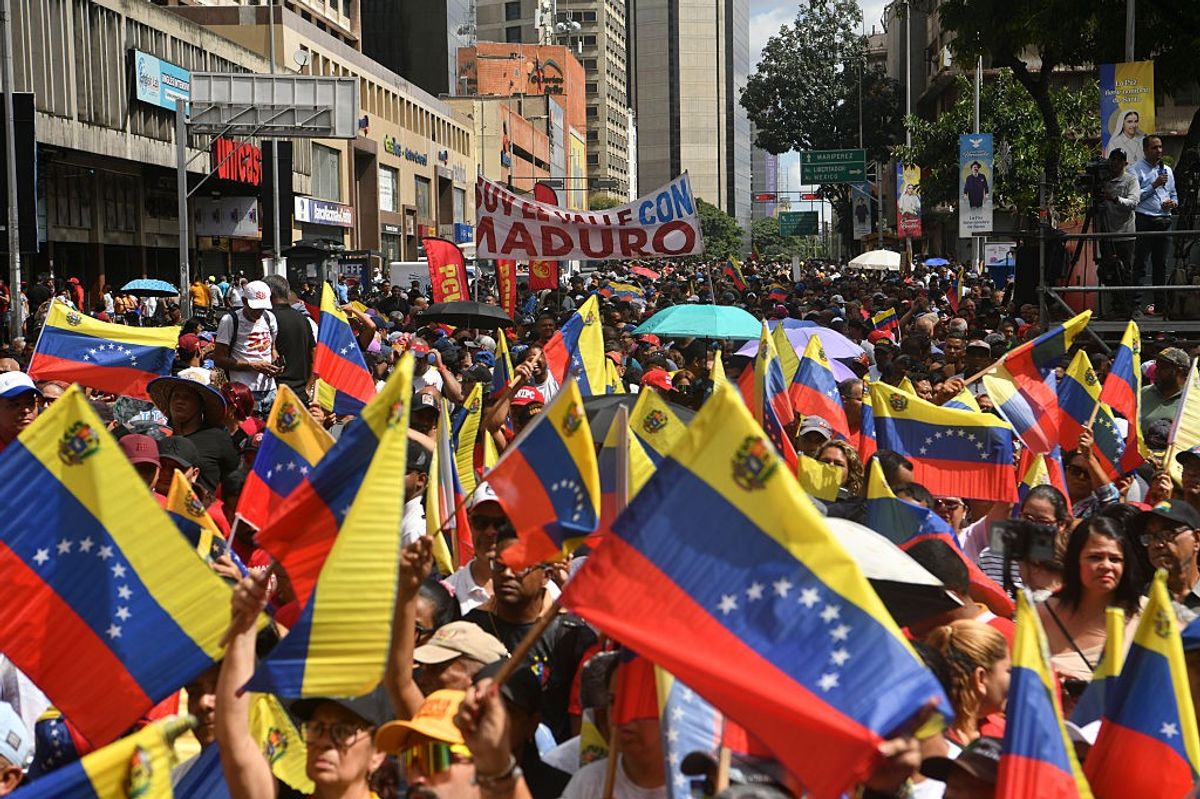
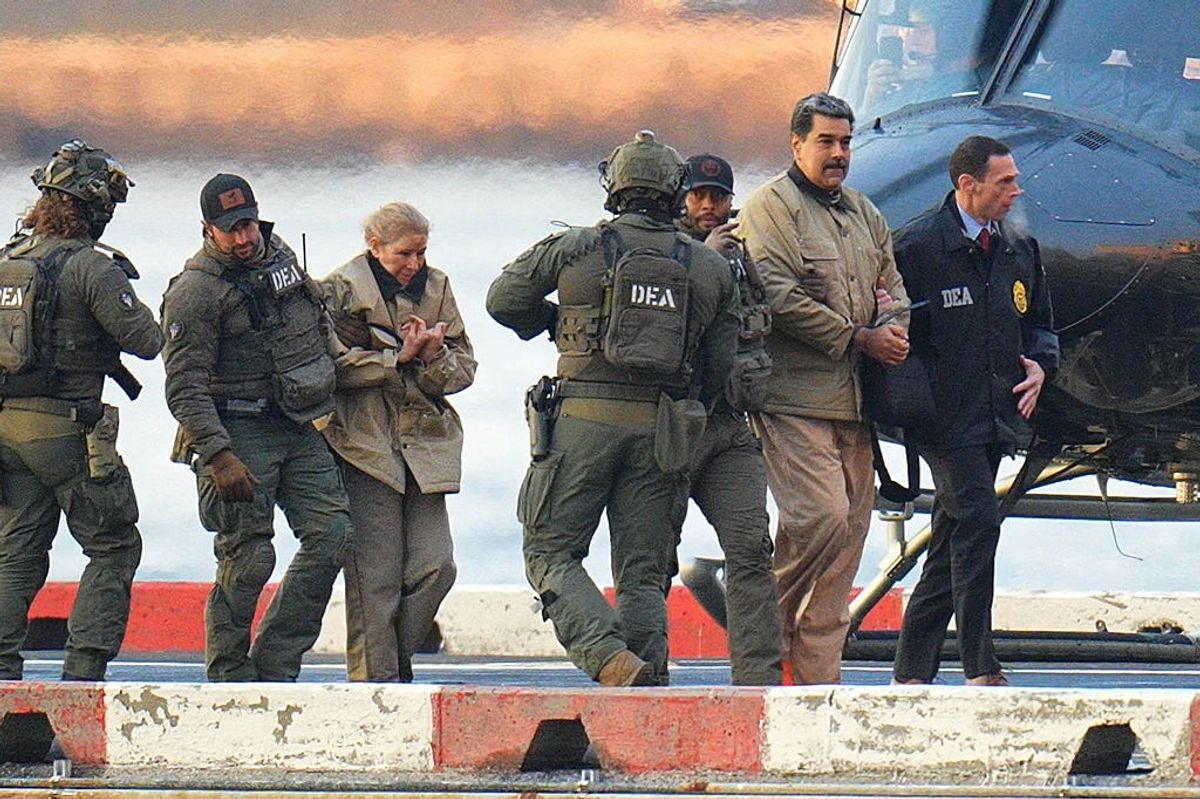
The second strike issue has also put a spotlight on President Trump’s threat policy toward Venezuela and its leader, Nicolas Maduro.
I describe it as a threat policy because Trump’s been unclear whether he just wants Maduro out, or plans for the U.S. to take over Venezuela and install a new government in Caracas.
Since August, a possible U.S. invasion force has been built up in the Caribbean, and over the past weeks Marine, Navy and Air Force elements have carried out well-publicized military exercises. Trump last week threatened to attack Venezuelan land-based drug facilities, and he disclosed on Sunday, that he had spoken to Maduro.
Press reports claim Trump offered free passage if Maduro left Venezuela, but indications are that the latter did not accept the offer. A Trump-led White House meeting on Venezuela was scheduled for 5 p.m. yesterday with the President’s top national security aides.
Let’s pause for a moment.
President Trump has not yet explained his strategy, or the specific purpose or plan, for the built-up U.S. Caribbean military forces. He has talked about stopping drugs from entering the U.S., often claiming – with no proof – that each narco-boat destroyed saves 25,000 American lives.
It’s no real war on drugs in the U.S. since it has no domestic element, and even the foreign side is flawed as illustrated by Trump’s surprise pardon offer last Friday to former-Honduran President Juan Orlando Hernández.
Based ironically on an investigation begun during Trump’s first administration, Hernandez was convicted and sentenced last year to 45 years in prison. Prosecutors described him as a “violent, multi-ton drug trafficker” who allegedly abused his political connections for personal and political gain and at least twice “helped arrange murders of drug trafficking rivals.”
Nominations for outstanding leaders in national security and intelligence are now open for the 2026 Cipher Brief Honors Dinner. Find out more here.
Meanwhile, up to now Congress has yet to hold a public hearing focused on the Caribbean buildup or the Venezuelan situation. However, this second-strike killing of the two September 2 survivors has brought new attention and concern to the legal questioning of the Trump administration’s killing of narco-traffickers.
Harvard Law School Professor Jack Goldsmith last Friday pointed out in his Executive Functions platform that the Defense Department’s own Law of War Manual says, “it is also prohibited to conduct hostilities on the basis that there shall be no survivors, or to threaten the adversary with the denial of quarter. This rule is based on both humanitarian and military considerations. This rule also applies during non-international armed conflict.”
Last Friday, Sens. Roger Wicker (R-Miss.) and Jack Reed (D-R.I.), chairman and ranking Democrat on the Senate Armed Services Committee, released a joint statement saying their committee “is aware of recent news reports and the Department of Defense’s initial response regarding follow-on strikes on suspected narcotics vessels in the SOUTHCOM area of responsibility.”
As a result, the two Senators said, “The Committee has directed inquiries to the Department and we will be conducting vigorous oversight to determine the facts related to these circumstances.”
Their notice comes on top of a letter sent November 24, to Attorney General Pam Bondi and Hegseth by Democratic Senators on the Armed Services Committee, seeking “expeditious declassification and public release of the Department of Justice Office of Legal Counsel’s [OLC] written opinion, dated September 5, 2025, concerning the domestic and international legal basis for recent military strikes of certain vessels near South America and the Caribbean, with appropriate redactions necessary to protect military personnel and sensitive intelligence matters.”
The 13 Senators pointed out, “Few decisions are more consequential for a democracy than the use of lethal force,” and noted as precedent that “after the United States carried out military strikes in Libya in 2011, and in Syria in 2018, the Department of Justice released the applicable OLC opinion justifying each operation.”
On Saturday, the House Armed Services Chairman and ranking Democrat. Reps. Mike Rogers (R-Ala.) and Adam Smith (D-Wash.), issued their own statement saying their committee is “committed to providing rigorous oversight of the Department of Defense’s military operations in the Caribbean,” and “we take seriously the reports of follow-on strikes on boats alleged to be ferrying narcotics in the SOUTHCOM region and are taking bipartisan action to gather a full accounting of the operation in question.”
With both Republican-chaired committees on record opening inquiries into the narco-boat attacks, and President Trump threatening new land attacks on Venezuela, it is not clear what happens next.
Are you Subscribed to The Cipher Brief’s Digital Channel on YouTube? There is no better place to get clear perspectives from deeply experienced national security experts.
What Trump has done is put out statements on Truth Social such as the one last Saturday, “To all Airlines, Pilots, Drug Dealers, and Human Traffickers.” They are to “please consider THE AIRSPACE ABOVE AND SURROUNDING VENEZUELA TO BE CLOSED IN ITS ENTIRETY.” Most international commercial flights had been cancelled more than 10 days ago after the November 21, U.S. Federal Aviation Administration warning of the risks of flying over Venezuelan airspace,
What is all this Trump messaging supposed to mean? And is this a way a serious U.S. President should be conducting foreign policy?
As I and others have pointed out, there has been unease indicated within the Defense Department since these unprovoked killings began. In mid-October, SOUTHCOM Commander Adm. Alvin Holsey announced his early retirement on December 12 – little more than a year after he assumed the position. Holsey has yet to disclose his reasoning, but the New York Times reported that he had raised internal concerns about the attacks on the boats.
In November, NBC reported that a senior SOUTHCOM Judge Advocate General in August, before the strikes began, had raised whether they would be legal, and that he was later sidelined.
We also have had President Trump’s social media outbursts beginning November 20, against Sen. Mark Kelly (D-Ariz.) and five other Members of Congress, each of whom had served in the military or CIA, for their video reminding military personnel that they “can refuse illegal orders.” Trump at various times called what they had done “Seditious Behavior” that was “punishable by death.”
Hegseth, last Tuesday in a memo to the Navy Secretary John Phelan, described Kelly’s participation in the video as “Potentially Unlawful Conduct,” and asked for it to be reviewed for “consideration and disposition as you deem appropriate.” As a retired Navy officer, Kelly could be ordered back on active duty and face a court martial trial. But Hegseth, having apparently left it up to Phelan and the Navy to carry out, made it highly unlikely that anything more than an inquiry will ever take place.
While all these activities are taking place today, I want to also record a bit of history surrounding Operation Southern Spear, which Secretary Hegseth announced November 13, “as a new, formal military and surveillance campaign,” with a goal “to remove ‘narco-terrorists’ from the Western Hemisphere and secure the U.S. homeland from illicit drugs.”
In fact, Operation Southern Spear had its roots in the Biden administration and was officially announced by the U.S. Navy 4th Fleet on January 28, 2025, as “a heterogeneous mix of Robotic and Autonomous Systems to support the detection and monitoring of illicit trafficking while learning lessons for other theaters.” In a press release, the 4th Fleet said the operation was an evolution of the Navy’s previous operation dubbed Windward Stack, begun in 2023. It added, the results of Operation Southern Spear “will help determine combinations of unmanned vehicles and manned forces needed to provide coordinated maritime domain awareness and conduct counternarcotics operations.”
In a July 2, 2025, announcement, the Navy said SOUTHCOM and 4th Fleet have launched Operation Southern Spear which “will involve un-crewed surface vessels that can stay at sea for extended periods, small robotic interceptor boats, and vertical take-off and landing un-crewed air systems. These will combine with manned forces to help provide coordinated maritime domain awareness and conduct counternarcotics operations.”
I doubt that the originators of Operation Southern Spear foresaw it as a human killing program.
The Cipher Brief is committed to publishing a range of perspectives on national security issues submitted by deeply experienced national security professionals.
Opinions expressed are those of the author and do not represent the views or opinions of The Cipher Brief.
Have a perspective to share based on your experience in the national security field? Send it to Editor@thecipherbrief.com for publication consideration.
Read more expert-driven national security insights, perspective and analysis in The Cipher Brief