



OPINION — The fate of territory in eastern Ukraine remains the “most difficult” sticking point in the ongoing peace talks, President Volodymyr Zelensky acknowledged over the weekend as U.S. negotiators held separate meetings with Ukrainian and Russian officials. In pursuit of peace, the Trump administration is pushing Ukraine to bend to maximalist Kremlin demands that Russia has failed to impose militarily, while promising Kyiv “platinum standard” security guarantees to sweeten the deal.
This approach is unlikely to succeed — and may prove harmful. The administration would be wise to focus instead on pressing Russia to soften its terms.
Putin Demands Victory He Hasn’t Earned
As one of his conditions for peace, Vladimir Putin insists that Ukrainian troops withdraw from the roughly 23 percent of the eastern Donetsk region they still control. He vows that if Kyiv refuses, his military will take that territory anyways. Putin seems convinced that Russia eventually can grind down Ukraine’s undermanned forces.
Some U.S. officials have echoed those arguments, apparently believing that pressuring Kyiv into concessions offers the surest path to peace. As President Donald Trump recently put it, Russia is “much bigger” than Ukraine, and “at some point, size will win.” Ukraine is “losing,” Trump contended, so it must “accept” Russian demands. An initial U.S. peace plan released in November, drafted with Russian input, called for Ukraine to cede the remainder of Donetsk, which would become a “demilitarized buffer zone,” which Washington is now pitching as a “free economic zone.”
In fact, it’s anything but certain that Russian forces can conquer the rest of Donetsk. They would need to seize a so-called “fortress belt” of cities and towns, just one of which — Pokrovsk — has taken Russia over a year to capture despite advantages in manpower and materiel. Despite improvements in drone warfare, Russia has remained unable to achieve a major breakthrough. That’s partly due to degraded force quality, which is unlikely to recover while large-scale hostilities continue. Russia can continue inching forward so long as it can recruit enough men to throw into the “meatgrinder.” Since 2023, Moscow has maintained a surprisingly strong recruitment rate thanks to ever-larger financial incentives. But that can’t last forever.
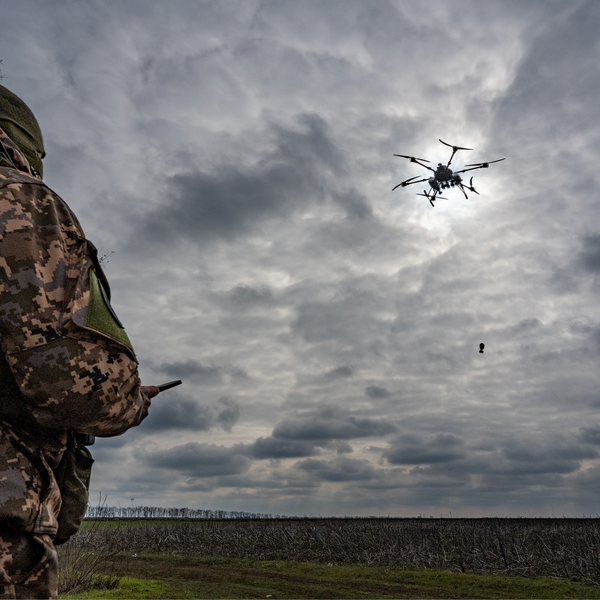
Although Ukrainian forces are weary and short on infantry, they are not on the verge of breaking. Ukraine continues to put up a stout defense, relying chiefly on Ukrainian-made drones to inflict disproportionate casualties. The decline in American aid has hurt. But even a complete cutoff probably wouldn’t trigger a collapse, though it would mean more Ukrainian lives lost and infrastructure destroyed.
In short, Putin is demanding that Ukraine accept defeat despite the inconvenient fact that Russia hasn’t defeated Ukraine on the battlefield and is unlikely to do so. As long as that remains the case, lopsided peace plans will be a dead end.
This is not a “Zelensky problem.” Recent polling indicates that the Ukrainian people still overwhelmingly reject ceding more territory, seen as synonymous with capitulation. Many in the Ukrainian military are understandably loathe to cede defensible terrain for which Ukrainians have bled for nearly four years. No Ukrainian leader will agree to a deal that would mean political suicide. Even if Zelensky did try to capitulate, it could ignite domestic political instability and undermine morale, which Russia would seek to exploit.
The Cipher Brief brings expert-level context to national and global security stories. It’s never been more important to understand what’s happening in the world. Upgrade your access to exclusive content by becoming a subscriber.
Beware Empty Promises
In part to convince Kyiv to swallow territorial concessions, the Trump administration has been surprisingly forward-leaning on security guarantees for Ukraine. Although Washington has made clear it won’t allow Ukraine to join NATO, U.S. officials touted an “Article 5-like” commitment during recent talks in Berlin. This has enthused Ukrainian and European officials, who are rightly concerned Russia will violate any peace agreement it signs.
The White House, though, should take care not to make empty promises. Ukraine must not be left with another 1994 Budapest Memorandum, which gave Kyiv hollow security assurances in exchange for relinquishing nuclear weapons inherited from the Soviet Union.
While the administration has released few details regarding the specific commitments it made in Berlin, press reports indicate elements of the plan are sensible. The Ukrainian Armed Forces would be permitted to maintain a peacetime strength of 800,000 troops and would receive Western training and equipment, defying Moscow’s demand for Ukrainian demilitarization. A U.S.-led international monitoring and verification mechanism would ensure compliance with a ceasefire, and a deconfliction mechanism would work to prevent escalation.
However, earlier media leaks, as well as a European statement released following the Berlin talks, suggest Washington may also be offering a non-committal promise to respond with measures up to and including “armed force” if Russia re-invaded Ukraine. The Trump team says it will grant Kyiv’s request to seek Senate approval to make this pledge legally binding. Even so, the threat of U.S. military intervention lacks credibility. Both Trump and his Democratic predecessors have eschewed direct conflict with Russia over Ukraine. That’s unlikely to change under a future president, especially since Washington is trying to focus on deterring China.
If the White House is betting its bluff won’t be called, it should think again. However the current war ends, it’s unlikely to resolve Russia’s decades-long struggle to dominate Ukraine and reshape the European security order. Moscow will be racing to reconstitute its army, drawing on lessons learned in Ukraine and expanded defense-industrial capacity. Another Russian invasion is a distinct possibility. And if America’s “Article 5-like” guarantee is revealed to be hollow, it could undermine the credibility of the actual Article 5, weakening NATO deterrence.
As another part of the security guarantee package, the Trump administration apparently has agreed to support a British- and French-led multinational force in Ukraine. After hostilities cease, countries from the so-called “Coalition of the Willing” would help police Ukraine’s skies, clear naval mines, and regenerate the Ukrainian army. This would include deployments of Europe troops to Ukraine (though far from the front lines) — an idea which Moscow vehemently opposes. Other than ruling out putting American boots on the ground, the administration hasn’t publicly specified how it would support this force (likely involving intelligence, surveillance, and reconnaissance and possibly other so-called “strategic enablers”). Nor has Washington publicly agreed to provide an air-power “backstop” if that force were attacked. If a ceasefire looks shaky and no U.S. backstop is committed, European countries will be more reluctant to put troops in Ukraine.
Another problem is that tying the force’s deployment to a ceasefire incentivizes Russia to prolong the war. Putin invaded Ukraine precisely to reverse its Westward drift, and Moscow insists that any peace settlement must bar Western troops from the country — a demand that earlier drafts of the U.S. peace plan sought to satisfy. As British scholar Jack Watling has argued, Europe could obviate the Russian veto commencing with air policing and training in western Ukraine now, before the war ends. Yet European capitals remain unwilling to do so, wary of escalation with Russia. That same fear undermines the force’s deterrent value in the first place.
Subscriber+Members get exclusive access to expert-driven briefings on the top national security issues we face today. Gain access to save your virtual seat now.
Path to Peace
Rather than gunning for a quick but lopsided deal, Washington should patiently focus on shifting the Kremlin’s calculus. Moscow has made clear that its ambitions go well beyond Donetsk. In essence, Putin seeks a settlement that locks Ukraine within Russia’s sphere of influence. Given the maximalist nature of Putin’s demands, peace will remain impossible unless Moscow reduces its expectations considerably. Ukraine will also have to make concessions, including on its NATO aspirations. But Russia is the primary obstacle.
Perversely, pressuring Ukraine to cede more territory could put a deal farther from reach. By attempting to strong-arm Kyiv, echoing Kremlin arguments about the inevitability of Russian advances, and reducing military aid for Ukraine, Washington risks hardening Putin’s intransigence.
The consequences could also extend beyond Ukraine. Since the Second World War, the United States has led the free world in opposing the acquisition of territory by military means. Discarding that now could shake allied trust in America while emboldening adversaries such as China. President Trump is right to push for peace in Ukraine, but the medicine must not be worse than the disease.
So long as Putin is overconfident in his military prospects and feels no sense of urgency to end the war, he is unlikely to make the necessary compromises. The Russian autocrat must be made to realize that more war will bring nothing but pain. The European Union just took an important step by pledging 90 billion euros to shore up Kyiv’s state budget through 2027. The United States should do its part, too. Washington could bolster Ukraine’s bargaining position by surging military assistance, much of which could be financed by Europe. This effort should include support for Kyiv’s air defense and long-range strike capabilities, helping Ukraine endure the winter and impose greater costs on Russia.
In addition, Washington should stringently enforce and build on its recent sanctions targeting Russia’s top oil companies. The Treasury Department should target unsanctioned Russian oil suppliers as well as other entities, vessels, and infrastructure that help bring that oil to market. Western countries could further ramp up the pressure by replacing the Biden-era price cap on Russian oil flows with a full ban on providing shipping or financial services for those exports.
Lastly, Kyiv’s Western partners should encourage the Ukrainian military to fight smarter. Ukraine must stop wasting precious manpower clinging to semi-encircled towns or counterattacking to reclaim insignificant positions. This penchant stems in part from concerns that admitting to battlefield setbacks would discourage U.S. support and fuel calls for territorial concessions.
The Ukrainians aren’t going to give Russia more than it can take by force of arms. Rather than trying to do Putin’s dirty work for him, Washington should put its energies into convincing Moscow to accept realistic terms.
The Cipher Brief is committed to publishing a range of perspectives on national security issues submitted by deeply experienced national security professionals.
Opinions expressed are those of the author and do not represent the views or opinions of The Cipher Brief.
Have a perspective to share based on your experience in the national security field? Send it to Editor@thecipherbrief.com for publication consideration.
Read more expert-driven national security insights, perspective and analysis in The Cipher Brief, because national security is everyone’s business.