

Russian President Vladimir Putin has repeatedly threatened that Russia might use nuclear weapons if its sovereignty or territory is threatened, as it enters the fourth year in its war of aggression in Ukraine. The Russian Federation has revised its nuclear doctrine and lowered the threshold for the use of nuclear weapons. And given the lethality of nuclear weapons, the use of nuclear weapons in any large-scale exchanges would kill tens or hundreds of millions of people.
The 1963 Cuban missile crisis brought us close to a nuclear war with the Soviet Union. It was the basis for President John F. Kennedy’s concern that more countries with nuclear weapons would create an unstable world with nuclear war more likely. President Kennedy feared that by 1970 there may be 10 nuclear powers instead of the four – the U.S. Soviet Union, United Kingdom and France – and by 1975 there could be as many as 10 or 20 nuclear weapons states. It would be “the greatest possible danger and hazard to contemplate – a nuclear arms race on a multipolar basis.” President Kennedy’s concerns are the concerns we have today, with the prospect of a nuclear arms race in the Middle East and in East Asia.
The Cuban missile crisis contributed to several arms control efforts, like the Limited Test Ban Treaty (1963) banning atmospheric and underwater tests and the creation of the 1968 Nuclear Non-Proliferation Treaty (NPT). Indeed, the NPT established a global framework for the 190-member counties to stop non-nuclear states from getting nuclear weapons.
There are now nine nuclear weapons states and concern that more countries will seek the resources necessary to produce their own nuclear weapons or to buy them.
In East Asia, North Korea has increased its stockpile of nuclear weapons and the ballistic missiles to deliver these weapons of mass destruction. The Korea Institute for Defense Analysis recently publicly stated that North Korea has between 127 and 150 nuclear weapons and by 2030 they will have 200 nuclear weapons. And given the likely assistance North Korea is receiving from Russia with its nuclear and missile programs, it’s possible that South Korea and Japan, threatened by a belligerent North Korea, will conclude that they need their own nuclear deterrent programs, rather than relying on U.S. extended nuclear deterrence commitments. Indeed, a recent poll in South Korea had over 70% of the people saying they needed their own nuclear weapons program, rather than relying on the U.S. nuclear umbrella.
The Cipher Brief brings expert-level context to national and global security stories. It’s never been more important to understand what’s happening in the world. Upgrade your access to exclusive content by becoming a subscriber.
South Korea and Japan are watching what happens to Ukraine, a sovereign country invaded by a Russia that disregarded its security guarantees to Ukraine, with the 1994 Budapest Memorandum also signed by the U.S. and the United Kingdom. Ukraine gave up its nuclear weapons for security assurances that Russia ignored. Will the U.S. and NATO be there for Ukraine this time, or should Ukraine pursue its own nuclear deterrent?
The U.S. bombing of Iranian nuclear sites Fordow, Isfahan and Natanz in June 2025 was in response to Iran’s continued enrichment of uranium at 60% or higher and Iran’s unwillingness to permit International Atomic Energy Agency monitors to inspect nondeclared suspect enrichment sites. Thus since 2003, when Iran said they ceased their nuclear weapons program, Iran has been a threshold nuclear weapons state, months away from being able to produce nuclear weapons if the U.S. and the European Union didn’t comply with Iran’s demands.
Given this reality, and if Iran produces or acquires nuclear weapons, Saudi Arabia, Turkey and Egypt would rush to create their own nuclear weapons programs. The June 2025 U.S. bombing of these nuclear sites in Iran was an effort to ensure that Iran did not go nuclear, with the likelihood that these countries would also establish their own nuclear deterrent programs.
President Kennedy’s expressed concerns about a nuclear arms race during the Cuban missile crisis in 1962 was prophetic. Sixty-three later, there is real concern by a few non-nuclear-weapon states that they would need their own nuclear weapons to address the nuclear threat from North Korea and Iran, and the rhetoric from Mr. Putin and Dmitry Medvedev, Deputy Chairman of Russia’s Security Council, who warned that Russia is prepared to use nuclear weapons if it faces defeat in Ukraine.
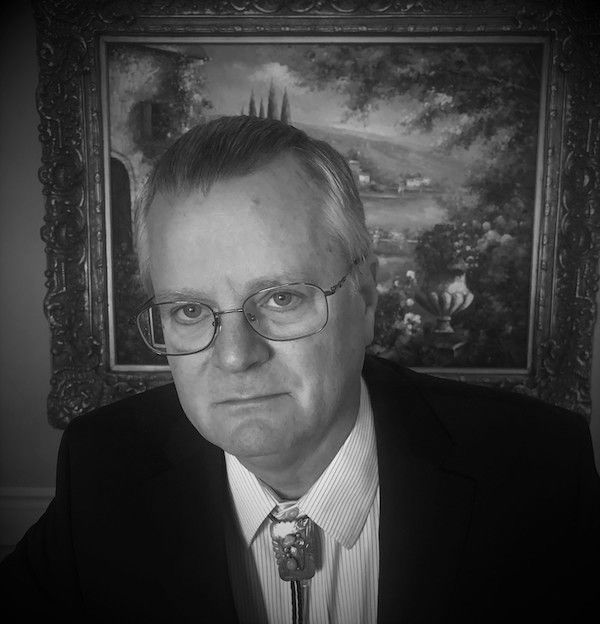
This column by Cipher Brief Expert Ambassador Joseph DeTrani was first published in The Washington Times
Read more expert-driven national security insights, perspective and analysis in The Cipher Brief because National Security is Everyone’s Business.