

“There's no doubt that America's adversaries are trafficking fentanyl into the United States in part because they want to kill Americans. If this were a war, that would be one of the worst wars. I believe they killed over the last five or six years, per year, 200-to-300,000 people. You hear about a 100,000, which is a lot of people, but the number is much higher than that. That's been proven.”
That was President Trump in the Oval Office on December 15, explaining why he was signing an Executive Order (EO) designating “illicit fentanyl and its core precursor chemicals as Weapons of Mass Destruction (WMD).”
Notice Trump’s use of the word “war,” and the vast exaggeration of numbers of fentanyl drug deaths in the U.S. -- actually 48,000 in 2024. Also, does anyone really think that the cartels are pushing fentanyl into this country “to kill Americans?” Or is the real reason they are doing it is to make money – as is the case with most drug dealers.
I am focusing on this rather odd EO because to me it is another sign that President Trump is bringing the U.S. military into yet another essentially domestic American problem, drug use. I also see it as the Trump administration regularizing employment of the U.S. military to be a normal response to control civil issues.
Remember, President Trump has employed some 9,000 active and National Guard service members on the U.S. southern border to block what he termed an invasion of illegal immigrants. He has also federalized National Guard troops in U.S. cities like Washington, D.C. claiming they were needed to combat crime, and required hundreds of Marines and originally 4,000 California National Guard personnel in Los Angeles to put down protests against immigration raids.
There was even a military atmosphere in the Oval Office on December 15, because the President used that same meeting to make the first awards of a Mexican Border Defense Medal to 13 Army and Marine service members who provided military support to the Department of Homeland Security and U.S. Customs and Border Protection.
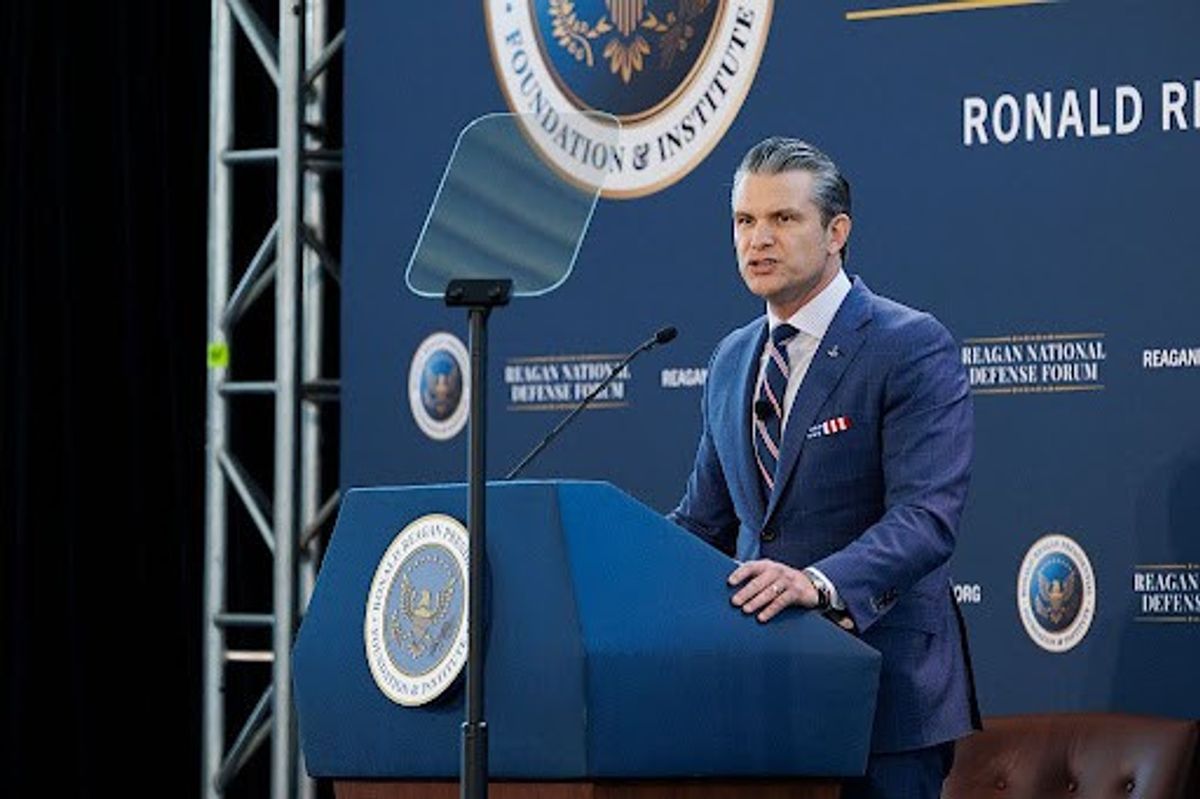
In the Oval Office meeting, Defense Secretary Pete Hegseth explained that the newly-issued medal exactly replicated the 1918 Mexican Border Defense Medal, but that one went to U.S. troops who patrolled the border during 1916-1917, when fear was of a German-inspired invasion by the paramilitary forces of Francisco "Pancho" Villa as part of the Mexican Revolution.
The Cipher Brief brings expert-level context to national and global security stories. It’s never been more important to understand what’s happening in the world. Upgrade your access to exclusive content by becoming a subscriber.
While President Trump said that “to kill Americans” was a purpose of trafficking fentanyl, the EO itself said there was a more complex goal. The EO said, “The production and sale of fentanyl by Foreign Terrorist Organizations and cartels fund these entities’ operations — which include assassinations, terrorist acts, and insurgencies around the world — and allow these entities to erode our domestic security and the well-being of our Nation.”
Here, this EO seeks to link up with one of President Trump’s first EOs, signed on January 20, that designated unspecified cartels as Foreign Terrorists Organizations to make them subject to laws Congress passed in the wake of the September 11, 2001, attacks.
The new December 15 EO goes on to say, “The two cartels that are predominantly responsible for the distribution of fentanyl in the United States engage in armed conflict over territory and to protect their operations, resulting in large-scale violence and death that go beyond the immediate threat of fentanyl itself.”
Inexplicably, the EO does not name those two cartels.
However, the Drug Enforcement Agency (DEA) in its 2025 National Drug Threat Assessment makes it clear who they are by saying, “The Sinaloa and Jalisco New Generation Cartels, in particular, control clandestine [fentanyl] production sites in Mexico, smuggling routes into the United States, and distribution hubs in key U.S. cities.”
Then both the new EO and 2025 National Drug Threat Assessment carry the exact same following sentence: “Further, the potential for fentanyl to be weaponized for concentrated, large-scale terror attacks by organized adversaries is a serious threat to the United States.”
It turns out that back in the 1990s, a number of countries investigated using fentanyl as part of an incapacitating agent, including the U.S. Defense Department. The U.S. dropped the idea because of a margin of safety issue – the difference between a dosage that would incapacitate and one that would kill a person.
However the Russians did create a fentanyl-based incapacitating agent and used it in October 2002, when 40 Chechen terrorists seized Moscow’s Dubrovka Theater and held some 800 people hostage. Russians finally released the fentanyl-based gas to incapacitate those in the theater and it killed some 130 of them.
Fentanyl is an FDA-approved synthetic opioid used medically as a pain reliever and anesthetic. It is close to 100 times stronger than morphine. Two milligrams of fentanyl -- equivalent to 10-to-15 grains of table salt – can be lethal. Unlike other illegal drugs such as cocaine, wholesale traffickers distribute fentanyl by the kilogram, equal to 2.2 pounds.
The DEA has found wide U.S. usage of illicit, manufactured, counterfeit fentanyl pills ranging from .02 to 5.1 milligrams, the latter more than twice the lethal dose depending on a person’s body size, tolerance and past usage.
Fentanyl illegal drug use has been a major problem in the U.S. since 2021 when overdose deaths reached 71,000. But as shown above overdose fentanyl deaths are on the way down. President Trump even recognized fentanyl use had gone down saying in the Oval Office on December 15, “We've also achieved a 50% drop in the amount of fentanyl coming across the border and China is working with us very closely and bringing down the number and the amount of fentanyl that's being shipped…We've got it down to a much lower number.” But Trump added, “Not satisfactory, but it will be satisfactory soon.”
Subscriber+Members get exclusive access to expert-driven briefings on the top national security issues we face today. Gain access to save your virtual seat now.
The term “weapon of mass destruction” has specific legal definitions, typically tied to nuclear, radiological, chemical, or biological weapons that are designed to cause large-scale death or bodily harm.
Under the Trump WMD EO, implementation calls for Defense Secretary Hegseth and Attorney General Pam Bondi to determine if the U.S. military is needed to enforce 10 U.S.C. 282, a post-9/11, 2002 counterterrorism law covering emergency situations involving weapons of mass destruction.
If they agree the military is needed, under 10 U.S.C. 282 Hegseth and Bondi are to “jointly prescribe regulations concerning the types of assistance that may be provided,” and “describe the actions that Department of Defense personnel may take in circumstances incident to the provision of assistance.”
There are provisions in 10 U.S.C. 282 prohibiting the military from authority to arrest individuals, directly participate in searches or seizures of evidence related law violations or collection of intelligence for law enforcement – but those provisions also can also be waived.
In addition, under the Trump EO, Hegseth is to consult with Secretary of Homeland Security Kristi Noem to “update all directives regarding the Armed Forces’ response to chemical incidents in the homeland to include the threat of illicit fentanyl.”
I go into all these details because I believe something other than fentanyl is involved here. Others are questioning the December 15 EO, such as Andrew McCarthy in National Review on December 20.
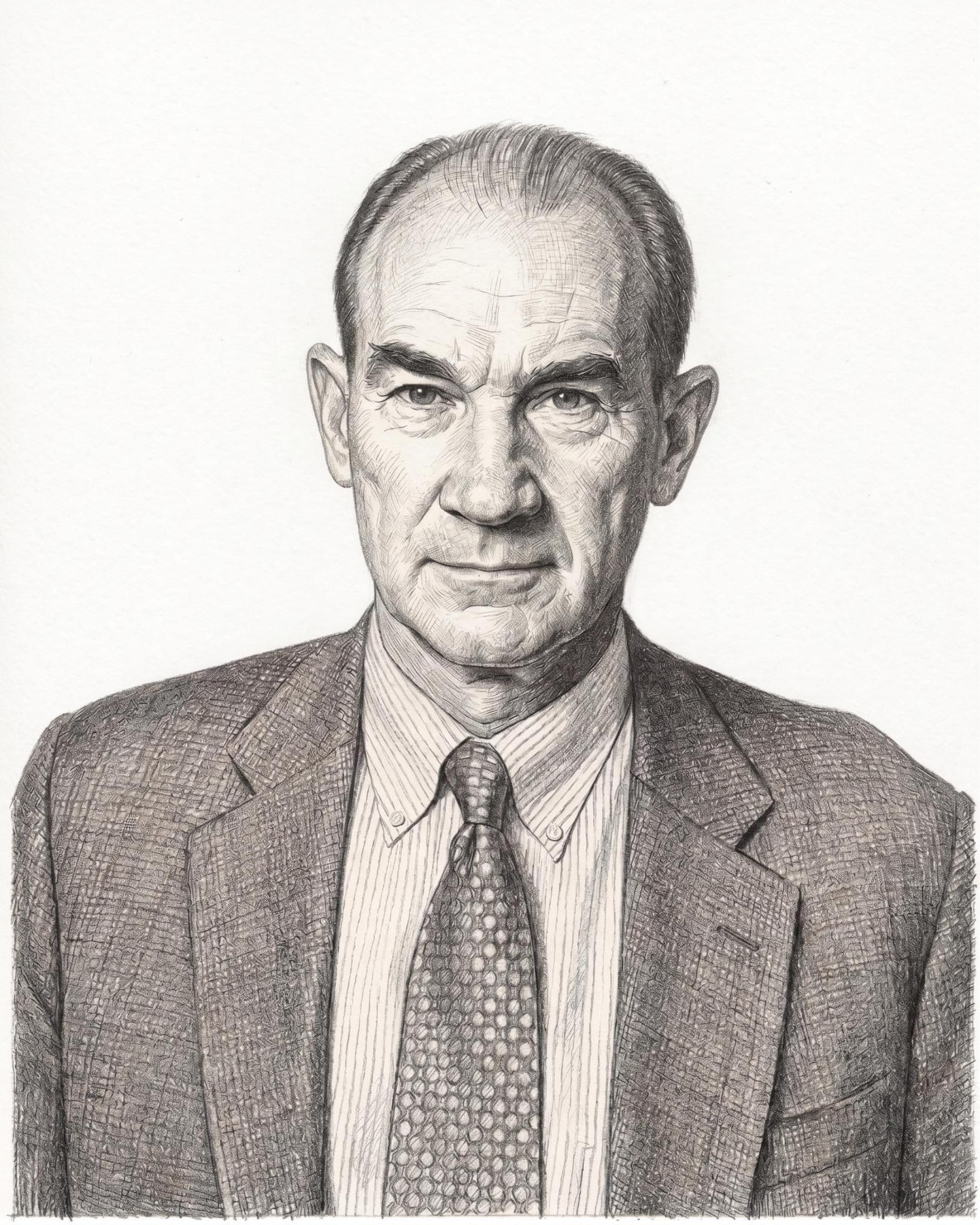
McCarthy wrote, “President Trump may despise ‘forever wars,’ but he sure seems to like pretend wars. The point of the fentanyl ‘designation’ is to shore up his case for using military force against drug traffickers — although its relevance to high seas around Venezuela is hard to fathom since fentanyl is neither produced nor imported from there. At any rate, fentanyl, a dangerous drug but one with legitimate medical uses, is a narcotic, not a weapon of mass destruction akin to a chemical or biological bomb.”
Yesterday, Military.com pointed out, “The [December 15] Executive Order does not spell out a specific military mission, and Pentagon officials have not yet stated whether the armed forces will take on a direct role under the new designation.”
Nonetheless, the EO creates yet another new, domestic area for military operations within the homeland, and what emerges needs to be watched.
The Cipher Brief is committed to publishing a range of perspectives on national security issues submitted by deeply experienced national security professionals.
Opinions expressed are those of the author and do not represent the views or opinions of The Cipher Brief.
Have a perspective to share based on your experience in the national security field? Send it to Editor@thecipherbrief.com for publication consideration.
Read more expert-driven national security insights, perspective and analysis in The Cipher Brief, because national security is everyone’s business.