
In 2017, Marco Rubio, then Florida’s junior senator, was assigned a Capitol Police security detail because the U.S. received unverified but alarming intelligence that Venezuelan strongman Nicolás Maduro’s feared chief enforcer was sending a hit man to assassinate him.
Today, in an epic irony, Rubio, now Secretary of State, and his boss, President Donald Trump, have turned to that same enforcer – Diosdado Cabello, whose official title is Minister of Interior, Justice, and Peace – to calm the nation in the wake of the U.S. Special Forces raid that ripped Maduro out of his bed on Jan. 3 and deposited him in a Brooklyn lockup on federal narcoterrorism charges. The administration’s aim, Rubio told Congress, is a “friendly, stable, prosperous Venezuela…objective number one was stability.” U.S. oil majors and other potential investors have told Trump and his team that they won’t return to get Venezuela's vast but neglected oil fields pumping again until the country is rid of troublemakers, from homegrown street crooks to hardline Cuban Marxists to malign players from distant shores.
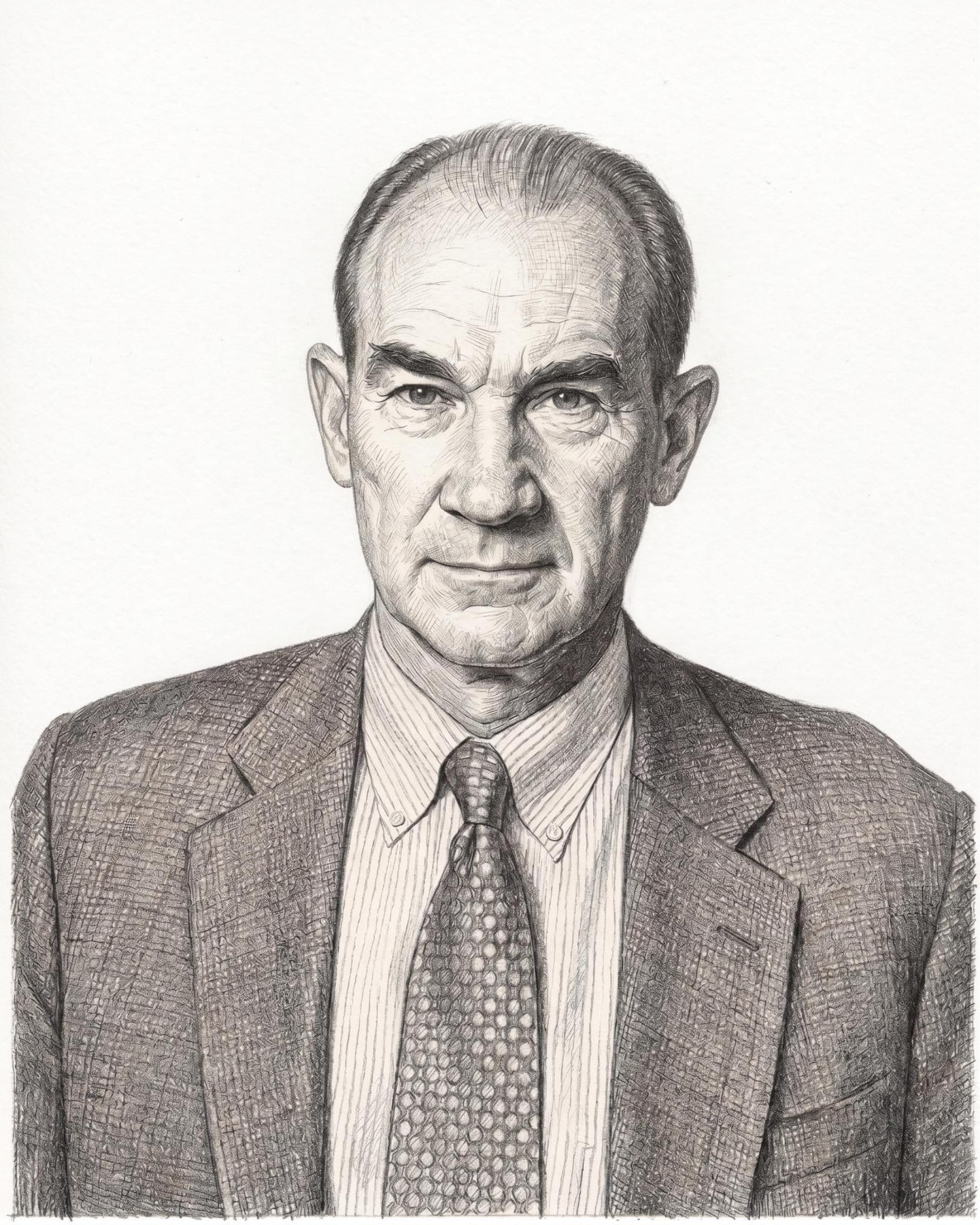
“The restoration of Venezuela will not be complete without the expulsion of the Cubans, the Iranians, and by extension, Hezbollah, the Iranian’s proxy in Venezuela, as well as really curtailing the activities of the Chinese and the Russians in Venezuela,” David Shedd, formerly acting director of the Defense Intelligence Agency, told The Cipher Brief. To clear out all those dangerous characters, Shedd, a Cipher Brief expert, said that for now, the Trump team has no choice but to collaborate with Cabello and other unsavory remnants of the Maduro regime. “The levers of power still rest with people like [acting president] Delcy Rodriguez, her brother Jorge Rodriguez, who's the head of the National Assembly, along with Diosdado Cabello at the head of the intelligence services and Vladimir Padrino, head of the military,” he said. “All very corrupt individuals, all individuals that need to go eventually. However, they have the levers of power. It's within their power to do these expulsions.”
Critics will call it a deal with the devil. But so far, it’s working. Interim president Delcy Rodriguez, once a hardcore leftist idealogue, has turned out to be a survivor with a pragmatic side. Last month, she ordered Cuban security advisers and doctors out of Venezuela, according to Reuters. Last Wednesday (Mar. 18) she sacked Defense Minister Gen. Vladimir Padrino Lopez who had held that post for more than 11 years. Named for Russian revolutionary Vladimir Lenin and educated in part at Fort Benning’s School of the Americas, Padrino was indicted for narcotics trafficking in federal court in Washington, D.C. in 2019 for allegedly facilitating Colombian cocaine traffickers who were using Venezuela as a trampoline to the U.S. and Europe. The State Department is offering a $15 million reward for his arrest. If extradited to the U.S, he could make a plea deal with federal prosecutors to testify against Maduro.
Another potential witness, Colombian-Venezuelan billionaire Alex Saab, Maduro’s chief money mover, fixer and point man for dealing with Iran and Russia, may turn up in the U.S. in handcuffs soon. As Maduro’s alleged bagman, he is believed to have detailed knowledge of how the strongman looted his country’s treasury. Saab was indicted in Miami in 2019 in a DEA bribery/money laundering case that involved, among other schemes, allegedly moving $350 million in Venezuelan government funds meant for the poor to his offshore accounts. In 2020, he was detained in Cape Verde on a DEA red notice as his private plane was refueling on his way to Tehran. The following year, he was extradited to the U.S. to face charges. He denied wrongdoing. In 2023, President Joe Biden pardoned him as part of a prisoner exchange with the Maduro government. He was sent back to Caracas, where Maduro appointed him Minister of industry and National Production. Last month, according to the Miami Herald and New York Times, he was reportedly detained by Cabello’s agents working with the FBI. Negotiations are under way for his extradition to the U.S., based on a new, still-sealed indictment.
Trump rarely misses a chance to boast about the changes he has wrought in Caracas – and how they serve as his model for pressuring other nations to bend to U.S. demands. Yesterday (March 24), speaking with reporters about his efforts to change the regime in Tehran to one friendlier to U.S. interests, he gushed, “Look at Venezuela, how well that's working out! We are doing so well in Venezuela with oil and with the relationship between the president-elect [Rodriguez] and us. Maybe we find somebody like that in Iran.”
Yet Cabello, a swaggering onetime military officer who poses for photos brandishing a cartoonish spiked cudgel and patrols the streets with scowling thugs, remains in power. Back in 2017, Cabello adamantly denied a Miami Herald and CBS News report that he had initiated a “potentially grave” threat against Rubio, but the pair carried on a heated verbal duel in the news pages and social medium with Cabello calling Rubio a “fool” and “Narco Rubio,” and Rubio labeling Maduro an “unhinged dictator” and Cabello “the Pablo Escobar of Venezuela,”
Actually, Cabello is so much more. Escobar never attained public office in Colombia. Cabello has loomed large in Venezuelan power circles since as a young Army lieutenant, he joined leftist strongman Hugo Chavez in an attempted coup in 1992. When Chavez was elected to the presidency in 1998, Cabello climbed rapidly. As interior minister since 2024, Cabello has been nicknamed Diostodo, God Almighty, because he commands the police, the dreaded internal security agency SEBIN, (for Servicio Bolivariano de Inteligencia Nacional) and the colectivos, civilian militias that prowl neighborhoods, enforce regime dictates and crush dissent. He was indicted in New York in 2020 and again this year for narcoterrorism conspiracy. He has a $25 million State Department bounty on his head, second only to the $50 million bounty offered for Maduro. Since his indictment, instead of going to ground as Escobar did, Cabello has made himself a constant media presence in Caracas, using Instagram accounts and his state-run TV show, “Bringing Down the Hammer,” to promote his brand of brutality.
Cabello has repeatedly denied involvement in the international drug trade. A former Venezuelan official who tells another story is disgraced former Venezuelan general Hugo Armando Carvajal Barrios, once head of his country’s military intelligence arm, who has been indicted at least four times in the U.S. for narcotics trafficking conspiracy, starting in 2011, Carvajal was extradited from Spain in 2023, pleaded guilty last June and is now incarcerated in the U.S. while awaiting sentencing. According to documents filed in federal court, after making a plea deal, Carvajal told federal prosecutors that he was in a pivotal high-level meeting in 2008 when Venezuelan leader Hugo Chavez personally ordered Cabello to lead a project working with Colombia’s leftist FARC guerillas to “flood” the U.S. with cocaine. At the time, the guerillas were manufacturing tons of cocaine in the Colombian jungle, near the border with Venezuela and wanted to partner with the Venezuelan military, which controlled the country’s air and seaports, to move the lucrative product to market in the States and Europe. After Chavez died of cancer in 2013 and Maduro succeeded him, Carvajal claimed, according to the documents, Cabello continued to oversee FARC cocaine shipments and to provide arms to FARC.
These charges have yet to be tested in U.S. courts. Everything Carvajal says will be challenged, because he has admitted his own corrupt involvement with the FARC’s cocaine-production arm, dating back to 1999 and the early days of Chavez’ rule. Still, as head of his country’s Directorate of Military Intelligence, DIM, from 2004 to 2014, he has been in a position to know a lot about Chavez, Maduro, Cabello and other senior figures in the leftist regime. Last December, Carvajal sent a letter from federal prison charging extensive Venezuelan government involvement, not only in narcotics trafficking and organized crime but also in intelligence operations against the U.S. According to the Miami Herald, he claimed that Russian and Cuban intelligence services were using Venezuela as a forward staging base to run joint operations against the U.S. and that Venezuelan and Cuban intelligence agencies had placed spies inside the U.S. “for decades.” Allegations that Russian and Cuban spies have infiltrated the U.S. are hardly new, and it’s far from clear whether Carvajal’s charges are specific and can be corroborated. Still, given his access to regime secrets, Carvajal’s account, coupled with those of other former Venezuelan officials who want to make deals with the U.S., underscores the risky nature of the Trump administration’s decision to leave Chavez-Maduro loyalists in power, even temporarily.
None of the regime holdovers are more hazardous to Trump’s plans than Cabello, who remains uniquely positioned to make or break Trump’s vision to restore Venezuela as a welcoming place for American business, especially Big Oil, as a Feb. 12 State Department policy statement, entitled “Actions to Implement President Trump’s Vision for Venezuelan Oil,” makes plain. It declares that as in the post-Maduro era, “U.S. firms will play a critical role in repairing and upgrading Venezuela’s oil and gas infrastructure for the benefit of the Venezuelan people…With renewed cooperation and sound economic stewardship, Venezuela can reemerge as a stable, prosperous partner whose citizens benefit from its vast natural wealth and strengthened ties with the United States.”
Cabello and the colectivos he controls could interfere with that vision. According to Reuters, before the Special Forces operation to seize Maduro, the Trump team delivered a blunt message to Cabello that if he ordered his goon squads to attack opposition activists or unleash chaos, he would suffer the same fate as Maduro and wind up in a grim cell in Brooklyn. Cabello wavered briefly, according to the Miami Herald, sending voicemail messages to military officers and regime loyalists that urged, ”Let’s go to the streets, as much as we can, in the states, mobilize our people.” Then he reversed course and fell in line with the U.S. demand, posting a torrent of social media messages showing happy citizens and proclaiming that his country was stable and safe. His Valentine’s Day post boasted, There isn’t a single place in the Americas that has better security numbers than Venezuela.” By numbers, he meant the street crime rate.
But street crime was never the issue for U.S. national security experts and federal investigators, who have been far more worried about less visible threats posed by transnational organized crime, foreign terrorism, espionage and, potentially, hybrid warfare, using Venezuela as a base from which to attack U.S. physical and cyber infrastructure and other interests vital to American and regional security.
“Venezuela has essentially been run as a narco-state, or as a vast organized crime network, for the past 20 years,” Sandalio Gonzalez, who initiated the DEA’s criminal case against Maduro and his top lieutenants, told The Cipher Brief. As a DEA agent in Caracas from 2006 to 2010 and later a senior agent in the elite DEA Special Operations Division, Gonzalez and his partners started out investigating the Chavez regime’s connections with Colombia’s FARC guerillas. They thought they were pursuing a straightforward drug corruption case, but, says Gonzalez, “During the course of the next several years, we became deeply concerned that an important country like Venezuela had become allied with our adversaries. Venezuela ought to be America’s partner and ally in stabilizing and unifying our hemisphere, not advancing the anti-American and anti-democratic interests of our adversaries.”
Others in the DEA were equally alarmed. “Venezuela is sitting on the biggest oil reserves in the world, but it had become a haven for countries and movements that were against U.S. interests, such as the Russians, Chinese, and Hezbollah,” Paul Craine, DEA’s regional director for Mexico and Central America from 2013 to 2017, told The Cipher Brief. “Different terrorist elements had safe haven in Venezuela. And obviously, the Maduro regime was in direct collusion with Russia and supporting Cuba. The Venezuelan secret police are very closely aligned with the Cuban secret police.”
Once the Trump White House and Pentagon started making plans to remove Maduro, Craine, like other experts on the Latin American criminal and terrorist underground became concerned that he would be replaced by other corrupt, duplicitous figures from the Venezuelan power elite.
“You can't leave these major criminals who have blood on their hands and who have been agents of suppression to continue to be there, or be part of the government,” Craine said.
Unraveling the Caracas-Havana connection will take a while. “I recognize that it won’t be easy,” Rubio told the Senate Foreign Relations Committee in January. “I mean, look, at the end of the day we are dealing with people over there that have spent most of their lives living in a gangster paradise, so it’s not going to be like from one day to the next we’re going to have this thing turn around overnight. But I think we’re making good and decent progress.”
For the U.S. national security community, the Caracas-Beijing connection is more subtle and even more important over the long run. On January 2, the day before Delta Force launched into Caracas to take custody of Maduro, a Chinese delegation led by Qiu Xiaoqi, the Chinese government’s special representative for Latin American affairs, was at the Miraflores Presidential Palace, meeting with Maduro. China was getting deeply discounted oil from Venezuela, was Venezuela’s second-largest trading partner after the U.S. and was selling Venezuela billions of dollars’ worth of military equipment, according to a January 2026 report by the U.S.-China Economic and Security Review Commission.
“China is a big loser in the Maduro rendition,” said Shedd, whose new book, The Great Heist, examines China’s theft of U.S. technology and intellectual property. “China has invested nearly $5 billion over the past two-plus decades in Venezuela, primarily focusing on energy projects which under Phase 2 of the transition in Venezuela will go to U.S. oil companies with first rights of refusal. How can China not lose?”
During the Chavez and Maduro regimes, Shedd said, “China has increasingly been involved in weapons sales, back-door-enabled Huawei and ZTE telecommunications networks, and dual-use tech related sales” to Venezuela. “In addition, the PRC has had an interest in – if not an actual hand in – enabling some intelligence/security capabilities in Venezuela that help Venezuela’s security apparatus, SEBIN, spy on and disrupt the political opposition. Anything that curtails Chinese influence, which is by its nature antithetical to U.S. interests, is a good outcome.”
Rubio has insisted it would be physically impossible for the U.S. military to remove all of the allies of China, Iran, Cuba and other malign influences in one or two raids. “Land within three minutes, kick down [Maduro’s] door, grab him, put him in handcuffs, read him his rights, put him in a helicopter and leave the country without losing any American or any American assets – that’s not an easy mission,” Rubio said on Face the Nation last January. “And you’re asking me why didn’t we do that in five other places at the same time? I mean, that’s absurd.”
Since that time, Washington has not demanded that Rodríguez hand over Cabello, Padrino López and other current and former senior officials indicted in the U.S. and instead has pressed Rodriguez for a more gradual transition, removing potential troublemakers from power one by one. According to the Miami Herald. Cabello has tried to stave off his own exit from power by leveraging his influence as a security insider and by asking for a guarantee that the popular opposition leader María Corina Machado won’t return to Venezuela. His eventual fate is a subject of intense speculation, but facts are scarce.
So far, the Trump administration appears to be running a charm offensive. Trump regularly praises Rodriguez and says he wants to visit Caracas at some future date. Meanwhile, the administration has dispatched a steady stream of senior American officials to get to know Rodriguez and other Venezuelan holdovers still in power, impress them with Washington’s seriousness of purpose and, as the fictional Michael Corleone counseled, keep them very close.
For instance, last month (Feb. 18) Marine Gen. Frank Donovan, a former special operations leader, now commander of the U.S. Southern Command, made a surprise visit to Caracas and met with Rodriguez, Cabello and Padrino Lopez, before he was removed. The agenda, according to Rodriguez’ X feed, was predictable, if ironic – drug trafficking, terrorism and migration, covering all the bad acts federal prosecutors and Trump have attributed to Maduro and his cronies.
In an interview with The Cipher Brief, Renee Novakoff, a former deputy director of intelligence for sensitive activities and programs at the Pentagon, described Donovan’s visit as “a historic event, even if it was a confusing one.”
“The U.S. military just forcefully removed the country's President and U.S. officials met with indicted criminals to discuss cooperation on the issues they are indicted for and for which their President is awaiting trial in the U.S.,” Novakoff said. “The U.S. continues to sink drug trafficking boats, killing those on board. The Venezuelans are saying that diplomacy is the right way forward but ....is this diplomacy or is it continued pressure on Venezuela? Usually, the first trip by the COCOM Commander is to a partner nation. The actions and the words are perplexing."
Yesterday (March 23), apparently undaunted by the deepening U.S. presence, Cabello led a protest march through the streets of Caracas, defiantly demanding an end to U.S. sanctions and restoration of some socialist policies. According to Spanish-language news reports, he promised, “We will return to the highest wage system in America. We will return to an education with everyone; we will give quality of life to Venezuelans."The Cipher Brief is committed to publishing a range of perspectives on national security issues submitted by deeply experienced national security professionals. Opinions expressed are those of the author and do not represent the views or opinions of The Cipher Brief.
Have a perspective to share based on your experience in the national security field? Send it to Editor@thecipherbrief.com for publication consideration.
Read more expert-driven national security insights, perspective and analysis in The Cipher Brief