


Two straits, six thousand kilometers apart, are defining the global balance of power in 2026. The first, Hormuz, is closed by force and heavily impacting the world economy. The second, the Øresund, is open, and through it passes 60% of the oil that funds Russia's war in Ukraine. One chokepoint is being used against the West; the other could be used to protect it. The difference is not legality, capability, or geography; it is political will. And as the conflict in Iran has consumed Washington's attention, the question of whether Europe will close the Øresund Strait to Russia's shadow fleet could become one of the most consequential decisions in Europe.
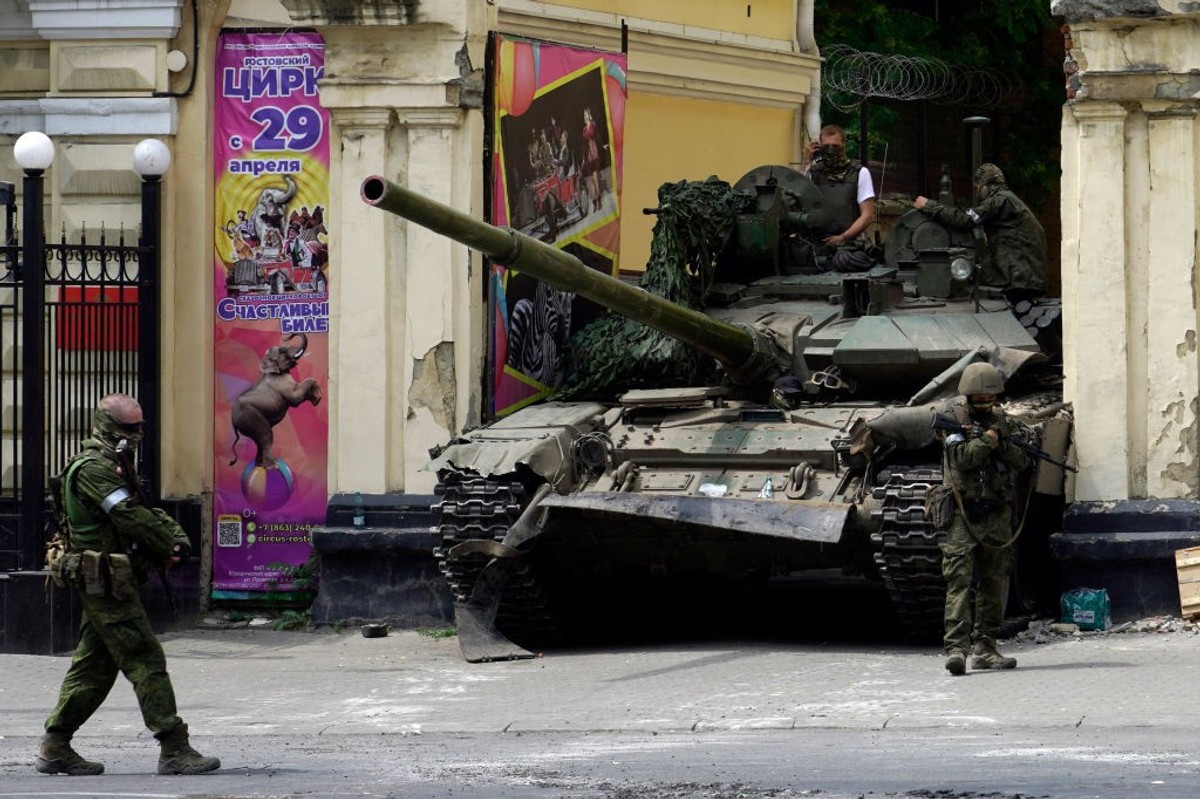
The Strait of Hormuz is 54 kilometers wide at its narrowest point, with 20% of the world's seaborne oil passing through it. After US and Israeli strikes on Iran and Iran's retaliation, it has been closed, held shut by a combination of high-end US warships and aircraft on one side and large-scale, low-cost Iranian sea mines and missiles on the other. The asymmetry is itself a lesson: a regional power with cheap munitions can deny a waterway against the most advanced navy in the world.
The consequences arrived quickly with oil passing $120 per barrel, which the IMF called the largest oil supply disruption in history. Kuwait, Iraq, Saudi Arabia and the UAE cut production of both oil and fertilizer because of a lack of available storage and without an ability to export it. East Asia, who gets a majority of its oil from the Middle East, has been badly hurt. The deepest damage, though, is in South Asia and Africa, where it translated into higher fertilizer prices, higher food prices, and empty shelves.
Iran will not reopen the strait while under military threat. Washington will not pull back while Tehran pursues a nuclear weapon. Both governments accept the global cost of the standoff and neither signals willingness to change their stance. The lesson is that a strait only tens of kilometers wide can do more to reshape the global economy than years of sanctions, summits, or shooting wars. Geography, used correctly, is leverage.
In May Donald Trump arrived in Beijing for the first US presidential visit to China in nearly a decade. The two leaders spoke of being "partners, not rivals." Although the choreography was immaculate, the substance was thinner. While trade deals were signed, both leaders affirmed that the Strait of Hormuz must be reopened. This was an unsurprising position, given that China depends heavily on Persian Gulf oil.
The summit is best read not as a negotiation but as two rivals agreeing that open confrontation has become too expensive, and looking for a way to coexist without conceding anything that matters.
European capitals watched with growing unease. Ukraine was not on the agenda. Neither was enforcement against Chinese firms supplying the Russian war economy. No joint language on Russian sanctions emerged, and no European leader was in the room. What Europe's leaders saw was something many had already suspected: Washington and Beijing are arranging a coexistence between themselves, and the multilateral order Europe is left out.
Europe is now responsible for its own security and its own pressure on Russia. And one of the most powerful tools they can use is geography.
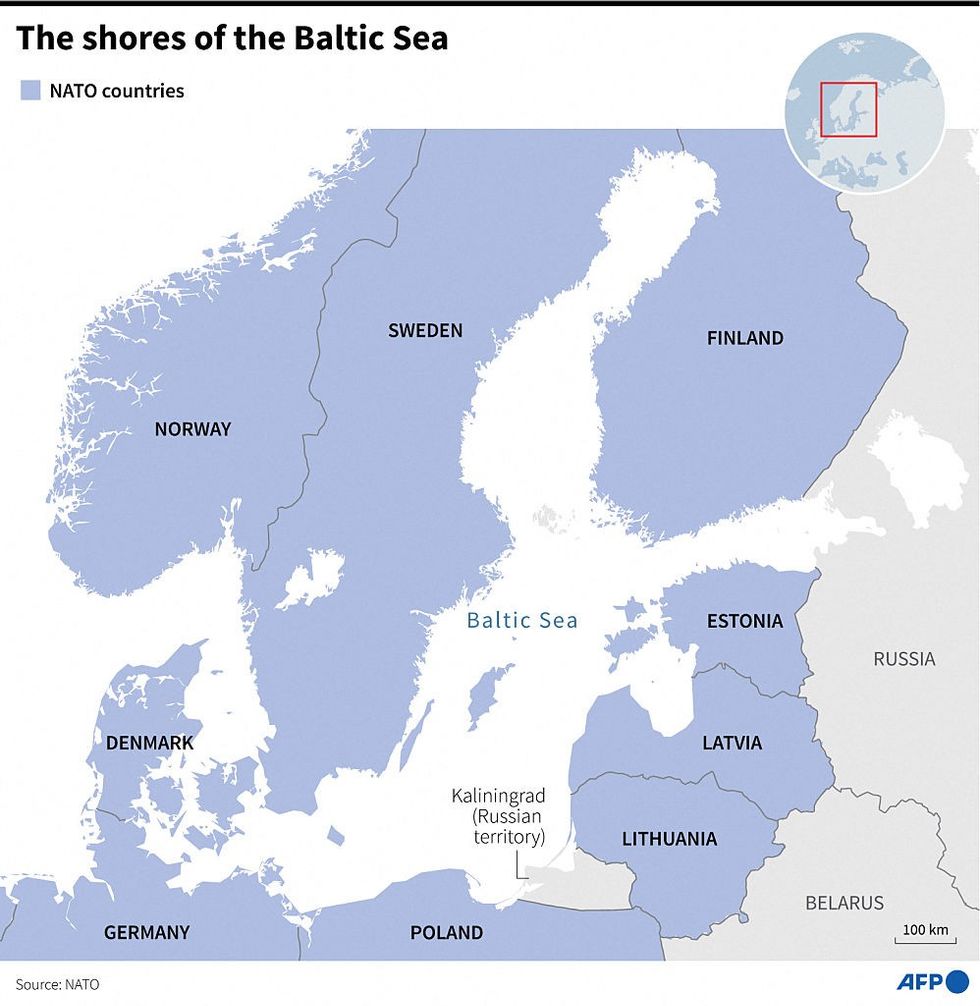 Map of showing NATO member countries around the Baltic Sea after Sweden joining (Graphic by Valentin RAKOVSKY and Valentina BRESCHI / AFP via Getty Images)
Three thousand kilometers from Iran, Russia is stuck in a war of attrition with Ukraine, and with an economy that is hurting. Official 2026 growth was revised down to 0.4%, a figure many Western analysts deem falsified. Real wages are stagnant against high inflation. Its oil and gas industry is reporting sharp declines in profit. Ukrainian drone strikes on export terminals in the Baltic and Black Sea have already cut Russia's oil export capacity by roughly a million barrels per day, close to 20%.
Oil and gas are the foundation of the state with roughly a quarter of all government revenue, which funds the military, sustains the loyalty of the elite, and keeps basic services running. Putin's choice to keep Russia structurally dependent on oil is a regime strategy. A diversified economy would produce independent wealth, independent power centers, and political constituencies the Kremlin does not control.
The strategy is beginning to show strain. Money that once flowed to well-connected Russians is now flowing to the war. The elites and media are starting to complain publicly. Putin's regime can absorb financial pressure, but not financial pressure that turns the country against him. That is the pressure Europe is in a position to apply.
The opportunity is unusually clean. A consistent campaign of boardings and inspections in the Øresund could cut between a third to half of Russia's seaborne oil exports. No budget maneuver could replace that revenue. Russia's war funding would face a shortfall it could not absorb, and the political costs inside Russia would drastically sharpen.
The legal authority is already in place. Ships sailing under false flags, without valid insurance, or on sanctions lists can be lawfully stopped and inspected under existing maritime law. Sweden and Denmark control both shores of the strait. Acting in coordination, they can make it practically impossible for sanctioned vessels to transit, without firing a shot and without stepping outside the rules-based order they have spent decades defending.
What has been missing is political will. Denmark is hesitant, both to protect commercial interests and out of concern about Russian retaliation. Moscow has worked to keep that concern alive, and is actively using naval assets to project power.
Sweden has over the past three months taken a more active approach with five boardings of shadow fleet vessels done by a mix of Coast Guard, the National Task Force and unnamed military units. Boldness, once demonstrated, is contagious.
The next step is to make this routine. Every vessel transiting the Øresund under a false flag, without valid insurance, or on a sanctions list should be inspected. Sweden has proven its agencies can execute these operations. Denmark, on the other shore, has the same legal authority and strategic interest. Coordinated action would convert the Øresund from a loophole in the sanctions regime into the choke point it geographically already is.
The wider Ukrainian campaign is already in motion elsewhere. From bases in Libya, Ukrainian naval drones have struck Russian shadow fleet vessels in the Mediterranean. This is part of a deliberate Ukrainian naval strategy aimed at the economic infrastructure of the Russian war effort.
Hormuz has demonstrated, at enormous global cost, how a single narrow waterway can reshape the calculations of governments. Beijing has demonstrated that even the world's two largest powers will look for an exit when the price of confrontation becomes high enough. Putin has not yet reached that price. The Øresund is an important opportunity.
What remains is the political decision to treat the Øresund as a chokepoint for Russia's illicit oil trade. Unlike the deserts of the Middle East or the frozen lines of the Donbas, the Øresund is a place where Sweden and Denmark hold the keys, and where international law is already on their side.
The question is no longer whether Europe has the tools to pressure Russia without American leadership. The question is whether Europe will use them.
The Cipher Brief is committed to publishing a range of perspectives on national security issues submitted by deeply experienced national security professionals. Opinions expressed are those of the author and do not represent the views or opinions of The Cipher Brief.
Have a perspective to share based on your experience in the national security field? Send it to Editor@thecipherbrief.com for publication consideration.
Read more expert-driven national security insights, perspective and analysis in The Cipher Brief