

“We've won Venezuela and [have] taken out billions and billions and billions of dollars already. And we will be taking out many billions of dollars and get along very well. And -- you could call it a territory, you could call it whatever you want. We won that war in less than one hour.”
That was President Trump during his telecast 60 Minutes interview on CBS with Ross Douthat on November 8. However, CBS also has released the transcript of the entire, unedited transcript of the 51-minute interview during which Trump also said, but was not part of the telecast version, “Venezuela, where, by the way, we’ve taken out 50 times what the war has cost already. To the victor belong the spoils.”
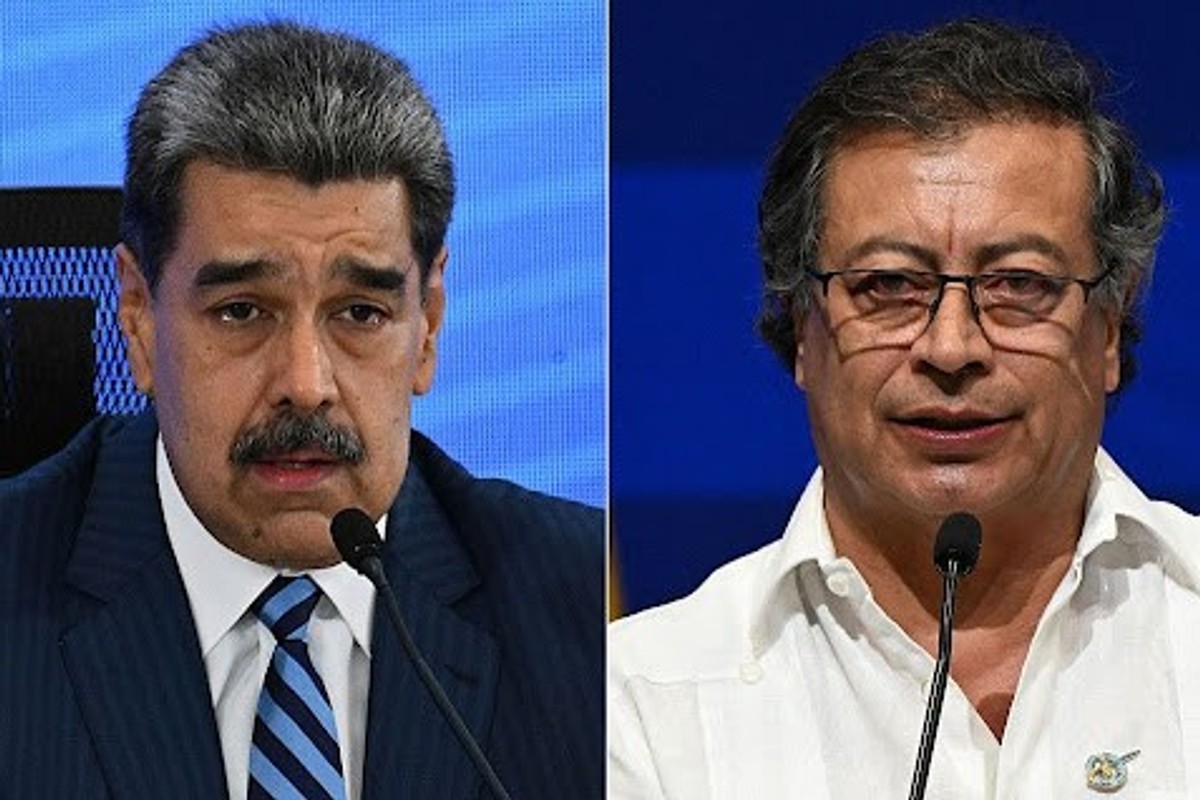
I bring up those remarks because last August I wrote a column questioning what had happened to those billions of dollars from Venezuelan oil that Trump referred to many times earlier than the 60 Minutes interview – in fact, Trump began less than a week after the U.S. military seized then-Venezuelan President Nicolas Maduro and his wife on January 3, 2026, and, in effect, took over that country.
Douthat did not ask Trump anything more about the “billions and billions” in the 60 Minutes interview – I wish he had.
Also not discussed was what Trump last August 28 on Truth Social called, “THE BIGGEST OIL DEAL IN WORLD HISTORY!” where the U.S., through a Pentagon agency, has become the 35 percent owner of what a White House fact sheet called, “the second-largest private oil company by [Venezuelan oil] reserves in the world.”
I will discuss the many still secret parts of that Trump administration deal below.
But the public release last week by the State Department of the American accounting firm KPMG LLP’s 53-page Report on Venezuela Custody Account Operations January - September 2026 October 29, 2026 also failed to answer questions that I and others have raised about what happened to those initial “billions” from Venezuelan oil.
For example, during his January 9, 2026, meeting with oil company leaders at the White House, Trump told the press that was present that Venezuela had already given the U.S. 30 million barrels of what had been previously-sanctioned oil that it had on hand.
“That's about $4 billion worth,” Trump announced back in January, adding, “And it's on our way to the United States right now. And we want to thank Venezuela for that. And we're working very well with them [Acting President Delcy Rodriguez and her government], obviously, or they wouldn't have been so generous.”
At that January 9, meeting, Trump also announced his Executive Order, Safeguarding Venezuelan Oil Revenue for the Good of the American and Venezuelan People under which Venezuelan oil revenues were to be held in a Venezuela Custody Account (VCA) set up by the U.S. Treasury. The VCA was initially based in a Qatar bank, but moved to Citibank in New York in late January. Distribution of the funds for use by the Venezuelan government would be determined by the Secretary of State.
Last week’s KPMG report showed that VCA in January received $500 million. On January 28, Secretary of State Marco Rubio told the Senate Foreign Relations Committee the payment of $300 million had already been made from the VCA “to keep [Venezuelan] sanitation workers, police officers, government workers on staff,” and that it was from Venezuelan oil sales totaling $500 million.
The KPMG report also showed the VCA received $1 billion in February, another $1.5 billion, and another $2.1 billion in April.
On April 16, the State Department’s Michael Kozak, a senior official from the Bureau of Western Hemisphere Affairs, in testimony before the House Foreign Affairs Western Hemisphere Subcommittee, disclosed “around $3 billion” of Venezuelan oil revenue had moved through the VCA “paying the salaries of government workers in Venezuela; buying supplies for their oil industry, and so on, other things that benefit the public.”
Since it appears that the VCA did not receive as much as $4 billion until April, that again raises the question what happened to the $4 billion in Venezuelan oil Trump said was “on the way” to the U.S. in early January.
Overall, The KPMG report showed that between January and September 30, 2026, the VCA received $12.26 billion from sales primarily of Venezuelan crude oil and petroleum transactions, with minor amounts from gold, minerals, and fertilizer. In turn, following review and approval by the State Department and Treasury, some $12.11 billion has gone to the Venezuelan central bank or directly to vendors.
As mentioned above, another flow of Venezuelan oil money to the U.S. is coming from the most unusual “historic oil agreement” Trump announced built around the interim Venezuelan government granting what a White House August 31 fact sheet said was “100-year concessions for 17 oil fields with proven reserves of approximately 65 billion barrels” to a company named North American Blue Energy Partners (NABEP).
I should point out any 100 year oil concession violates Venezuelan law.
According to a September 2, White House fact sheet, the 17 oil fields were “previously controlled or operated by Russian and Chinese firms, or by corrupt cronies of Maduro and Chavez.”
More important was that the Trump administration signed a joint agreement with NABEP’s parent company, based in Barbados, that grants the U.S. government a 35%-stake in ownership in that corporate parent and the right to buy 20% of NABEP’s Venezuelan oil output at production cost.
Here is the way the September 2, White House fact sheet described that deal. It said the joint agreement “was signed by Secretary of State Marco Rubio and Secretary of War Pete Hegseth,” and “at no cost to the American taxpayer, NABEP has granted the U.S. Department of War’s Office of Strategic Capital a 35% equity stake in its corporate parent, representing up to hundreds of billions in value and dividends for the United States.”
In addition, the White House release said, “NABEP has granted the U.S. Department of State the right to purchase, at production cost, a guaranteed 20% of the off-take from all current and future fields NABEP will operate.”
That means that a Pentagon agency is the over one-third owner of a major Venezuelan oil company and the State Department may be the substantial buyer of the oil output of that company. In short, two departments of the U.S. government are now in the oil business.
The September White House release made the further points that, “This is a deal with a private company – not the Venezuelan interim government. It’s not a deal with the interim
In an October 20, report, ProPublica, which said its staff had “reviewed a copy of the 18-page strategic partnership agreement signed for the United States by Secretary of State Marco Rubio and Defense Secretary Pete Hegseth,” points out, “The deal document provides little information about the owners and investors behind the parent [Barbados] company, who could receive enormous wealth from the arrangement.”
In short, the public ought to know who are the new business partners of the U.S. Government?
ProPublica also questioned NABEP’s chief executive, Alejandro Betancourt, whom it describes as “a globe-trotting Venezuelan oligarch who has faced money-laundering investigations in three countries.”
The agreement gives the U.S. government veto power over the appointment of any member of NABEP’s seven-member board of directors and a majority must be U.S. citizens. ProPublica says the board members have 15-year terms, a move it was told “designed to prevent future U.S. and Venezuelan leaders from dismantling the enterprise.” Betancourt is the only board member named by the agreement.
According to ProPublica, “The signed agreement is marked as a ‘sensitive’ government document. That classification is commonly used to shield a variety of federal records from public release, including those containing personnel information, details about ongoing law enforcement operations and matters protected by attorney-client privilege. The document also contains a confidentiality clause barring Betancourt’s company from disclosing the ‘existence and terms” of the U.S. government agreement.”
Hopefully, the incoming Democratic-controlled Congress will include the Venezuelan oil deal in one of its investigations.
Meanwhile, on October 27, Trump diverted from a campaign appearance in Texas to make a statement that day pier-side in Corpus Christi, along with Rubio, where two tankers carrying one million barrels of Venezuelan crude produced by NABEP had arrived.
Betancourt was on hand to say, “This first shipment since the U.S.-NABEP deal will be followed by thousands of such arrivals, and each one shows the world that Venezuela is back as a dependable energy supplier, with the United States as its anchor buyer.”
Trump told the press, “We took over Venezuela very successfully and they've sent me as a gift a boatload of a million barrels of oil and I'm giving that to the United States.”
Three days later, Reuters reported, “NABEP initially said the oil was delivered under Washington's right to buy a portion of the company's production at cost. It later said it gave the shipment to the U.S. at no cost to U.S. taxpayer ‘to recognize the historic nature of the agreement.’"
This is an oil agreement worth following.
The Cipher Brief is committed to publishing a range of perspectives on national security issues submitted by deeply experienced national security professionals. Opinions expressed are those of the author and do not represent the views or opinions of The Cipher Brief.
Have a perspective to share based on your experience in the national security field? Send it to Editor@thecipherbrief.com for publication consideration.
Read more expert-driven national security insights, perspective and analysis in The Cipher Brief