
In Moscow this year, people stopped answering “How are you?” with “Fine.” They started saying, “I’m full tank.”
K. first heard it from a friend, right after drones hit several fuel plants around the capital. “I’m great,” the friend said. “I have a full tank.” It was a joke, and it was also the plain truth about what counted as a good day. His friend drove to three gas stations. Each one would sell her only a third of a tank. When the needle finally reached the top, she was, in her words, “super happy.” In Moscow the shortages eased within weeks, then came back in August. In the smaller towns, she heard, it stayed awful for much longer.
Russian political jokes are older than the Soviet Union, and have always worked as a coping mechanism and a quiet form of protest. Right after the 2022 invasion the most common joke was that Russia is at war with Ukraine and NATO, but NATO hadn’t arrived yet.
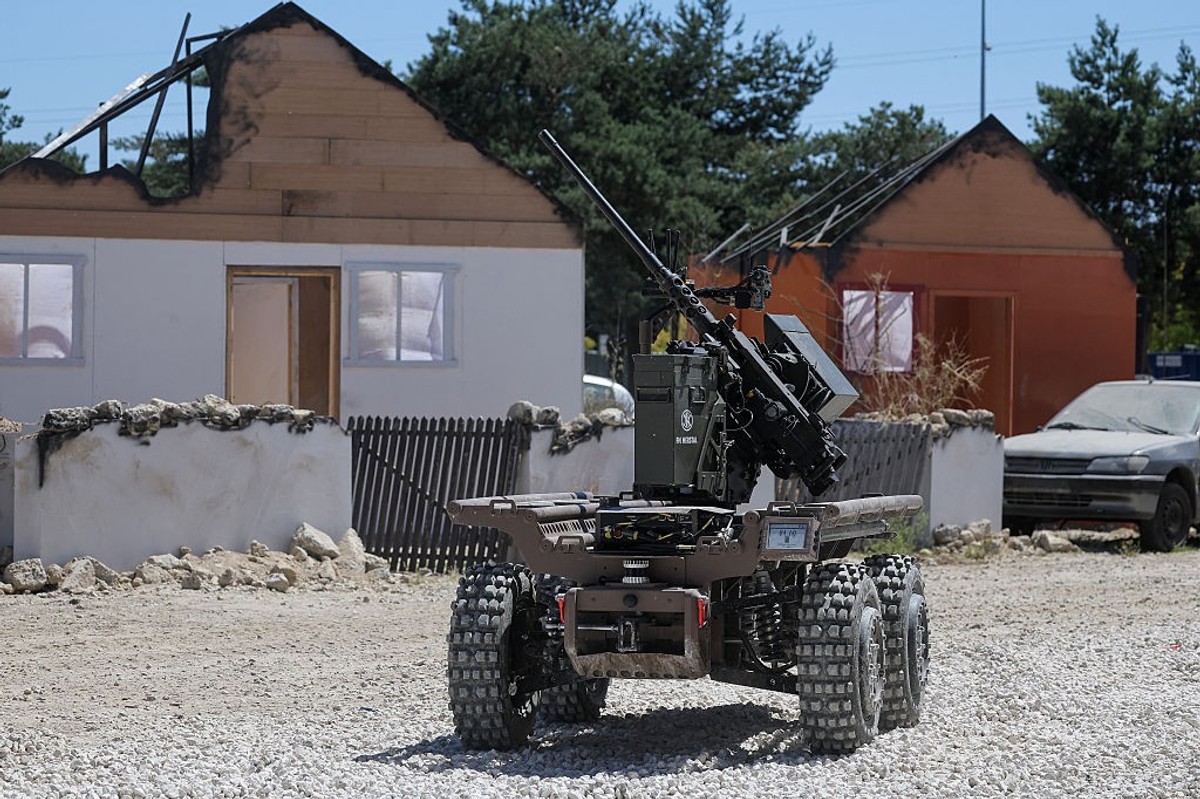
For years, Putin worked to keep the war far from Moscow, knowing that a capital living normally is a capital that doesn’t threaten his hold on power. This year, that wall began to crack, and Ukraine’s strikes started impacting industries and reaching everyday life inside Russia.
K. is a Russian man who lives abroad and returns to Moscow to care for his aging relatives. This is his account of the city in 2026, the year things got noticeably worse and what he saw on his last visit is a country where the two things holding Putin’s wartime system together, the money that buys his soldiers and the digital state that runs daily life, are starting to fail at the same time. We share his observations in the hope that they help the West understand how to prevail against Putin. He is identified here only by an initial.
Getting in and out of Russia
K. travelled to Moscow earlier this year and brought with him two phones. His American phone stays out of sight while the Russian one is a burner, and at first the latter was completely empty. But an empty phone, he was warned, looks suspicious so he used it a little before he arrived in Russia and downloaded cat memes, sport articles and Russian music to make it look lived-in.
He crossed the border on his Russian passport with a Russian SIM card. He also bought two separate sets of tickets. People told him that passport control can see short layovers and flag travelers coming from the United States. Separate bookings made it look as if he had not come from America at all and reduced risk of border issues, but instead travels in and out of Türkiye, Serbia or Armenia where Russian men can travel, pending they are not registered for conscription.
None of this is spycraft for its own sake. It is the price of coming home for a Russian with an American life, avoiding any red flags that the state is watching for. The border has become a sensor, and the diaspora is its target. With independent media exiled, people like K. are among the last unfiltered channels from Russian society to ours. Every new layer of scrutiny at passport control narrows that channel, and the Kremlin knows it.
When you can no longer pay
To understand Moscow, you have to understand Yandex. It is the local Google, Uber and online banking, and includes search, taxis, food delivery, payments and navigation. In October, all of it went down at once, and it still isn’t fully working.
Yandex Pay links to other banks, so the damage spreads. Everyone, K. says, is having problems. Then, on October 14, drones struck a Sberbank data center on the Volga, and users across Russia reported that the Sber app would not open and payments would not go through. The bank insisted everything was working but the reality did not agree. Almost everyone uses Sber, especially anyone who receives a pension, a student stipend or state aid. For days, K. says, people could not reach their own money and this is now impacting how people live their lives.
The day before we spoke, K. finally got into his account to buy groceries for his mother through Yandex Lavka. He ordered 5,000 rubles’ worth, about $60. Half the order went through. The other half was silently cancelled. He wasn’t charged for it and never learned why. “That never happened before,” he says.
His grandmother drew her own conclusion. “This is the time for having a lot of cash at home,” she told him, and asked for help keeping cash in the apartment. In rubles.
That detail struck K. more than anything. Russians who saved used to save in dollars, in a bank or a safe, for the long term. A pile of rubles at home is risky; people break in. But nobody is thinking long term now. The money is for groceries tomorrow or next week.
The outage was not a glitch. Ukrainian drones hit three Yandex data centers in four days, then struck Sberbank’s. Kyiv called it payback for Russian strikes on data centers in Kyiv in September. Putin spent a decade building a sovereign digital stack so Russians would depend on platforms the state could read. He succeeded, and that dependence is now a single point of failure. When a man who once trusted dollars in a bank asks for rubles under the mattress, the regime has lost something it cannot easily buy back: the belief that the system will work tomorrow. A population living week to week does not revolt. It also stops saving, and a state that pays for its war through its own banks needs those savings in the bank.
Return to the kitchen
Nobody in Moscow says in public that they are against the war. People still talk, K. says, but they watch their mouths and check who is in the room.
He calls it “a return to the kitchen,” as in Stalin’s time. In a kitchen you can close the door, and you know everyone at the table.
There is a new guest in Russian kitchens, though: Alisa, the Yandex smart speaker running the Alice AI. People now assume she is listening and FSB is demanding great access. Before the conversation turns to politics, K.’s family switches her off. Not in the settings; instead they pull the plug from the wall.
“Superstition,” K. says. Nobody in the kitchen is willing to risk it.
Pulling the plug is a superstition the Kremlin earned. New phones ship with a state messenger that lacks end-to-end encryption, and the FSB can now order the networks switched off. Russians have drawn the obvious conclusion and Western analysts pay for it too. When people stop speaking in public, polls stop measuring belief and start measuring caution. The economist Timur Kuran called this preference falsification, and it is why authoritarian collapses look sudden from outside: hidden opinion is invisible until the moment it isn’t. Russia’s real public opinion now lives in the kitchen, out of reach of the Kremlin’s pollsters and ours.
Silent protests
One of K.’s closest friends is a teacher. Every week the government requires her to lead a class called Conversations About Important Things, introduced in Russian schools in 2022. The lessons are about the current war, about why Russia is right, about Putin’s version of history.
His friend doesn’t support the war, but refusing would mean failing one of her direct duties. But how does one play by the rules while still refusing to follow the government's orders?
So she found her own way through. Her students are in their final year of high school, facing their exams. “What can be more important than my subject?” she told K. She prepares, she shows up, and she talks to them about the material they need to pass. Not about the war.
Conversations About Important Things is the regime’s long game. If it cannot win this generation’s argument, it means to raise the next one. That project depends on teachers to deliver it, and K.’s friend shows what quiet non-compliance looks like. She has refused nothing. She has simply made the war less important than the exam. Multiply her across a school system and the program becomes a box checked. She is also the kind of person any post-Putin Russia will run on: the teacher, the doctor, the friends who stayed behind to look after everyone’s parents. A Western policy that treats every Russian as the regime gives them up. One that pressures the state while leaving them a door keeps them in play.
Dating
Another of K.’s friends is also against the war, but struggles to switch off from it. She joined a dating site, which is normal in most places but, K. notes, “a little sketchy in Russia right now”.
His friend started chatting with a man, but somehow they could never meet. Eventually she asked: “You’re only 37, and you’re bald and grey. What happened?”
“I have seen things humans shouldn’t see,” he wrote.
She still didn’t understand. Only when they were close to finally meeting did he tell her: he was at the front, and he couldn’t get out, and the date was postponed yet again.
Getting out of the Army is very hard, K. explains, as long as you can still physically walk. He had a concussion and other injuries, but not severe enough to be sent home. In the end, the soldier told K’s friend, he got out after two years because his time was up and because he was sick of it. But he never thought of the war as wrong, only as a way to earn a living.
The elevator to hell
Are the siloviki, the security elite, losing money in all this? Not really, in K.’s view. Some of them are growing their influence and massing large fortunes.
His summary is blunt. The rich are getting richer. The middle class is getting poorer. The working class is going into the army. People in heavy debt choose between the front and prison.
“Back when our great-grandfathers were young, people would get out of prisons by signing up for frontline duties. People were imprisoned for debt, and several stories of soldiers surviving the war and coming home debt free are told to us as kids“ K. says, “and they influence today’s Russians.”
The money runs the other way, too. K. has seen the posters promising millions of rubles if your husband dies at the front. That buys an apartment in a small town or pays off a large part of a Moscow apartment. Women, he says, have been marrying soldiers on an industrial scale.
There is no other way for ordinary people to make that kind of money right now, and there won’t be for years after the war ends. He describes it as an elevator that takes you down to hell, but brings you financial prosperity. It reminds him of the 1990s, the wild west of new capitalism, when people got rich within a year and then got shot.
Americans, he says, value their lives more. They eat well, exercise, think about vitamins and how long they’ll live. “In Russia, after so long in poverty, many people don’t value their lives in the same way. They value paying the rent and buying food. That makes the war easier to join.”
The elevator still runs, but the fare keeps rising, and some regions can no longer pay it. In late September, the Saratov region cut its payment to families of the dead from 1 million rubles to 100,000. Ulyanovsk went from 1 million to 50,000 in two steps this spring. Kemerovo cut its death payment to a third, yet it pays 115,000 rubles to anyone who signs up as a recruit. Fewer men are getting on and federal signing bonuses went to 71,200 new soldiers in the first quarter of this year, the fewest in three years. So the regions that can still afford it are bidding harder, raising bonuses and paying neighbors a bounty to bring each other in. Putin did not mobilize the country for this war. He bought it, and like any market, it works only as long as someone can pay.
And propaganda works. Independent media has been pushed into exile, much of it to Riga and Amsterdam. Inside Russia, state television is still the only source most people don’t have to work for.
Why nobody marches
What would make people protest? “In Sweden,” K. jokes, “it’s neighbours not respecting recycling. In America, people protest expensive gas. In Russia, protest means criminal charges.”
The Russian population knows that from experience. In 2011 and 2012 Russians went out in mass protests in Moscow, wearing white ribbons and demanding change. Demonstrating was legal then. Afterward, people from universities who led the protests went to prison in the Bolotnaya Square case.
“The totalitarian machine destroys demonstrations,” he says. He doesn’t feel she has the moral right to tell anyone to go out and demonstrate. The first thousands in the streets would be killed or imprisoned. The legal system doesn’t work, and legal rights are not something people can take for granted. But small acts of defiance survive. Although it is illegal, people film Ukrainian strikes and explosions and post them, afraid as they are. Everyone uses VPNs, even as the state works to block them.
Every ruble a bullet
Travel is not just hard and risky for K; it also carries a social cost. The harshest judgment he faces doesn’t come from Westerners. It comes from Ukrainians and from other Russians.
Americans and Europeans tend to separate a person from her government while the others see any trip to Russia as unethical. Every ruble you spend there is a bullet, the argument goes: support the economy and you support the war.
“I don’t have a good answer for them,” he admits. “I see both views. But I must be with my older relatives to take care of them. I still have to go.”
His compromise is to spend as little as possible. He doesn’t go out. He stays in the family apartment, or walks in the park.
He worries about her family being hit, he says, but he has gotten used to it; he no longer feels it. “Moscow is a war zone now. You hear the explosions. Babies wake up at night. Normal life bends around it.”
Radioactive+
“These last five years have sucked the life out of people,” K. says. Out of his mother. Out of everyday conversation.
He uses the word radioactive. “Being in Russia is radioactive, and the people inside don’t notice it. They are frogs being boiled slowly.” Coming in from outside, he sees the effect on everything. He can stay only for short stretches before it starts to get into him, and then he has to leave.
Many of his friends have left, but not all. Those who stayed have relatives, or are too sick to go, or have a calling.
One friend is a doctor. He feels he has to work harder than ever for his patients. The teacher wants to get her students through their exams. “Someone has to do it,” K. says. They stay with their people, regardless of the government.
The friends who stay behind also look after everyone else’s parents and grandparents. They help the elderly relatives of all the friends who have left. If every young person left, he asks, who would look after them? Now he knows who to call when urgent things come up.
But one thing, he says, unites everyone he knows, for the war or against it. Even people who watch the propaganda and believe its reasons want the same thing.
They all want it to be over.
Drawing conclusions
That is exactly why the West cannot give up on Ukraine now. The cracks K. describes, from rationed fuel and frozen bank accounts to unplugged speakers and soldiers who can’t get home, are the first visible signs that Putin’s bargain with Moscow is failing.
Russia has been here before, though not always the way we like to remember. In 1905, a losing war with Japan set off a revolution, and the tsar survived it by conceding a parliament he later gutted. In 1917, the strain of the First World War brought him down, but only after the soldiers of the Petrograd garrison refused to fire on the crowds. In 1991, a decade of war in Afghanistan and a hollowed-out economy helped bring down the Soviet Union, and the end came when a hardliners’ coup collapsed because the army would not carry it out. Each time, the regime looked solid from outside until the cracks at home gave way. Each time, the decisive break came when the men with guns stopped defending it.
K. describes a public that is exhausted but atomized, and an elite that is getting richer. That is not a recipe for revolution in the streets. It describes a country that will accept almost any ending Putin chooses to sell, including a pause to rearm that he calls victory. Everyone K. knows wants the war to be over. Putin knows it too. Whether that exhaustion becomes a Russian defeat or a Russian intermission depends on what the West does now. This is the moment to keep pressing, not to let up. K. has already told us what works.
The Cipher Brief is committed to publishing a range of perspectives on national security issues submitted by deeply experienced national security professionals. Opinions expressed are those of the author and do not represent the views or opinions of The Cipher Brief.
Have a perspective to share based on your experience in the national security field? Send it to Editor@thecipherbrief.com for publication consideration.
Read more expert-driven national security insights, perspective and analysis in The Cipher Brief