


As the 8th round of the U.S.-China Strategic and Economic Dialogue (SED) drew to a close on Tuesday, Chinese fighter jets buzzed a U.S. reconnaissance plane in the South China Sea—highlighting that underneath the promises of greater bilateral cooperation, tensions continue to simmer between the world’s two strongest powers. While progress was meagre, both sides agree in principle, if not practice, on many of the world’s most pressing security issues.
Among areas for strategic cooperation, cybersecurity is an issue where Beijing and Washington strongly believe cooperation is necessary but have the greatest difference in opinion on how to solve it. According to Adam Segal, a senior fellow at the Council on Foreign Relations, “The U.S. has a national interest in an open, interoperable, and secure internet” whereas China believes in “cyber sovereignty—the idea that states have the right to regulate the internet.” The two sides made progress in 2015 with an agreement on cyber espionage, but additional progress at the SED was not forthcoming.
There is hope that more fruitful discussion will occur at a High Level Dialogue on Cybercrime and Related Issues on June 14th. The greatest threat to cooperation from the U.S. perspective will be the cyber theft of intellectual property and the difficulty in identifying the perpetrators as state or independent actors.
An area where substantial agreement exists, but action has been limited, is promoting stability and counterterrorism in the Middle East. During the SED, both countries agreed on terms to increase support of aid efforts in Syria and economic reconstruction in Iraq. However, there is room for a larger Chinese role in the region. According to Christina Lin, a fellow at the Center for Transatlantic Relations, China’s desire to secure its energy sources means it will have increasing interest in Middle East stability. Lin went on to say that Washington and Beijing could capitalize on this by forming a “Mideast Dialogue for Crisis Management” that could establish a base for further cooperation.
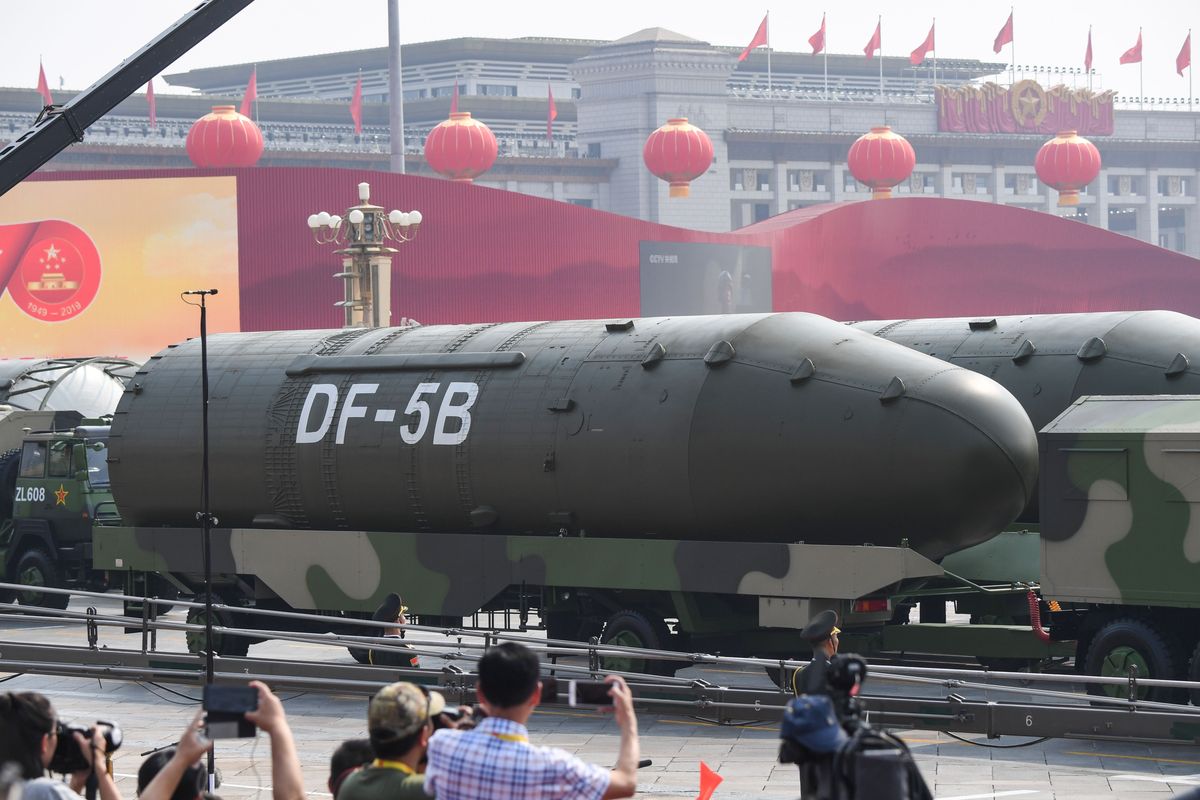
Nuclear security and nonproliferation may be the area of greatest agreement and action. Both countries are firmly committed to these two issues as exemplified by a Joint Statement on Nuclear Security Cooperation and continued cooperative efforts via the bilateral Nuclear Security Dialogue. These efforts allow the U.S. and China to restrict the illegal movement of nuclear materials that could be used for nuclear terrorism.
Absent from official transcripts of the SED was any mention of tensions in the South China Sea, where China’s territorial claims have prompted the U.S. to fortify alliances and partnerships that Beijing views as anti-China. It appears both sides felt it prudent to avoid an issue that has no foreseeable resolution in the short term. In the long term, however, the U.S. and China will need to reach an understanding on freedom of navigation and territorial claims in order to ensure that the South China Sea, a waterway that moves $5.3 trillion in trade annually, remains open for commerce.
The incremental progress of this year’s SED is neither reassuring nor worrisome. In the SED and the associated issue-specific dialogues, the U.S. and China have a comprehensive framework to advance cooperation and air grievances. However, initial progress can only be expected to build slowly and only in areas of mutual interest and low stakes. Mistrust and disagreement will likely keep substantive agreements out of reach.