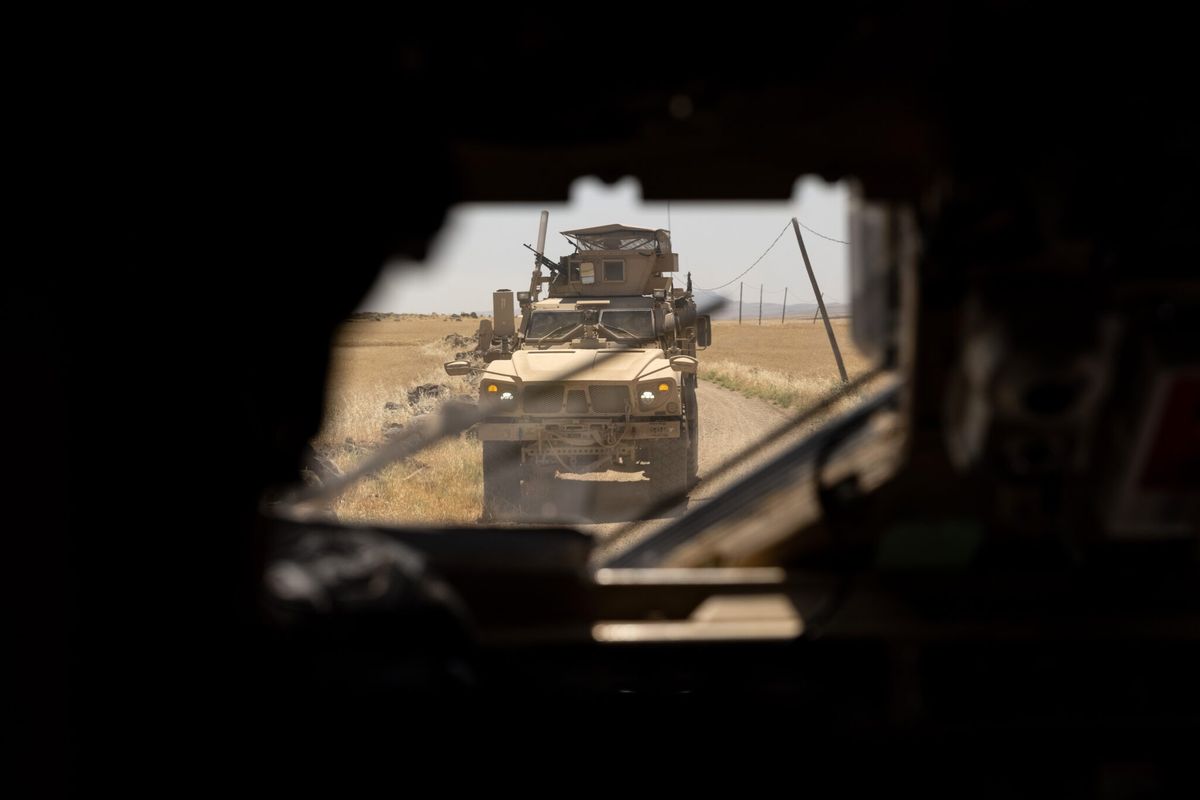


Late on Thursday night, U.S. naval vessels stationed in the Mediterranean fired 59 Tomahawk cruise missiles at the Shayrat Syrian military air base near Homs. The strike comes in response to a deadly chemical weapons attack on Monday in the rebel-held province of Idlib, which killed over 70 people.
This type of decisive action against the Syrian regime is something that regional and international allies opposed to Assad have been waiting for. However, it marks a major escalation against Russia and Iran, both of whom are deeply invested in the Syrian regime. The Trump administration claims that this is a one-off strike meant only to punish Damascus’ use of chemical weapons, and great pains were taken to avoid killing any Russian personnel.
Nevertheless, tensions between the U.S. and Russia in Syria – where both countries have deployed military personnel and assets – have never been higher. Meanwhile, the timing of this strike could undercut the summit this weekend between President Trump and Chinese President Xi Jinping; Beijing does not tend to look kindly on military intervention in sovereign states.
The Cipher Brief reached out to members of our Expert Network– Lieutenant General (ret.) Guy Swan III, and Ambassador James Jeffrey, former U.S Ambassador to Iraq and Turkey – to get their take on Thursday’s airstrikes, asking what message this sends not only to Syria, but to Russia and Iran as well.
The Cipher Brief: What was the significance of the target in Syria? Would a strike like this change the dynamic on the ground?
LTG Guy Swan: The chemical strike against civilians near Idlib, Syria, is the first true test of the Trump Administration’s resolve and ability to respond to an international crisis. In addition to rallying an international coalition to condemn the attack, this is an opportunity for the Administration to demonstrate that it can indeed synchronize military action with diplomatic and political leadership. The question is whether this response is, or will be, part of a broader strategy in Syria.
AMB James Jeffrey: There is limited military significance — although the same can be said of Syrians' chemical weapons attacks — but extraordinary diplomatic significance. The deliberate and repeated violation of two U.N. [Security Council] resolutions that the Russians helped put together (2118 and 2235) by [Syrian President Bashar al-] Assad undercut the entire international order by using terrible chemical weapons.
Earlier, less dramatic assaults on international order by Syria, Iran, North Korea, China and Russia went unanswered by [former President Barack] Obama, and the result is ever bigger assaults on the fabric of the international order.
TCB: What message does it send to the Assad regime?
Swan: Clearly, it sends a message to Assad that further use of chemical weapons or other weapons of mass destruction will be met with a strong military response. This should dissuade further use of these weapons by the regime, at least in the short term. It will put Assad back on his heels a bit, but without a sustained strategy, this could only result in short term effects.
Jeffrey: We will up attacks if you use chemical weapons again, and we will work to end your rule — but politically, not militarily.
TCB: What signal does this send to Russia? What about Iran?
Swan: There is no doubt that this U.S. action is being discussed and debated in Moscow and Tehran as we speak. You can bet that the North Koreans are also looking at what this kind of U.S. response means for their own policies. Of course, with the Chinese President Xi in Florida for meetings with President Trump, it is certain that the Chinese are also assessing the action. All must be asking: Is this a one-off response to a very tragic and heart-wrenching attack on innocent civilians or this a sign of an emerging “Trump Doctrine?”
Jeffrey: This is not an answer just to Syrian chemical weapons use this time, but the whole mess of Crimea, Aleppo, the Iran challenge and navies off Yemen, the South China Sea, North Korean missiles, etcetera, without U.S. reaction beyond rhetoric.
TCB: What should the U.S. do next?
Swan: The manner in which the U.S. has coordinated its response here is impressive, especially in such a short period of time. UN Ambassador Nikki Haley is engaged, Secretary of State Tillerson has emerged, National Security Advisor LTG H.R. McMaster and Secretary of Defense Jim Mattis appear to have passed their first test, and allies are praising American leadership. The key will be whether the U.S. can weave these short-term tactical actions into a long-term strategy that will rally international support to settle one of the most tragic conflicts in recent history.
Jeffrey: Stay ready and see the reactions from Russia, Iran, and Assad. If there’s another chemical weapons strike, hit Assad directly.