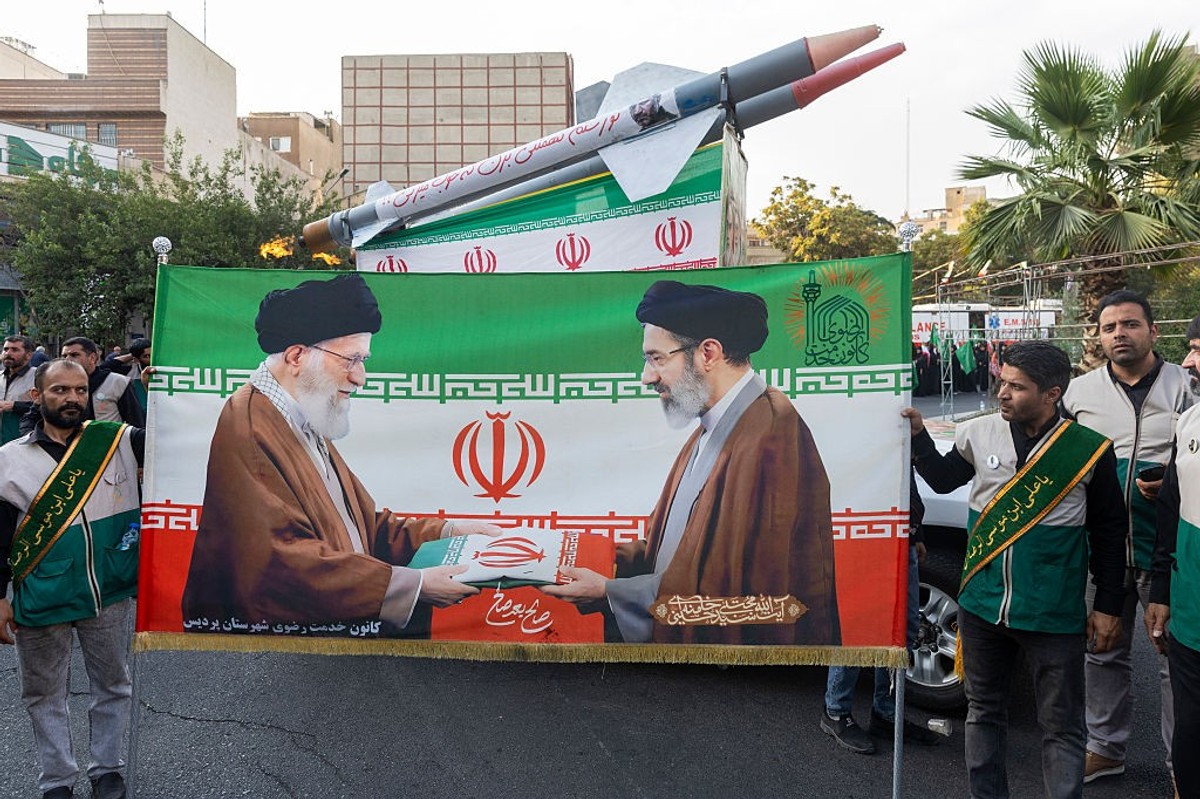


OPINION -- Two months into the U.S.-Iran war, the global oil market has shifted from shock to siege. The Strait of Hormuz — through which roughly 20 percent of the world’s seaborne oil trade normally flows — remains effectively shut. And while Brent crude hovers around $108–$115 per barrel, the real story isn’t the price on screen today. It’s the inventory math that’s quietly counting down to a crisis the world has never faced at this scale.
The Illusion of Plenty
A new JP Morgan flash note, aptly titled “The Illusion of Plenty,” lays out the arithmetic in blunt terms. At the start of 2026, the world held approximately 8.4 billion barrels of oil and oil products — a number that sounds reassuring until you examine what’s actually usable. According to JP Morgan’s analysis, only around 800 million barrels of that stockpile can be drawn without pushing the physical system into what they call “operational stress.” Roughly 35 percent of that accessible buffer had already been consumed by late April.
The distinction between oil-on-paper and oil-you-can-actually-use matters enormously. Much of the global stockpile is locked up in pipeline fill, minimum tank levels, refinery feedstock requirements, and other operational necessities. Draw below those floors and you don’t just run short — you damage the infrastructure itself. Pipelines lose flexibility, terminals seize up, and refineries lose the feedstock they need to function.
Goldman Sachs reinforces the urgency: global oil inventories are draining at a record pace of 11 to 12 million barrels per day, driven by the loss of roughly 14.5 million barrels per day of Middle East crude production. The IEA has called this the largest supply disruption in the history of the global oil market. That’s not hyperbole — it’s the assessment of the institution responsible for coordinating emergency energy responses among developed nations.
June: The Tipping Point
JP Morgan now projects that oil stockpiles will enter “operational stress” territory by early June and hit an “operational floor” by month’s end. At that point, the market isn’t absorbing a shock anymore — it’s depleting its last reserves in real time, and price becomes the only mechanism left to ration supply.
Traders are already warning that the math points to prices well beyond current levels. Macquarie Group has modeled scenarios reaching $200 per barrel if the war extends into June, assigning a 40 percent probability to that outcome. Worst-case modeling — such as Iranian strikes disabling Arabian pipeline alternatives — pushes theoretical prices as high as $370. These aren’t predictions; they’re stress tests. But they reflect the uncomfortable reality that the market is being asked to absorb something historically unprecedented.
The world will need to shed approximately 11 million barrels per day of demand to match remaining supply. For context, the COVID-19 pandemic — which locked down the entire global economy — produced a demand drop of roughly 9 million barrels per day. The oil shocks of 1973, 1979, and 2008 each cut demand by no more than 5 million. What the market is now being asked to do, through price signals alone and on a timeline of weeks rather than years, has never been accomplished.
Asia Is Already There
The crisis isn’t theoretical in Asia. Roughly 84 percent of crude oil that transited Hormuz in 2024 was headed to Asian markets, with China, India, Japan, and South Korea absorbing the bulk. Asian buyers ran through their Gulf-origin supply roughly two weeks before Europe and the United States. The consequences are already visible: factory shutdowns, government-imposed fuel rationing, cooking gas shortages, more than 150,000 flight cancellations, and severe strain on power grids now running on fumes.
Pakistan depends on the Gulf for 99 percent of its LNG. Vietnam sourced 80 percent of its crude from Kuwait. Bangladesh is facing recession-like conditions and has ordered universities and commercial establishments into early closures to conserve energy. The Philippines declared a state of emergency in late March. India, which imports 85 percent of its crude, has slapped export duties on diesel and aviation fuel while racing to connect households to piped natural gas from domestic fields.
This is what the front edge of an energy crisis looks like — and it hasn’t hit the West at full force yet.
The Western Countdown
For now, America benefits from its position as the world’s largest oil producer and LNG exporter. U.S. crude exports have surged to record levels — 6.44 million barrels per day — as global buyers scramble for non-Gulf supply. Gas prices have risen over a dollar a gallon since the war began but remain manageable compared to Asian spikes.
That insulation won’t last forever. Gunvor Group’s head of research has warned that without a reopening, the world faces a macro crisis and recession, with June as the clear inflection point. Macquarie’s strategists caution that the real pain arrives when diesel shortages hit — because diesel is the backbone of global goods movement. When it becomes scarce, the disruption cascades from trucking to manufacturing to retail shelves.
Europe sits in an especially vulnerable position. The continent entered this crisis with historically low gas storage levels after a harsh winter, and its dependence on Qatari LNG transiting Hormuz compounds the energy squeeze. The European Central Bank has already cut GDP growth projections and modeled scenarios where Brent at $145 cuts the eurozone’s growth in half.
The Strategic Question
President Trump has stated his intention to maintain the U.S. naval blockade of Iranian ports for “months,” framing it as maximum economic pressure. Iran’s new supreme leader, Mojtaba Khamenei, has pledged to retain control of the strait and refuses to relinquish nuclear or missile capabilities. Despite a fragile ceasefire announced in early April, ship traffic through Hormuz remains negligible.
This creates what is effectively a mutual chokehold: the U.S. blockade strangles Iran’s economy, while Iran’s closure of the strait bleeds the world’s oil reserves dry. The question now is which pressure point breaks first — and whether the answer arrives before June’s tipping point or after it.
For those of us who spent years studying energy markets during previous Gulf crises, there’s a temptation to assume the system will muddle through as it always has. But the scale here is genuinely different. Previous disruptions removed 2 to 5 million barrels per day from the market. This one has removed closer to 10–15 million. Previous crises had functioning alternative routes and infrastructure. This one has seen physical damage to Gulf production facilities and export terminals. And critically, previous drawdowns unfolded over months or years. This one is compressing into weeks.
June is coming fast. The buffers are thin. And the market is about to find out whether price alone can do what government edicts and pandemic lockdowns struggled to accomplish.
The author is a former CIA intelligence officer with extensive experience on the Near East. This analysis draws on open-source reporting, regional analysis, and publicly available assessments. All statements of fact, opinion, or analysis expressed are those of the author and do not reflect the official positions or views of the US Government. Nothing in the contents should be construed as asserting or implying US Government authentication of information or endorsement of the author’s views.
Watch my Special Competitive Studies Project podcast, Intelligence at the Edge!
The Cipher Brief is committed to publishing a range of perspectives on national security issues submitted by deeply experienced national security professionals. Opinions expressed are those of the author and do not represent the views or opinions of The Cipher Brief.
Have a perspective to share based on your experience in the national security field? Send it to Editor@thecipherbrief.com for publication consideration.
Read more expert-driven national security insights, perspective and analysis in The Cipher Brief