
Russian President Vladimir Putin can no longer conceal the cost of his Ukraine war from the Russian public. There are fuel shortages throughout the Russian Federation. Videos show hundreds of automobiles lining up to get a few liters of gasoline at gas stations around Moscow. Gasoline sales to civilian vehicles in occupied Crimea have been suspended as the Ukrainian blockade of the peninsula takes effect. Russia continues to make painfully slow progress in its efforts to capture territory in Ukraine and at a staggering cost in casualties.
“…sound out idols... by pos[ing] questions here with a hammer... scrutiny will reveal that they are actually hollow and meaningless—not the high, noble standards of conduct that their proponents claim them to be." — Friedrich Nietzsche
Twilight of the Idols
Ukrainian Defense Minister Mykhailo Fedorov recently says that Ukraine has successfully regained the strategic initiative on the battlefield and Kyiv’s use of long-range weapons to hit targets deep inside of Russia is aiming to force Moscow to end the war through asymmetric attrition. Ukraine has recently intensified precision strikes 20-300 kms behind Russian lines to isolate Russian infantry, destroy high value air defense systems and disrupt the flow of supplies to the front line. The long-range drone campaign is systematically targeting Russia’s energy infrastructure with devastating economic and psychological effect.
Vehicles are lining up to cross the Kerch Strait bridge following successful Ukrainian drone strikes on the Tavriiska thermal power plant, major electrical substations and the Kerch and Dzhankoi oil depots. These strikes have caused blackouts in Sevastopol and Simferopol, the two largest cities in the peninsula. The panic caused by the energy shortages and the fear of total collapse has led many to flee, causing the massive backups at the bridge—with sometimes as many as 2,500-3,000 vehicles lining up to cross. The Crimean Peninsula is the crown jewel of Putin’s campaign against Ukraine which he re-ignited with its annexation in March of 2014.
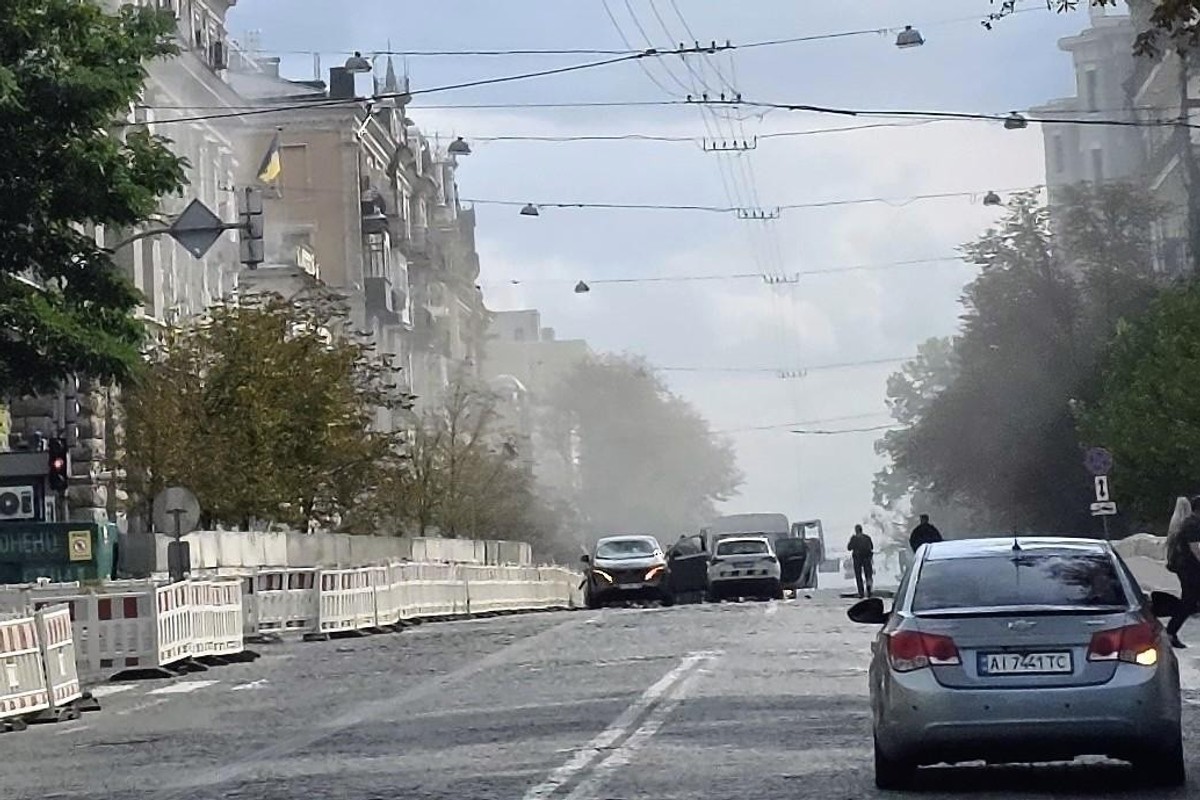
But Crimea is just one of the many challenges facing Putin. Omsk is burning, having been struck on July 6 by Ukrainian forces in their deepest strategic strike of the war. The Omsk oil refinery is located approximately 2600 kms from Ukrainian territory and is Russia’s largest oil refinery and its top producer of gasoline. There are still lingering oily black clouds over Moscow from the June 18 Ukrainian strike on the Gazprom Neft refinery in southeast Moscow—just ten miles from the Kremlin. The refinery was struck by over 200 drones and sent thick greasy black clouds of burning petroleum directly over the high-rise and residential areas fthat are avored by Moscow’s elites. The clouds created “black rain” and forced disruptions at Moscow’s four airports.
A few weeks before, there were oily black clouds over St. Petersburg as Russia hosted its annual St. Petersburg International Economic Forum in early June. International visitors to the Forum (whose attendance has seen a significant drop since 2022) were re-routed to avoid risk of Ukrainian drone strikes and to avoid the clouds of burning petroleum. This read like quite the humiliation for the architect of Russia’s current economic disaster.
As devastating as Ukraine’s attacks have been, the situation on the front is even worse.
A recent thinktank study indicates that Russian forces have suffered 1.4 million total casualties including 450,000 deaths on the battlefield. Approximately 32% of Russian casualties result in death, a fatality ratio that is much higher than modern Western military standards would allow. Reports by analysts and Russian military bloggers indicate that once a Russian soldier is deployed directly into an active combat zone, their average life expectancy drops to just 20-25 minutes. The average survival time for a raw recruit measured from the moment they arrive at a regional training ground to their death in Ukraine, ranges from ten days to three weeks. Even by the Russian standards that were established for casualties in World War II, these losses are staggering and must be causing alarm bells to go off amongst Russia’s elite leadership. There is more visible criticism of how Putin is conducting this war than has even been seen before.
On the diplomatic front, challenges for the Russian president are rising. This week’s NATO summit is yielding results on Europe’s commitment to defense spending and re-armament, led by Germany which is considering incurring state debt to finance defense spending which would be unprecedented for a postwar German government. Putin’s confidence in his ability to count on President Trump to put pressure on Ukraine to end the war on terms that are favorable to Moscow may be eroding and Trump has recently acknowledged Ukraine’s success in the war.
Putin’s reliable ally in Belarus, Alexander Lukashenko, seems also to be reconsidering the state of play and his enthusiasm for allowing Moscow to drag Belarus deeper into the conflict with Ukraine. resident Zelensky recently demanded Belarus take offline four relay facilities in Belarus’s Brest and Gomel regions near the Ukrainian border. These relay stations acted as signal boosters for Russian drones used to attack Ukrainian cities. The relays have been taken offline.
President Zelensky has just authorized a forty-day intelligence and security operation to heavily amplify pressure on the Kremlin to end the war. He is arguing that Russia’s elites live in Moscow and St. Petersburg and therefore, the war must be brought to their doorsteps. He also predicted that “When not one hundred drones but a thousand start reaching Moscow…Putin will be advised to move somewhere beyond the Urals. Zelensky is right and Ukrainians know Russia better than anyone in the West.
Despite the pressure he is under, it is too early to count Putin out. He has largely and cleverly managed his tenure as Russia’s leader. He is still two years short of Stalin’s 29 year record at the helm, but he is getting close and in his 27 years of running Russia, he has dug his tentacles deep into every level of the country’s power structure and has certainly accumulated kompromat on any potential rival or replacement. Many have speculated that if Putin departs the scene, his replacement could be an even worse partner for the U.S. and the West. I won’t argue that any replacement or coalition that follows Putin will be less anti West than Putin, but whatever constellation follows, they will not have the benefit of having roots and leverage as deep in Russia as Putin does.
For the moment, Putin still has escalatory options he can use to respond to increasing pressure.
In recent weeks, Russia has taken steps to close or severely restrict seven critical railway border crossings and road traffic crossings into Finland, Estonia, and Latvia. Apparently, negotiations are under way to restrict crossings into Kazakhstan and other central Asian states. The motivations for the abrupt closures are unclear but they suggest that Putin may be considering a mass mobilization and is trying to stem the likely departure of military age males to avoid the departures that have occurred since February 2022.
Mobilization alone will not solve Russia’s problem of shortages of equipment and training for conscripts as well as Russia’s World War I-style battlefront tactics. President Zelensky spoke on the margins of the NATO summit this week and said Ukraine is causing over 30,000 Russian casualties a month.
Putin can also rattle the nuclear saber again, but that is likely to be largely ignored as has his previous saber rattling. Most experts are confident that Putin has received firm guidance from his only remaining reliable ally China that he should not open the nuclear Pandora’s box in Ukraine.
The intelligence and security services in the Baltic States, Sweden, and Poland have recently assessed that Putin may try a provocation against one of the bordering NATO states in order to force an Article V action—which he hopes Trump would reject. But few analysts think Putin would risk an all-out war against NATO. That would be a path that could only accelerate Ukraine’s path toward NATO membership and could lead to further disasters for the Russian military, which many experts considered to be the most powerful conventional military in Europe prior to February 2022.
Putin’s most likely response to his current challenges is to continue to take advantage of weaknesses in Ukraine’s air defenses, particularly against ballistic missile attacks and hope that at some point, Ukraine’s morale weakens and pressure increases on Zelensky to end the war on terms that are more favorable to Russia. Such a change in Zelensky or Ukraine is inconceivable to any rational analysis of the current state of the war, but Putin is clearly not rational.
The Cipher Brief is committed to publishing a range of perspectives on national security issues submitted by deeply experienced national security professionals. Opinions expressed are those of the author and do not represent the views or opinions of The Cipher Brief.
Have a perspective to share based on your experience in the national security field? Send it to Editor@thecipherbrief.com for publication consideration.
Read more expert-driven national security insights, perspective and analysis in The Cipher Brief