

Each of my eight trips to Ukraine since retiring from the CIA in the summer of 2023 has been filled with unique challenges. Each time I’ve witnessed first-hand the sacrifices the Ukrainians are making on a daily basis to fight for their country’s independence. And while each trip has been physically exhausting, each one has also been highly inspiring because the Ukrainians are fighting to protect many of the traditional American values that I grew up believing in, including the right to self-determination, liberty and national sovereignty.
But my latest visit to Ukraine was by far the most difficult. Not just because the Russians are significantly increasing their air attacks on Ukrainian towns and cities or because Ukraine is once again going through a very cold winter while facing significant power shortages caused by Moscow’s attacks against energy infrastructure targets. But mainly because for the first time, I heard Ukrainians questioning my country’s commitment to helping them defend their country. Because I heard Ukrainian interlocutors conclude that the U.S. was not a reliable partner and because Ukrainians who are fighting to protect their country, questioned whether the U.S. was willing to abandon support for their cause in order to secure potential business deals with Russian dictator Vladimir Putin and his regime.
Remembering all the Americans I had served with over the years, especially those who made the ultimate sacrifice defending liberty and the honor of our country, it is extremely painful to consider the possibility that my country might choose to placate someone like Putin and, in doing so, turn its back on those who have suffered from Putin’s aggression.
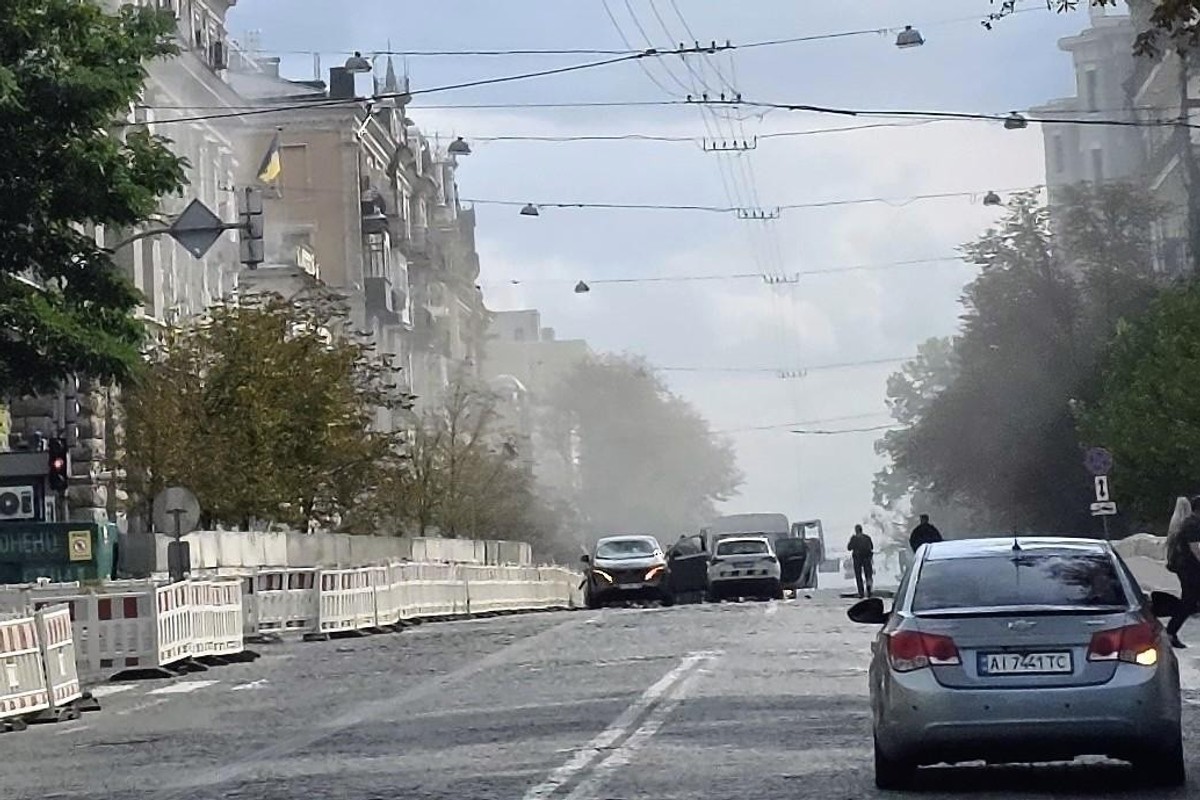
After more than 10 years of being at war, the Ukrainians are clearly fatigued. Russia's constant attacks against civilian targets are taking a toll. Families throughout the country are living without regular access to electricity and are subjected to daily mass Russian drone and missile attacks.
Ukraine's own internal corruption challenges, including the "Operation Midas" investigation, which resulted in the resignation of President Zelensky’s longtime advisor and head of the Presidential Office, Andriy Yermak, have raised questions among many Ukrainians about Zelensky and his Administration. The scandal also opened the door for many of the opponents of continued support to Ukraine to claim that Ukraine is a corrupt country led by corrupt leaders.
Of course, these critics forget that the Midas investigation is actually evidence of Ukraine’s efforts to deal with corruption and a development that highlights Kyiv’s determination to create a more transparent government based on “rule of law” principles. And there is no comparison between Ukraine’s efforts to deal with corruption, and Russia’s lack of transparency and complete rejection of “rule of law” governance.
Ukrainian fears about being abandoned by Washington are linked to the perception that the U.S. is going to end its support for Kyiv. Fears that are amplified by the recent leaking of the "28 Point Plan" that was initially presented to Kyiv by the U.S. as part of Washington’s efforts to bring the war to an end and revelations that the bulk of the plan was written by the Kremlin and then delivered to the U.S. Special Envoy for the Middle East and Russia Steve Witkoff by Russian Sovereign Wealth Fund head Kiril Dmitriyev.
These leaks bore many of the hallmarks of a Russian disinformation campaign, and whether or not the Kremlin leaked this information, there is little doubt that Moscow is using the leaks to undermine the U.S. internationally; to drive a wedge between the U.S. and its allies in Europe; to undermine the morale of the Ukrainian population; and to deceive international and domestic audiences into believing Russian President Vladimir Putin is trying to find a peaceful resolution to the war that he started.
Moscow has worked relentlessly to create the impression in Washington, Brussels and Kyiv - that the Ukrainian Armed Forces are on the verge of collapse, and it is only a matter of time before Putin achieves his military objectives.
The Ukrainians, on the other hand, are trying to counter this narrative and demonstrate that the Russians continue to make minimal battlefield gains while paying a tremendous price in terms of personnel and resources.
While people are tired, few appear ready to surrender or give up. Many equate surrender to betrayal of the memories of those Ukrainians who have died since 2014 fighting to defend the country from Russia.
Putin’s effort to control the narrative on Ukraine is partially linked to his desire to cover up how bad his own hand is at present. Putin does not want the West to focus on how the Russian military continues to struggle to take small amounts of territory, while suffering high casualty rates. He does not want others to focus on Russia’s own struggles with growing financial, economic and social problems that threaten the long-term stability of his regime and the future of Russia itself.
In recent years, the Kremlin has shifted its limited financial resources to the Military-Industrial complex, resulting in cutbacks to social spending and bringing an end to support of critical civilian infrastructure projects. While this policy has resulted in an increase in defense production, it is bankrupting the country and in recent months even Russia’s defense industry has had to implement spending cutbacks. Many factories and production sites across Russia are unable to pay workers and have been forced to reduce their work week to three or four days per week.
The money that Putin was once able to use to incentivize Russians to join the military and fight Ukraine is drying up, forcing him to once again consider mobilization plans, which will no doubt be highly unpopular with many Russians, especially with the “elites” living in the country’s main population centers.
The war has also drained off workers, resulting in significant labor shortages. Putin’s war is threatening to plunge Russia into the chaotic and painful social and economic conditions that the country faced in the early and mid-1990s.
Before leaving on my latest trip to Ukraine, I was asked to speak at an event in Washington D.C. focused on the future of U.S.-European relations. During that event, one attendee told me that recent polling in the U.S. showed that - since President Trump’s January 2025 inauguration - support for Ukraine among Republicans had risen significantly. This claim was supported by a report published by Defense One based on polling conducted by the Ronald Reagan Institute and a previous report published by the Chicago Institute on Global Affairs. These signs are heartening. In a system where the population’s interests should be considered by elected leaders, this means that the United States Government should be continuing its support for Ukraine.
The growing public support for Ukraine should give Ukrainians some hope that the U.S. is not going to abandon them. But it is hard for the Ukrainians to hear that message when it is often drowned out by much more negative news about alleged backroom deals made between Putin’s couriers and individuals close to President Trump and the very real possibility that those couriers are using their access to actively pursue a whisper campaign to influence the President and his policy decisions. That, combined with targeted leaks and distortions of facts to exaggerate the perception that Washington now prefers Moscow to Ukraine and the Europeans is painting a Russian-preferred narrative.
What national security news are you missing today? Get full access to your own national security daily brief by upgrading to Subscriber+Member status.
It is correct when President Trump says that he inherited a terrible situation in Ukraine. I also agree that as the elected leader of the most powerful country in the world, President Trump has a responsibility to try to end the bloody and senseless conflict.
The President deserves credit for trying, although I do not agree with his periodic claims that the Ukrainians, or their President, are guilty of starting the war - or that Kyiv does not want to end the war. Vladimir Putin is guilty of starting the conflict and despite all of President Trump’s efforts and the Ukrainians willingness to try to find a compromise, Putin has continued to make maximalist demands and drag out the conflict in hopes of stealing more of Ukraine’s territory and feeding Russia’s defense industrial complex, which is now the sole functioning part of Russia’s struggling economy.
It appeared President Trump recognized this reality in October, when he canceled plans to meet with Putin in Budapest and levied new sanctions on the Russian Energy sector. Unfortunately, the President allowed Putin to manipulate the U.S. team into thinking Putin was ready to negotiate in November, opening the door to a lot of Russian disinformation and information warfare designed to undermine the U.S., Ukraine and its allies - but not designed to bring the war to an end.
Over the past year, I have seen the level of political infighting within Ukraine increase. During a discussion with one Ukrainian General in September of 2024, the General opined that historically, Ukraine had never lost a war to Russia but had lost many wars to itself. He warned that internal political struggles in the country allowed the Russians to identify and exploit the political ambitions of some leaders and use these ambitions to divide the country and undermine national unity.
Ukraine is again facing the threat of serious internal divisions that the Kremlin will manipulate and use to achieve its military and political objectives. It appears likely that the Ukrainian government will hold elections in 2026, and the U.S. and the West should be ready to help Kyiv protect those elections from Russian interference. There is also little doubt that Russia itself will not hold fair elections in 2026 or as long as Putin remains in power.
As an American, I pray that our elected leaders will not repeat the mistakes made by British Prime Minister Neville Chamberlain when trying to deal with Adolf Hitler. The appeasement of Hitler by forcing allies to cede territories to the Nazi regime in Berlin did not lead to “Peace in our Time”. It led to a much greater and more horrific World War that could have been stopped if the English and French had taken decisive action against Hitler at that time.
To “Make America Great Again”, Americans need to stand up for what is right. Right - is not appeasing Putin. Justice is not allowing Putin to get away with stealing large portions of Ukraine’s territory and then benefit from killing more than a million Ukrainian and Russian citizens in a war that was designed to protect Putin’s personal power and re-establish an empire that has collapsed twice in the last 150 years.
As an American, I pray that we find our way through this very confusing and troubled period, hold the aggressor, Putin, accountable for his crimes, and successfully bring this war to an end while protecting Ukraine’s sovereignty and America’s reputation in the world.
All statements of fact, opinion, or analysis expressed are those of the author and do not reflect the official positions or views of the US Government. Nothing in the contents should be construed as asserting or implying US Government authentication of information or endorsement of the author's views.
The Cipher Brief is committed to publishing a range of perspectives on national security issues submitted by deeply experienced national security professionals.
Opinions expressed are those of the author and do not represent the views or opinions of The Cipher Brief.
Have a perspective to share based on your experience in the national security field? Send it to Editor@thecipherbrief.com for publication consideration.
Read more expert-driven national security insights, perspective and analysis in The Cipher Brief