


This is happening as Washington struggles to assemble an international coalition to help secure the vital shipping lane. U.S. officials have urged countries that rely heavily on Gulf energy exports to contribute naval forces to protect commercial shipping, but diplomatic efforts have been uneven as some governments hesitate to become directly involved in a rapidly escalating confrontation with Iran. Meanwhile, insurers have increased war-risk premiums for vessels transiting the strait and Gulf producers are exploring alternative export routes as tensions mount.
I sat down with energy expert and former National Intelligence Manager for Iran at ODNI, Norm Roule to talk about the strategic stakes surrounding the Strait of Hormuz, and the ripple effects being felt around the world. Our interview has been lightly edited for length and clarity.
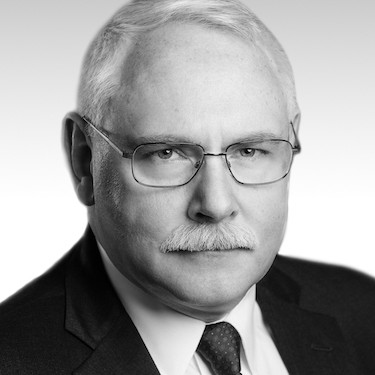
Norman T. Roule
Norman Roule is a geopolitical and energy consultant who served for 34 years in the Central Intelligence Agency, managing numerous programs relating to Iran and the Middle East. He also served as the National Intelligence Manager for Iran (NIM-I)\n at ODNI, where he was responsible for all aspects of national intelligence policy related to Iran.
Kelly: Give us a sense of what you're thinking about the Strait of Hormuz today as we see what's happening there and what do you anticipate are the ripple effects from this moving forward?
Roule: The U.S. military has been paying attention to this problem set for many years. I’ve read a lot of articles about Iran's capabilities in the region, and they are genuine. They're serious. But our military has studied this for a number of years, and they have plans and capabilities. These capabilities must be arrayed in a specific fashion. They can't be rushed. As you can tell, I'm talking around things and that's appropriate.
I also believe this is something best done as a team. The Strait of Hormuz is an international body of water. It's not owned by the United States. Something that I think is terrifically negative right now is that you have some countries contacting the Iranians, in essence, negotiating the right to pass through the Strait of Hormuz. That's a terrible thing.
The Iranians are on one side of the Strait of Hormuz. The Musandam Peninsula, the tip of which is controlled by the Omanis, is on the other side. The Omanis don't control the Strait of Hormuz. The Strait is an international body of water, which means you would want - in theory - a global coalition led by the United States. And that would be consistent with the December 2025 Trump National Security Strategy to operate some sort of coalition to free that for international commercial trade.
This would take a fair amount of resources so burden sharing would be important. And also by having many flags there, it would require that the Iranians in essence, fire upon the world when they attack any tankers or container ships going through.
The strait is also important for Iran. And this is sometimes forgotten. About 28% of Iran's GDP is derived from the traffic that comes from the port. Food, wheat, and other grains arrive through the Strait. So, Iran can sustain a closure for a short period of time, but the Iranian people need to be sustained by an open port, an open Strait of Hormuz.
Right now, if you're the U.S. Navy, you would want to do several things. First, you're going to make sure that you have reduced Iran's capacity to the largest degree possible to fire missiles, to deploy mines, and to deploy swarm speedboats and submarines. Then, once that's done, you're going to want to develop a convoy with the appropriate security capacity to move commercial shipping up and down through the Strait into the Persian Gulf and to ensure that that convoy is protected from drones.
Now, that last point is important because the drone and missile firings by the Iranians has been significantly and dramatically reduced over the last several days, but the numbers are still high for a convoy. You wouldn't want to have a container ship or an oil tanker face 40 or 50 drones at any one time. So, I think it's entirely prudent of the U.S. Navy to say, hypothetically, I don't know this, but I would assume, ‘Mr. President, we're getting ourselves lined up, but we'd like to spend more time reducing Iran's drone capacity. and spending more time making sure there are no more mine laying vessels or mine caches on Iran's shore. And then once we have that taken care of and perhaps put together a coalition, we will begin operations.’
You've seen in the president's recent social media, even an allusion to an international coalition. So, I think something is being developed and it may not be made apparent to the American people, but war plans aren't something that you usually put into the open press. So, we need to have some patience and understanding and confidence in our very effective, very well-led American military CENTCOM and our naval forces.
Kelly: OK, but let's take stock for just a moment of what's been achieved over the past couple of weeks. A lot of Iran's missile program has been decimated. They do still have drones, as you point out. They still have mines in the strait. They still have the Quds Force, how are you assessing the threat still posed by Iran today?
Roule: You're correct. We have dramatically reduced Iran's missile program. Iran is now finding out that there is no such thing as a subterranean storage location that we cannot attack and collapse. It just takes a while for us to work through that with the Israelis, hence their missiles, their launchers, and their missile personnel are being significantly degraded.
And the drones, similarly, mobile launchers and mobile drones that are systems that are above ground are taking a longer period of time, as you would expect. It takes a while to locate those and that becomes a problem.
For the Quds Force and the IRGC, you have two different issues going on. First, the United States has, and the Israelis reportedly, have destroyed a large number of these facilities in Tehran and throughout the country. Now, this has done several things. First, it's destroyed large numbers of buildings. Now one would expect that prior to this conflict - which people knew was coming - that they probably got out of those buildings. But in any case, their headquarters buildings have been destroyed, files have been destroyed, structures have been damaged. They're probably dispersed throughout cities now and in the countryside, so the efficiency of the organizations is significantly degraded. The least degraded would probably be their cyber capacity because that was already dispersed throughout the country and even sometimes, out of the country.
But nonetheless, this has meant that the capacity of the Revolutionary Guard, the law enforcement forces, even some of the police elements that were oppressive elements against the population have been reduced to some extent. To what extent? It's not known because of the information blackout. The U.S. government probably knows but that would obviously be classified.
Iran’s capacity to oppress its people has also been reduced. What I think would be most interesting is if you are a revolutionary guard or a ministry of intelligence or a security official abroad, you're probably not getting a lot of instructions from home. You may not even be getting paid. You may not even have a home, which makes it unclear as to what sort of capacity for terrorism, for operational work you have abroad, which is important if we have concerns about their ability to conduct terrorism - terrorism abroad and threats against American or American interests elsewhere. But these operations are important, although of course, they do require air assets, and they take time and capabilities from other targets.
Kelly: What should we expect from this new governing structure, which assumedly, is going to continue to be targeted by the U.S. and Israel for some time?
Roule: There really are very few surprises here. The personnel who are around the table, if they are able to meet in this turbulent and dangerous environment, are pretty much the same people who were around the table prior to the conflict, albeit they were further down in the pecking order and they've replaced individuals who were killed in the conflict. The head of the Revolutionary Guard, Ahmad Vahidi, is a longtime Revolutionary Guard officer. He was born I think, around 1956 and joined the Revolutionary Guard in 1979.
He led the Quds Force prior to Qassem Soleimani, a very dark and dangerous individual. He is wanted by Interpol for his involvement in the AMIA terrorist bombing. He was a previous Deputy Defense Minister, Deputy Commander of the Revolutionary Guard. But you can, he's a long-time career Revolutionary Guard individual. These people been around for a very long time. And of course, the new supreme leader, Mujtaba Khamenei was a member of the Revolutionary Guard as a young man. He fought at the tail end of the Iran-Iraq War. He is known to have hardline views, likely supports Iran's acquisition of a nuclear weapon, supports Iran's revolutionary role in the region. He is an individual who believes in the militaristic role of the Revolutionary Guard. And what I mean by that also is the role of the Revolutionary Guard in Iran's economy.
Need a daily dose of reality on national and global security issues? Subscribe to The Cipher Brief’s Nightcap newsletter, delivering expert insights on today’s events – right to your inbox. Sign up for free today.
So, you don't have a change in the system. And of course, I should also say he ran the campaign and helped put then-candidate Ahmadinejad in power. He is not a lightweight. He's not an intellectual lightweight. He's not a religious heavyweight, but I don't think that's the intention of this regime. What you're looking at is the next phase of leadership.
If you look at this in terms of the previous regime saying, ‘Well you know he's not the same guy as his father. He's not a senior religious official. He's not speaking like his father. He doesn't have the same titles. He doesn't have the same education,’ that’s the wrong view. This is the new generation. This is the post-revolutionary generation. This is the evolution of Iran's government to a new world where they are maybe more engaging of the world, more aggressive, more assertive, but they're not tied to the revolution. We have a world where there more women in Iran's parliament than clerics. That's fine with them. They don't need to have someone who has the same religious bearing as the predecessor. And I'm not quite sure that we have ingested that in our analysis in the West.
Where do I see this going? Their job now is not only survival of the regime, but survival period. At the end of this conflict, my sense is that they're going to want to do two things.
First, put out a bellicose rhetoric to claim that they have survived, won, defeated the United States, could defeat the United States again, can damage the region. But more so, they need to make sure that they're alive in six weeks or six months or six years, because as history has shown over the last couple of years, quite a few Iranian leaders and Iranian proxy leaders have had a rather short lifespan or a rather sudden departure from this earth and I think they're going to want to have some kind of a shift in that dynamic.
Here's the challenge. If they achieve that, if they achieve some sort of agreement where there is a ceasefire that doesn't mean they're going to stop building a nuclear weapon or they're going to stop building a missile program that moves toward an ICBM - or that the Quds force is going away and they're going to stop building good proxies in the region. So, there is a challenge for the region and for the United States in dealing with this government in the future.
Kelly: What are some of the things that you believe that the U.S. government should be paying close attention to when they're planning for how this new Iranian leadership may evolve and how it may be more aggressive and how it may go back to that nuclear issue with a renewed sense of purpose?
Roule: With the Iranian government, two factors just need to be kept in mind, in my view. The first is that they need to know that we're always watching.
The world has changed in terms of the tools that are on the table. For many years, the West would state all options are on the table. That was our position. That was Europe's position. But we watched as multiple red lines turned pink. And the Iranians violated an endless array of them, killing American servicemen in Iraq, building and having a nuclear weapons program, Tehran’s proliferation of missiles, shutting down the Red Sea with missiles - I mean, just an astonishing list that includes attempting to kill Americans in the United States, attempting to kill a presidential candidate. It's an extraordinary list.
They need to know if we see it, we're going to respond and it's likely going to be a military response and we're not going to waste time. If they believe that, that our intelligence programs will remain heavily resourced, active and successful, and our military focus will be immediate and robust, I think that will contain them and constrain them. But the moment that either of those slip, I think the Iranians will, at the very, very least, seek to test whether the red lines again, are turning pink.
Kelly: Do the Israelis have a different set of metrics in order to determine what victory looks like in Iran?
Roule: The United States and Israel have a very different geographic location. For the Israelis, they're sitting much closer to a country that writes ‘Death to Israel’ in perfect Hebrew on its missiles. They're sitting next to a country that has launched hundreds of missiles against Israel. Now, remember Israel has, according to press reports, a nuclear weapons program, and that hasn't stopped Iran from attacking it on multiple occasions.
Iran has attacked Israelis and Israeli officials and Israeli nationals on multiple occasions around the world, successfully and unsuccessfully over the years. It is a serious, mortal, and potentially existential threat to Israel. So, their barrier for what they need is going to inherently be higher than ours. But in the end, our goals are parallel.
What it comes down to is going to be what their requirements are on - we'll call it the technical oversight - the technical demands, the requirements to make sure that Iran’s nuclear program isn't being developed and perhaps clarity around guarantees of joint action or the capability that the Israelis might want to have to independently act to ensure their capacity to do this if they see on their own that something is being done. So, they're not compelled to rely upon us if our politics don't allow us to act on our own. Because again, they're in a very different world.
Kelly: Israel has exquisite intelligence on what's happening inside Iran and with Iran's nuclear program. They have launched campaigns in the past that have taken out Tehran’s nuclear scientists. What do you think the likelihood is that Iran’s new regime won't double down on redeveloping their nuclear program?
Roule: In many ways, the United States was offering a pretty good deal to the Iranian government and was asking the Iranians for very little in return. The Iranians do not have an enrichment program at present. It was largely destroyed in the June war. You can call it obliterated or severely degraded, whatever variation you want to use.
The medium-range ballistic missile program needs to be constrained at some point, and we need to stop the proliferation of missiles to the Houthis and other countries. And last, of course, the terrorism program - militia building of the Quds forces - something everyone in the region and in the world would agree, is a terrible thing.
I don't know anyone in the world that would say the United States isn't asking for something reasonable. And in return, we would lift sanctions largely on Iran, and Iran could normalize its relations with the region and build a great energy program. The Iranians refused. It just makes it seem like these aren't reasonable people. It does sound as if they are aiming for something dangerous. So that enrichment program does appear to be something that we're going to have to focus on to ensure that Iran does not have a program, even if it's under heavy international supervision.
Kelly: We'll be looking for whether the U.S. will take a stand and declare victory on some level over the next few days and weeks. What are you looking for in the short term, let's say over the next two to three weeks?
Roule: The continued collapse of missile and drone firings from Iran; the development of any international naval force as a potential regarding the Strait of Hormuz; the potential departure from this earth of any Iranian leader.
I would worry about any catastrophic success that the Iranians may have with any of their missiles or drone attacks. We have seen extraordinary defense by our Gulf partners and we haven't talked about that, but I'd like to spend a couple of moments on that if I may.
Our Israeli partners have done magnificent work on air defense. They've got a lot of experience, a lot of great well-trained people and a lot of good technology. They've got a lot of motivation. You would expect this and they're doing just wonderfully at this. But the Gulf nations don't have a lot of history of combat and air defense, and they have faced an unprecedented, just for any country in the world, number of missile, drone, and cyberattacks simultaneously to a degree that would challenge any country in this world.
I urge all of your readers just to look at the statistics and to look at how well these countries have performed. This is a testimony to their leadership, to their investment over many years, to their training, largely using Western American technology.
This tells you about the private sector and the companies that have been working with them for many years, and how well those relationships have evolved. When you look at how the economies have continued to run while these countries are under attack, so that the Emirates, who for the longest time, were taking the largest number of hits, that tells you just how extraordinarily well that society is running with its population.
The Emirates and Saudi Arabia have managed to produce vast amounts of oil to keep the world economies going. They've defended against hundreds of drones and missiles, and they've done this amid thousands of cyberattacks. And the cyberattacks don't get much publicity. I think there's a tremendous story.
Need a daily dose of reality on national and global security issues? Subscribe to The Cipher Brief’s Nightcap newsletter, delivering expert insights on today’s events – right to your inbox. Sign up for free today.
Our interview has been lightly edited for clarity. You can also watch the interview and other conversations with Cipher Brief Experts by subscribing to The Cipher Brief’s Digital Channel on YouTube.
Read more expert-driven national security insights, perspective and analysis in The Cipher Brief because National Security is Everyone’s Business.