


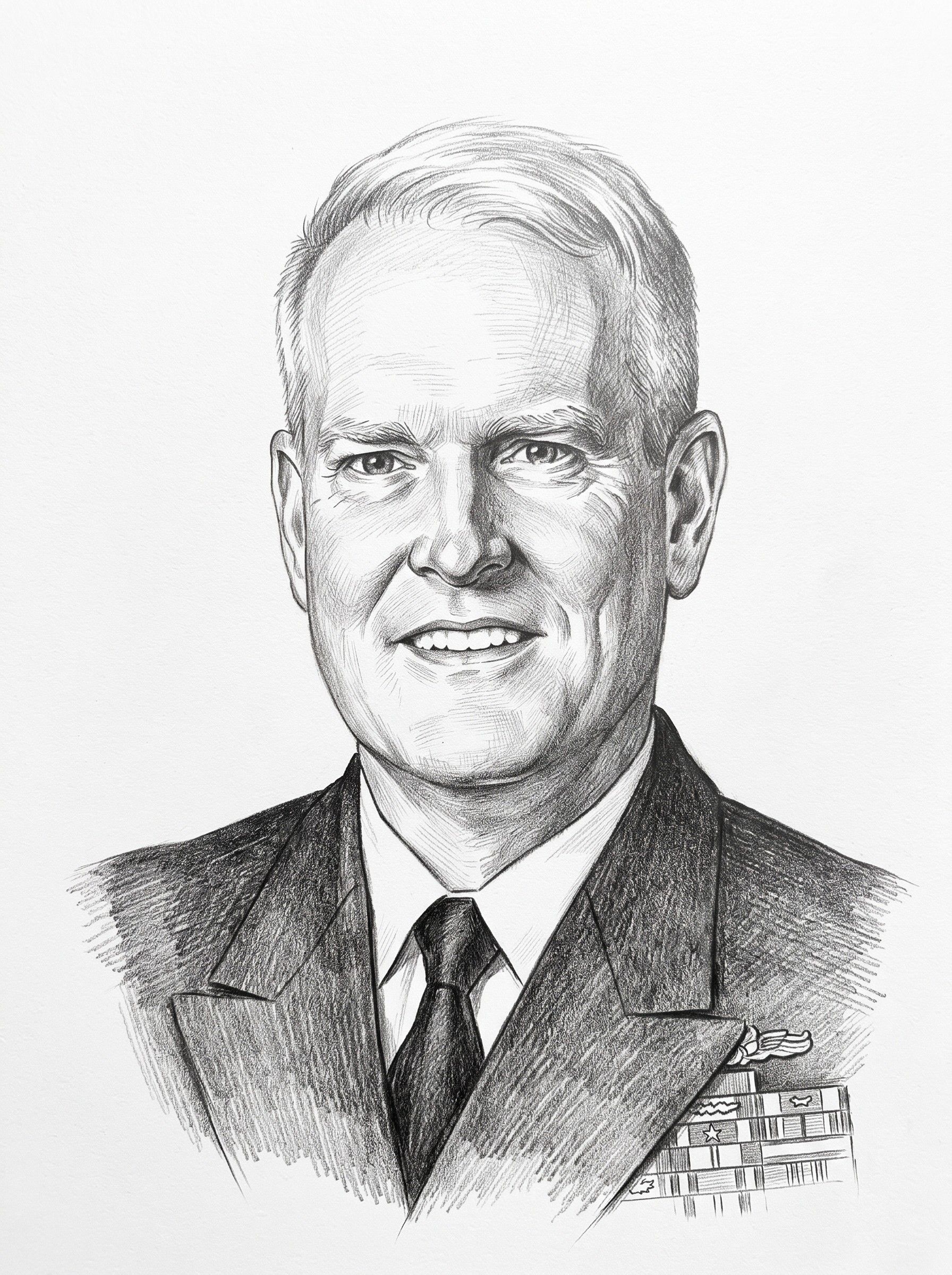
Editorial note: This is the third in a four-part series from former National Geospatial-Intelligence Director VADM Frank Whitworth (Ret.) on the reluctant revolution in military affairs and what it means for future intelligence and defense. This series of perspectives was adapted from a previous white paper written by the author two years ago, while he was on active duty.
In Part One, VADM Frank Whitworth (Ret.) argues that the U.S. military is embracing autonomous, remote warfare in space and cyberspace while resisting similar changes on the battlefield. He warns that this reluctance, rooted in institutional hubris, tradition and emotion, could weaken America’s military advantage. In Part Two, he examines how Ukraine’s rapid expansion of drone production has outpaced the United States and argues that limited investment in unmanned systems reflects a broader reluctance to adapt how the military prepares for war.
"Our problem is breaking out of a vicious cultural cycle that perpetuates platforms with warriors inside—and forward. "- VADM Frank Whitworth (Ret.)
Let's examine three root causes of this cultural cycle: tradition, arts, and emotion.
Tradition: It is difficult to find written sources confirming an American bias towards forward, operational elements in the military instead of support elements in garrison – but the bias exists. In my career, I have come to accept this as an outgrowth of traditions instilled during the Industrial Revolution and the work ethic on which America was founded. Even as automated as our society has become, Americans (particularly military personnel) find dignity in labor and respect those who use their hands, legs, and backs. While the 2024 election yielded a debate on the political viability of American laborers, every generation can point to foundational members of families or communities who labored themselves (and most importantly, their children) into better lives. This tendency bleeds into the military ranks, where “extra respect” is paid to those who maneuver for a living – rather than those who “support” maneuver through cerebral efforts such as intelligence, logistics, and public affairs.
Arts: This emphasis on forward and operational combat service is perpetuated by the American film industry well after the end of combat operations. The stories are nearly always dramatic, compelling, and inspiring – and the public simply cannot get enough. These films can have a profound effect on the perceptions of both civilian Americans and active military members – as they build expectations for the next conflict, no matter how weapons or tactics may have progressed. One article led by Dr. John Chapin in the Army War College’s Quarterly Parameters in 2017 identifies the entertainment industry as a “Third Force” – meaning it literally can influence outcomes of armed conflict.
Music is not exempt from perpetuating this bias toward putting humans forward, proximate to combat. In 1917, George Cohan’s famous wartime propaganda song, “Over There,” urged Americans to take the fight to Europe: “We'll be over, we're coming over, and we won't come back till it's over over there.” It was written just as America was entering the fray of World War I in wake of historic casualty rates experienced by the United Kingdom at the Somme, Ypres, and Yoos. The song motivated American young men to enlist with pride and built esprit de corps in the ranks – even though 100,000 American forces would lose their lives by the war’s end in 1918. The song earned Cohan a special Congressional Gold Medal and exemplified an ethos that glorified Americans’ forward service (with the unfortunate exception of Vietnam) for the next century.
When one combines this “hand/leg/back” bias with the expectations already baked into societal portrayals of “greatness” in military service – particularly in film and the arts – one can understand the vicious cycle the United States faces when trying to wrest humans out of planes, tanks, fighting vehicles, ships, and submarines. This can spill over to emotion and even hubris – especially during combat operations.
Emotion: If there is an unwritten code governing a warrior’s public communications during combat operations, it is to press on with orders and to keep criticism of those orders private – unless those orders are illegal, immoral, or wrongly endanger our troops. We witnessed an exception to that code during the most kinetic phase of Operation Enduring Freedom in late 2001 and early 2002 – and in hindsight, that exception was a clear indicator of reluctance regarding drones and this RMA of non-proximate combat. Worse, it reflected the emotion of unrealized grandeur and unmet expectations for independent air warfare.
During Operation Desert Storm, the four-star Combatant Commander of United States Central Command (USCENTCOM), General Norman Schwartzkopf, provided objectives and guidance to his land, air, and maritime component commanders. As was the tradition, he afforded them the flexibility to devise and direct combat operations. Only a decade later, that decentralized approach changed during Operation Enduring Freedom, the operation launched in response to al Qaida’s horrific attack on September 11, 2001. The USCENTCOM Commander, General Tommy Franks, centralized portions of his command and control of Enduring Freedom for two reasons. First, the United States’ political leadership had imposed tighter rules of engagement for the use of force, aimed at reducing collateral damage. Second and more applicable to the RMA we are examining in this paper, Operation Enduring Freedom was the first major conflict to employ drones (the MQ-1 Predator) in both intelligence and attack roles. Notably, those drones received orders from the USCENTCOM Headquarters, not from the forward-deployed Combined Air Forces Commander. This centralized approach did not sit well with the air component’s leadership, then-Lieutenant General Charles Wald and then-Major General David Deptula. Against military custom, Wald and Deptula aired their disdain for USCENTCOM’s centralized leadership in public venues, including the press.
Even in 2021, Deptula remained unrelenting in his criticism of USCENTCOM. Referred to as an “iconic airman” and the Dean of the Mitchell Institute for Aerospace Studies, Deptula overstates the audacity of command from afar: “We could not drop a bomb in Afghanistan without approval of the four-star commander of Central Command, which was ridiculous.” The emotion in such unmet expectations of forward commanders is tough to shake – and clearly is a component of our reluctance to accept the non-proximate nature of this RMA—particularly in the case of drones.
Read all four parts of the series exclusively in The Cipher Brief this week and please note that the views expressed in the article are those of the author and do not necessarily represent the views or endorsement of factual accuracy of the Department of War, the Department of the Navy, or the United States.
The Cipher Brief is committed to publishing a range of perspectives on national security issues submitted by deeply experienced national security professionals. Opinions expressed are those of the author and do not represent the views or opinions of The Cipher Brief.
Have a perspective to share based on your experience in the national security field? Send it to Editor@thecipherbrief.com for publication consideration.
Read more expert-driven national security insights, perspective and analysis in The Cipher Brief