



Brose correctly identified a history of “change labels” in the last three decades with no resulting or substantial adjustment to core military methods. This trend began with the oncoming “military technical revolution” in 1992, moved to Admiral Arthur Cebrowski’s “Network-Centric Warfare” in the mid-1990s, Secretary Donald Rumsfeld’s “transformation” in the 9/11 era, and Deputy Secretary Robert Work’s “third offset strategy” in 2014. Each brought a slight twist on a common theme: “…emerging technologies will enable new battle networks of sensors and shooters to rapidly accelerate the process of detecting, targeting, and striking threats.”
Brose did not stop there. He was critical of American procurement choices over the last three decades as Washington “…poured money into newer versions of old military platforms and prayed for technological miracles to come (which often became acquisition debacles when those miracles did not materialize.” Brose was prescient in identifying how inexpensive uncrewing could be – and how much change it required of the military mindset. Well before Replicator (DOD’s primary development program for autonomous vehicles) became a glimmer in anyone’s eye, Brose identified the need for fleets of drones, with ubiquitous communications and elements of autonomy.
To reiterate, this paper does not intend to prove and explain the United States’ reluctant acceptance of every facet of this “drones, codes, and spacecraft” RMA. In fact, during our application of Marshall’s principles, we cited three major developments that help rule-out our reluctance to accept non-proximate warfare in the space and cyber domains: specifically, the establishment of the United States Space Force, USPACECOM, and USCYBERCOM. Drones are a different matter, though – and to prove our reluctance, we will (a) compare the United States’ rate of “military drone fleet” development to that of Ukraine, and (b) demonstrate the stark difference in DOD’s acquisition budgets between manned and unmanned assets.
Globally, the number of nations with armed drone programs has accelerated. The rapid growth of armed, medium altitude, long endurance (MALE) drones (such as the MQ-9 Reaper) since 2001 is evident in this graphic from Drone Wars UK:
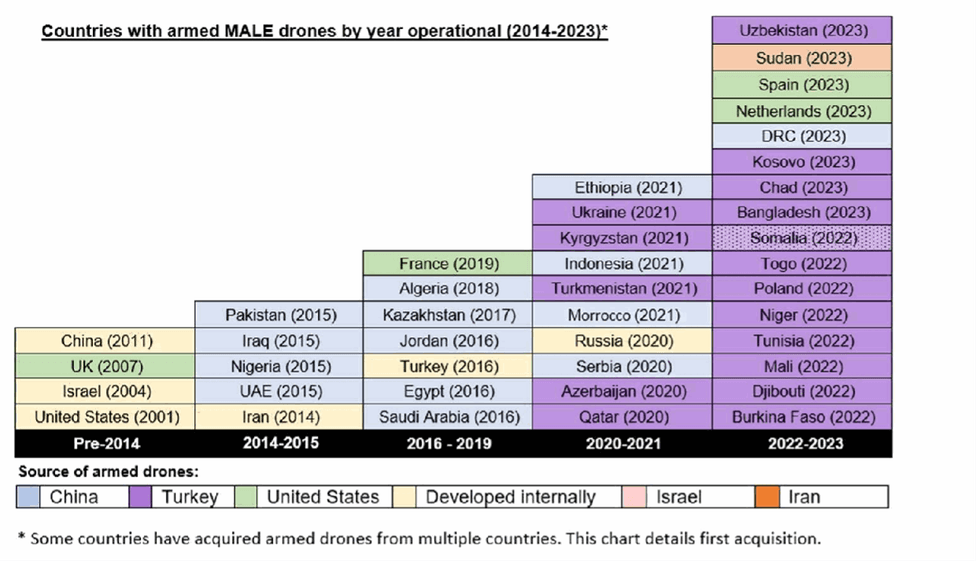
Source: Drone Wars UK
These large, MALE drones are important because they can deliver munitions lengthy distances and damage strategic targets such as infrastructure and headquarters. Since Russia’s invasion in 2022, Ukraine has transformed itself into a world leader of drone technology and employment. In fact, Ukrainian President Zelensky just announced in December 2024 that his country will produce 30,000 MALE drones next year. That nearly triples DOD’s entire drone fleet of 11,000 (a number that even includes smaller, non-MALE assets such as the hand-launched RQ-11B Raven). The United States’ production of military drones has been lapped numerically by Ukraine in only two years—despite America’s 20-year head-start in developing the technology.
The Ukrainian Ministry of Defense Transformation reports seven drone models were produced domestically in 2022, and that number has grown tenfold to 67 in only two years. Similarly, Ukraine now has an astounding 200 domestic drone manufacturers. This stands in stark contrast to America’s drone manufacturing sector, which has declined. With the United States’ withdrawal from Afghanistan and a reduction in military contracts, IBIS World estimates the United States has only 73 businesses in the UAV manufacturing sector. As representationally depicted in Figure 3, the sector is declining at a Compound Annual Growth Rate (CAGR) of 5.8 percent to $4.0 billion through 2024 (dropping 21.4 percent this year alone.)
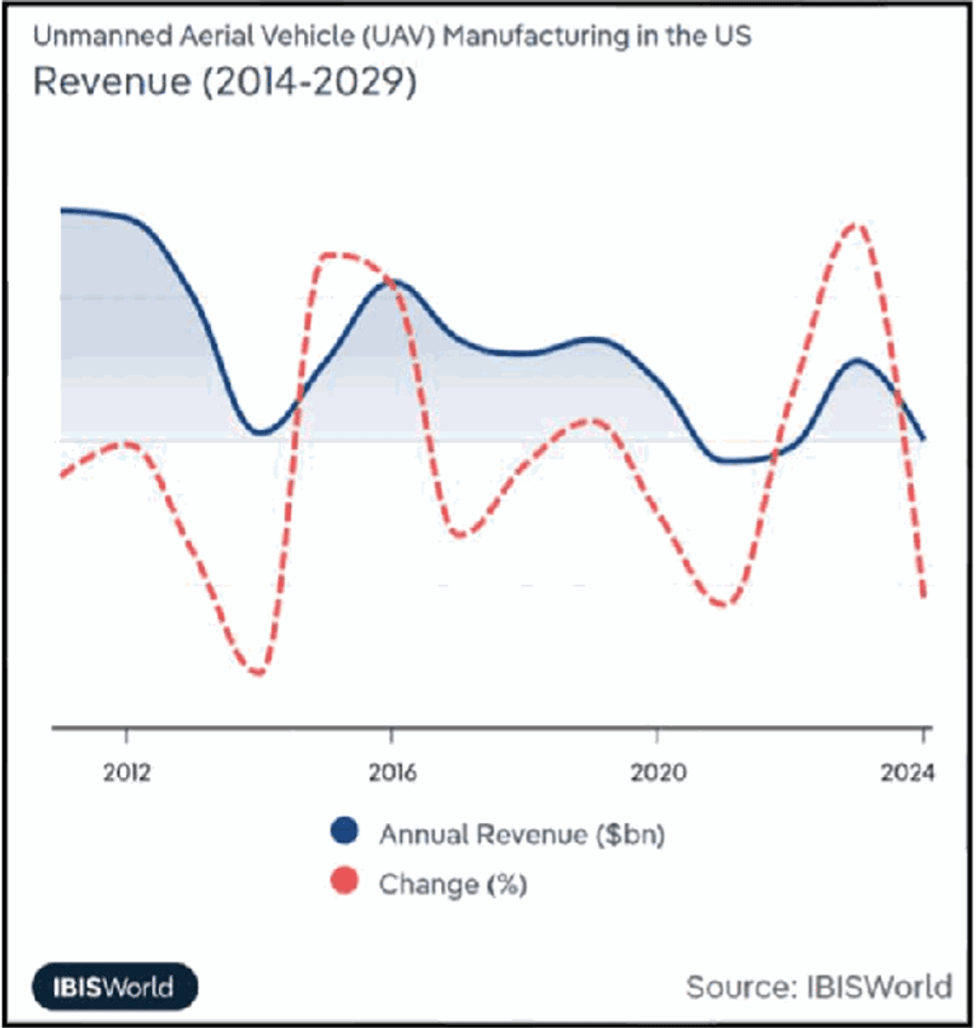
UAV Manufacturing in the U.S. — Source: IBISWorld
In examining expenditures reported in the Office of the Under Secretary of Defense, Comptroller’s April 4, 2024 report, “Program Acquisition Cost by Weapon System, FY2025,” the United States’ reluctance to adopting the “drones” portion of this RMA is demonstrated further. As depicted in Figure 4, unmanned aircraft systems account for less than four percent of DOD’s expenditures dedicated to overall aviation and related systems. Separately, there are no “unmanned” wedges in either the $48 billion of proposed expenditures for shipbuilding and maritime systems or the $13 billion or proposed expenditures for ground systems. To be fair to the Navy, they do lead the other services in Research and Development for unmanned systems – but those investments will require time before they are made manifest in the fleet.
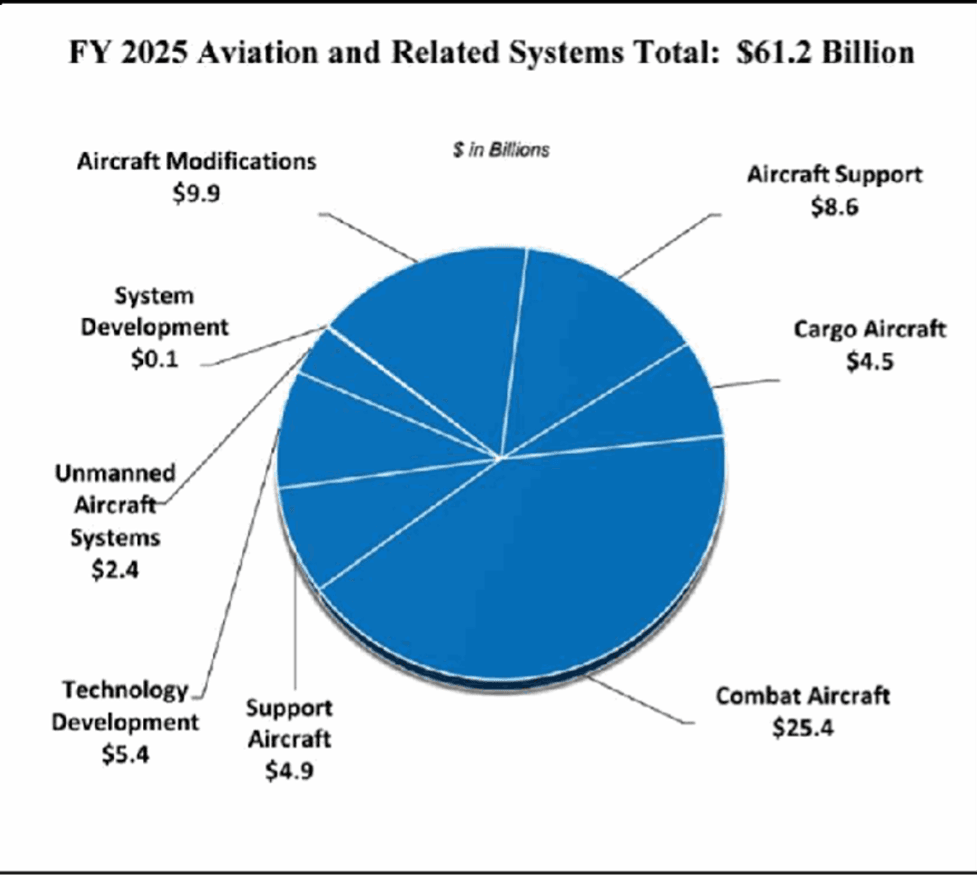
Figure 4: DOD’s FY2025 Aviation Expenditures — Source: DOD Comptroller
Editorial note: This installment is drawn from the author’s December 2024 white paper. Dates, figures, forecasts, and references to current events reflect that original context.
Part Three of this series focuses on identifying and testing our reluctance as this special series continues all week in The Cipher Brief.
Read all four parts of the series exclusively in The Cipher Brief this week and please note that the views expressed in the article are those of the author and do not necessarily represent the views or endorsement of factual accuracy of the Department of War, the Department of the Navy, or the United States.
The Cipher Brief is committed to publishing a range of perspectives on national security issues submitted by deeply experienced national security professionals. Opinions expressed are those of the author and do not represent the views or opinions of The Cipher Brief.
Have a perspective to share based on your experience in the national security field? Send it to Editor@thecipherbrief.com for publication consideration.
Read more expert-driven national security insights, perspective and analysis in The Cipher Brief