

Earlier this month I traveled to Ukraine and met with soldiers, corps commanders, and business leaders in Kyiv, Dnipro, Pavlohrad, and Kharkiv. I was in Kyiv on November 7 when Russia launched 36 ballistic missiles overnight toward the capital and the region around it. Ukrainian air defenses stopped four. The attack was aimed mainly at energy infrastructure, three days before negotiators met in Abu Dhabi.
I want to make the case for allowing Ukraine to hit the launchers that fire these missiles. What Ukraine needs is a White House approval, not a new weapon: permission to use Starshield, SpaceX's satellite service for military customers, as far as 300 kilometers into Russia and only against ballistic missile launchers. This is good for the United States. It would put pressure on Russia to negotiate seriously, there is no cost to us, and it is not complex.
Russia strikes Kyiv and Dnipro with its own Iskander ballistic missiles and with North Korean KN-23s. It fires them from mobile launchers spread across four regions: Voronezh, Kursk, Oryol, and Bryansk. Ukrainian officers put the number of launchers at about 65. A launcher typically stays at its firing position for only a few minutes before it relocates.
Ukraine does not have enough interceptors to stop these missiles. President Zelensky said on October 27 that Ukraine has received an average of 12 Patriot interceptors a month from the United States this year.
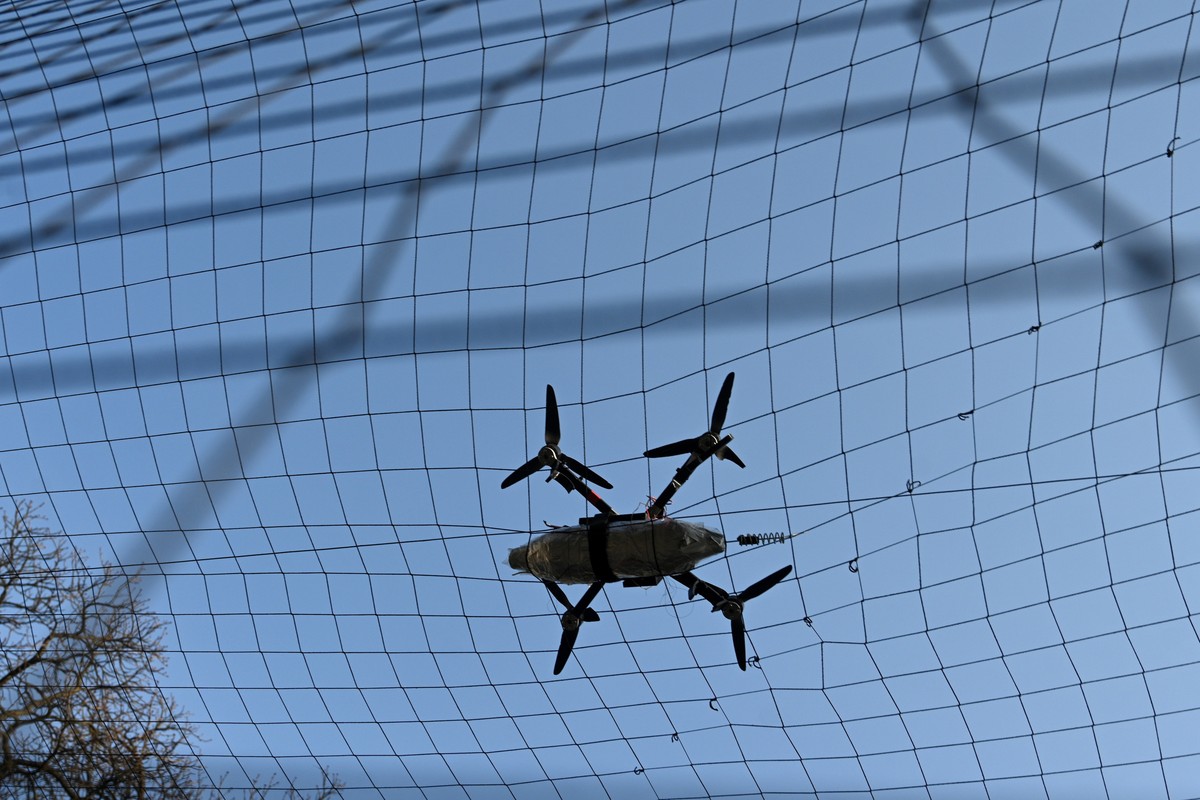
Ukraine began going after the launchers in May. Its officers describe the results so far as limited: some launchers damaged, few destroyed. They say Ukraine can now locate the launchers in most cases. What it cannot do is get a large enough warhead to them before they move. The drones Ukraine sends that far into Russia are controlled through radio relays and carry small payloads, so a hit usually damages a launcher without destroying it. Ukraine's bigger drones, with payloads of up to about 200 kilograms, fly on a Starshield link, which Ukraine has over occupied territory but not inside Russia.
If Starshield were available to Ukraine across a strip of Russian territory extending roughly 300 kilometers from the border, the officers believe they could destroy the majority of the launchers in it or force Russia to pull them back. In their judgment, Russia's ground-launched ballistic missiles would then no longer reach Kyiv, Dnipro, or the power plants of central Ukraine. Kharkiv would probably remain within range, and missiles launched from aircraft would not be affected. I cannot verify this estimate, but it comes from officers who have spent six months trying to hit these launchers.
Why this is good for the United States
Ukraine's army is holding the front, and the commanders I met expect to keep holding it. Russia has not been able to break through on the battlefield, so it is putting pressure on Ukraine's civilians instead. During my visit, some households in Kyiv without a generator were down to two hours of electricity per day. Russia is terrorizing civilians to pressure Ukraine's government, and ballistic missiles are the part of that campaign Ukraine has the hardest time stopping. On November 7, Ukraine stopped 149 of 172 drones but only four of 36 ballistic missiles.
The Kyiv Independent reported on November 18 that the Kremlin believes it has the advantage in the talks. It pointed to two factors: Russia's strikes on Ukraine's energy system continue, and Ukraine is struggling to get enough interceptors. It also said the Russian delegation in Abu Dhabi showed little interest in an energy ceasefire. The talks produced an agreement in principle on a prisoner exchange, but no breakthrough on a ceasefire or on territory.
If Ukraine can destroy the launchers or push them out of range, Russia loses much of its ability to hit Kyiv and Dnipro with ballistic missiles. That removes much of the pressure on civilians that Russia is counting on. Without it, Russia has less reason to believe it can win by waiting and more reason to negotiate seriously. I cannot say for certain that Russia would then agree to a settlement, but it has little reason to compromise while these attacks are working. Some have argued that allowing these strikes would not help end the war. I think the opposite is true.
Every launcher destroyed also means fewer missiles to intercept, at a time when we are short of interceptors ourselves. CSIS estimates that the war with Iran used up about half of our Patriot interceptors.
What it would take from Washington
There is no cost to the United States. Ukraine builds the drones and flies them, so no American weapons, interceptors, or new funding are needed.
It is also not complex. Ukraine already uses Starshield on its strike drones over occupied Ukraine, and the service ends at the Russian border. Ukraine reports that a speed limit has interfered with those flights this month; SpaceX says it has imposed none. The service is already controlled by terminal and by location, so letting registered Ukrainian terminals work 300 kilometers into Russia is a change to settings that have been changed before.
The decision belongs to the White House. Elon Musk has said that the U.S. government owns and controls Starshield, and that the U.S. military and ultimately the president decide the limits on its use.
The approval can be narrow: ballistic missile launchers only. This autumn, Washington objected to Ukraine's strikes on Russian refineries, and refineries would not be covered. Ukrainian officers say each terminal is registered individually, and that inside this strip they would move their strikes away from economic targets and onto military ones.
The White House should make this decision now. Ukrainian officers say Russia already protects some of its fixed sites with satellite jamming and is likely to have mobile jammers in a few months. Approving it would help protect civilians in Kyiv and Dnipro this winter, at no cost to the United States, and would give Russia a real reason to negotiate.
The Cipher Brief is committed to publishing a range of perspectives on national security issues submitted by deeply experienced national security professionals. Opinions expressed are those of the author and do not represent the views or opinions of The Cipher Brief.
Have a perspective to share based on your experience in the national security field? Send it to Editor@thecipherbrief.com for publication consideration.
Read more expert-driven national security insights, perspective and analysis in The Cipher Brief