

In a wide-ranging address to State Department employees Wednesday, Secretary of State Rex Tillerson laid out his vision for the future of the department, the Trump’s Administration’s “America First” approach to foreign policy, and global issues touching nearly every continent.
Tillerson’s speech, his second to department workers since being sworn in as Secretary in February, came amidst proposed dramatic changes at the State Department.
The President’s so called skinny budget would slash State funding by nearly 30 percent and eliminate as many as 2300 jobs. The Trump administration reportedly plans to merge the State Department and the United States Agency for International Development (USAID).
“The way we have been delivering was in many ways shaped and is residual of the Cold War era, and in many respects, we have not yet transitioned ourselves to this new reality either,” Tillerson said, without directly addressing the reports.
“I guess what I am inviting all of you to do is to approach this effort that we are going to undertake with no constraints to your thinking,” continued Tillerson, as he encouraged employees to participate in a department-wide survey on the mission of the State Department.
But he also acknowledged the upcoming changes will be difficult for employees. “Change like this is really stressful for a lot of people. There is nothing easy about it, and I don’t want to diminish the challenges I know this presents for individuals, it presents to families, it presents for organizations. I am very well-aware of all of that.”
Tillerson also touched on critical foreign policy issues. On North Korea, he reiterated the Trump Administration’s stance to be more assertive in their approach to Pyongyang’s nuclear ambitions.
“We have been clear to them this is not about regime change. This is not about regime collapse. This is not about an accelerated reunification of the peninsula. This is not about us looking for an excuse to come north of the 38th Parallel. So, we are trying to be very, very clear and resolute in our message to them that your future security and economic prosperity can only be achieved through your following your commitments to denuclearize.”
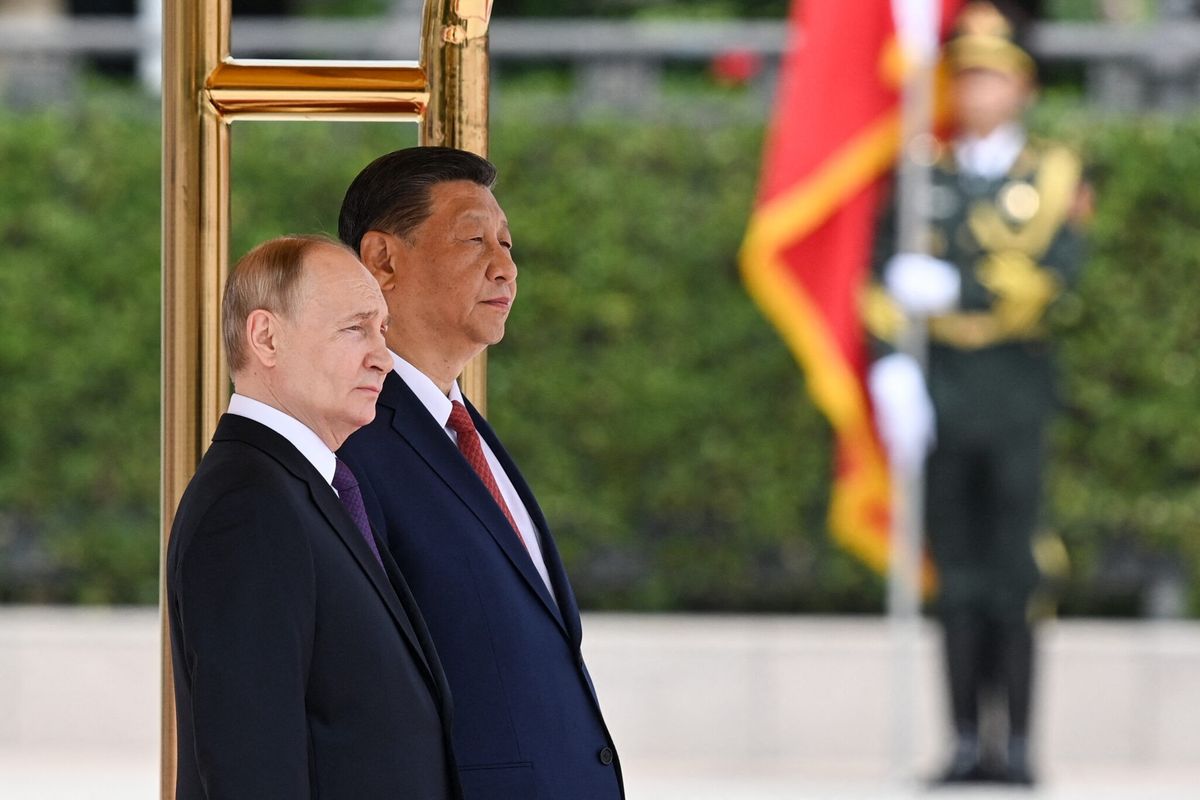
And Tillerson said the U.S. will push China to do more. “The assumption was China had limited influence on the regime in Pyongyang, or they have a limited willingness to assert their influence. And so I told the President, ‘We have got to test that. And we are going to test it by leaning hard into them.’”
Tillerson said the U.S. wants to take a “fresh look” at its overall relationship with China and where it is headed. Tillerson told the audience the administration wants to elevate talks with China and has asked Beijing to make politburo-level officials available to participate in dialogue with the U.S. in four major policy areas. He said the Chinese government appears willing to do so.
On the Middle East, Tillerson said there is renewed energy and commitment to defeating ISIS. While progress has been made in defeating the caliphate in Syria and Iraq, more work needs to be done in combating ISIS recruiting through social media and cyberspace, he said.
“A lot of work ahead of us. Many of you are directly engaged in it already. Many more of you will become engaged in it.”
On Russia, Tillerson reiterated the relationship with Moscow is at the “lowest it’s been since the Cold War.” He said efforts are underway to stabilize the relationship, with the first area of cooperation focusing on a ceasefire in Syria followed by peace negotiations.
“I don’t want to say we are off to a great start on this because it is in very early stages, I don’t know where it will go”, he said.
On Africa, he said the U.S. cannot allow the continent to become a breeding ground for ISIS, while acknowledging economic opportunities as well as health challenges.
“We have got to step back and take a more comprehensive look at our approach to the entire continent, and that is ahead of us as well,” he said.
Finally, addressing the situation in the Western Hemisphere, Tillerson said the U.S. relationship with Canada and Mexico “is not as rocky as it looks sometimes.” He reiterated the Trump Administration’s position of re-examining trade agreements with the two nations, and said both nations are ready to engage in “good-faith efforts” with the U.S.
With respect to South America, he acknowledged the administration still has to develop clear policies, particularly concerning the political crisis in Venezuela.
Verdi Tzou is a national security web editor at The Cipher Brief.