
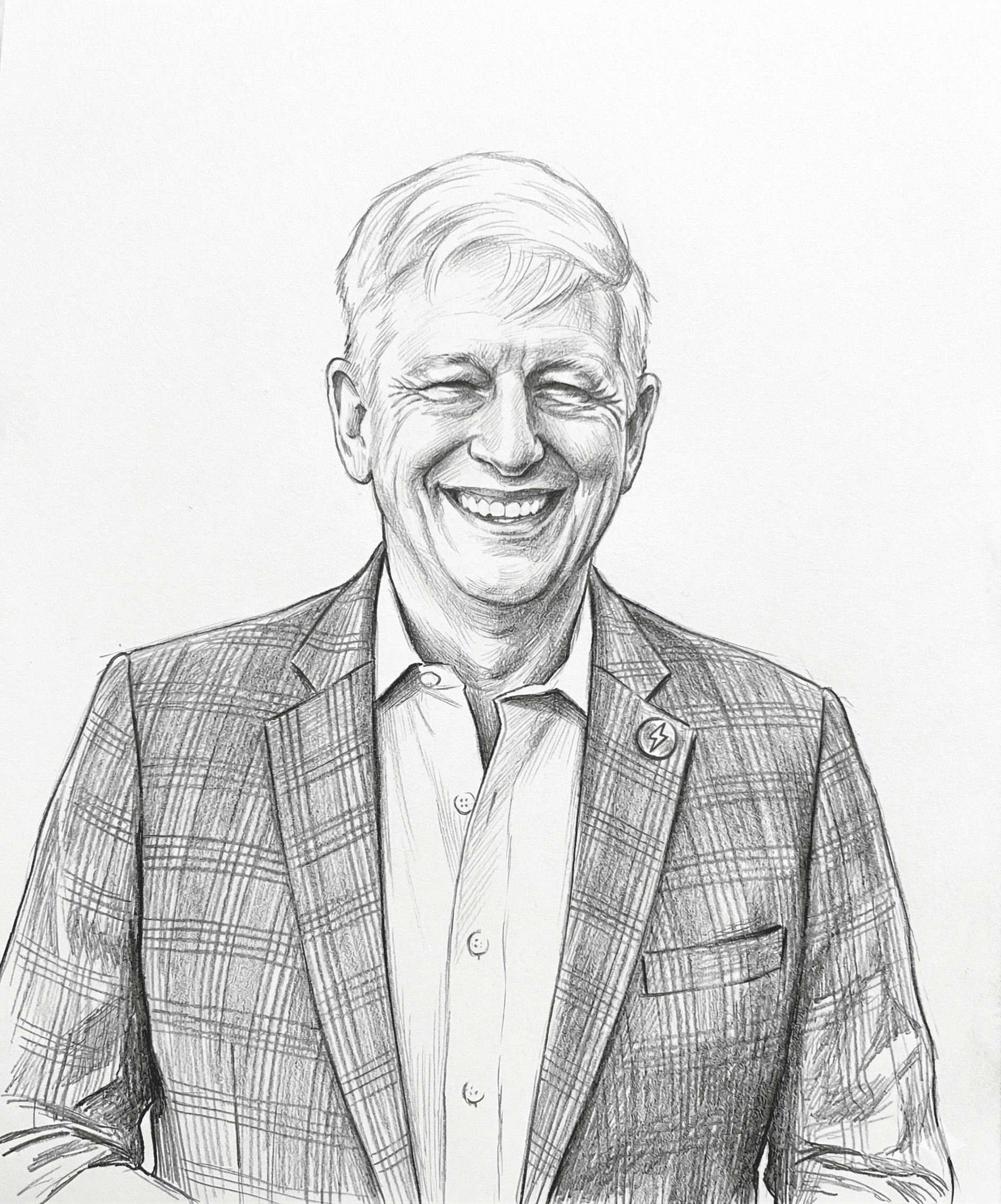
The late-June 2026 death of Sergei B. Ivanov - the man once thought the most likely successor to Vladimir Putin - as well as the Russian President’s age, his rumored health problems, and the discontent over the economic impact of his disastrous invasion of Ukraine; have renewed speculation over when, under what circumstances and to whom he might cede power. The constitutional changes Putin orchestrated in 2020 potentially allow him to remain in office until 2036. Further, he has refused to answer questions about whether he will stay until then saying it is too early to discuss such matters and citing his focus on running the nation. However, given that Putin would be 83 in 2036, it is highly likely a leadership change will occur before then. How might Putin – assuming he is in a position to do so - handle such a transition? Ivanov’s history with him is instructive in this regard.
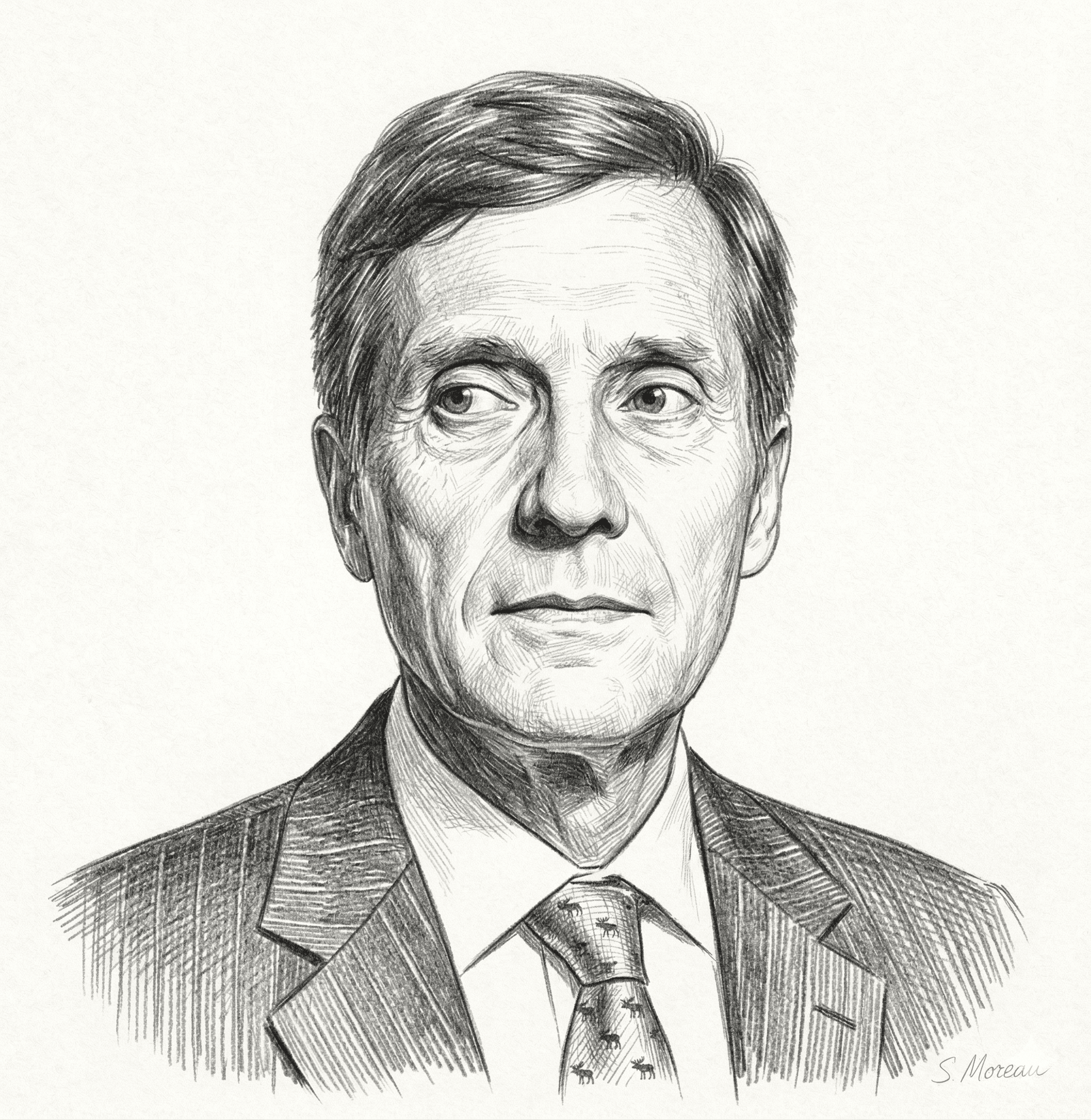
Like Putin, Ivanov hailed from St. Petersburg. They both served in the KGB’s foreign intelligence arm, the First Chief Directorate. But there was a difference between them that likely nettled the prideful Putin. While he served in Dresden, working with the allied East German State Security Service (a posting that earned him the not wholly complimentary sobriquet “Stasi” among his KGB colleagues), the polished, English-speaking Ivanov battled the ‘Main Enemy’ on the hostile side of the East-West divide. The two maintained a close relationship while Putin came to power and into the early years of his rule. Ivanov was the most-trusted of the coterie of St. Petersburg intelligence and security service veterans who formed the core of Putin’s governing elite as he founded what would become a de facto ‘Chekist” state in Russia.
When Putin was appointed Director of the Federal Security Service (FSB) by then-President Boris Yeltsin, he named Ivanov as his deputy. As he moved on from the FSB to become prime minister and then president of Russia, Putin kept Ivanov at the center of his security apparatus, appointing him successively as Secretary of the Security Council from 1999 until 2001; as Defense Minister from 2001 until 2007; and then as First Deputy Prime Minister. Apparently seen by Putin as too ambitious and difficult to control, Ivanov’s influence began to gradually wane in 2008 as the Russian president named the more pliable Dmitry Medvedev as a placeholder president while he himself actually ran the country from his perch as Prime Minister pending a return to the presidency. Although Ivanov remained a trusted player in Putin’s orbit for years thereafter - subsequently serving as Deputy Prime Minster and Chief of Staff of the Presidential Administration – the window for him to succeed his boss had long since closed. In 2016, he was relegated to a ceremonial position overseeing environmental and transport matters.
Repeating a Medvedev-like managed transition arrangement – that is Putin “retiring” while orchestrating events like a puppet master behind the curtain - is one likely scenario should he decide to depart the presidency. Another possibility is the constitutionally sanctioned model like that which played out in 1999 wherein the man Yeltsin named prime minister – in that case Putin himself - became his heir apparent. Putin went on to become acting Russian president and then president in 2000 following Yeltsin’s resignation. Another possibility is that Putin could precipitously decide to extra-constitutionally designate a successor.
The problem with these scenarios is that Putin to date has given no indication he might be willing to cede power. Nor, even if so inclined, is he likely to do so at least until he has secured something he can, however speciously, call ‘victory’ in Ukraine, a result that – at minimum - hinges on his ability to secure either through negotiations or force of arms the four oblasts Russia claims to have annexed in 2022. For Putin, successful resolution of the war is both a strategic imperative and central to his personal legacy. Given the grinding nature of the Russian Army’s advance in Donbas and the ferocious resistance being mounted by the Ukrainians, such an outcome appears unlikely in the foreseeable future if ever.
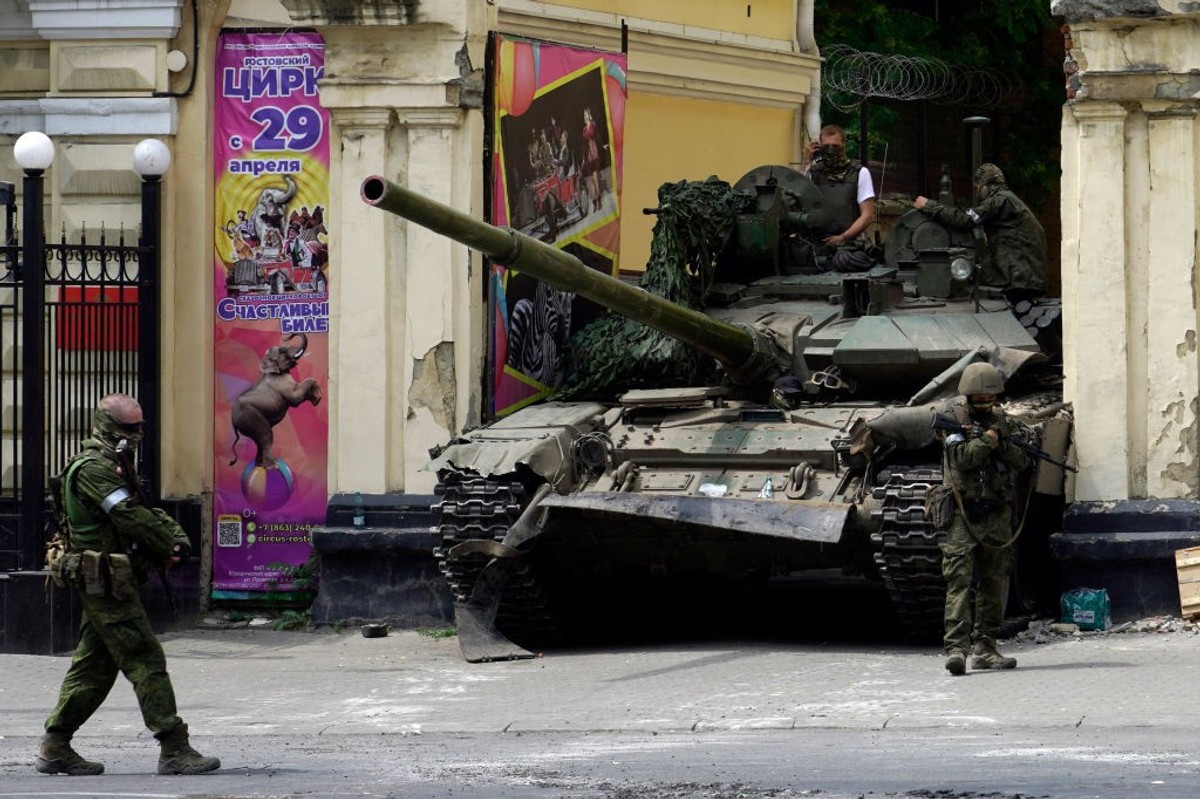
It is conceivable that the military or security services could mount a coup to topple Putin. Yet, despite the massive human and economic costs his war has imposed on the Russian people, there are to date no discernible indications such a putsch is in the offing. Additionally, the security measures taken following the abortive 2023 Wagner mutiny – to include the 2024 restoration granting of the Soviet-era Dzerzhinskiy title/honorific to a division of the Putin-created National Guard (‘Rosgvardiya’) protecting the country’s leadership and the ‘no man, no problem’ retaliation meted out to Yevgeny Prigozhin in its wake – mitigate against the success of any such attempt to overthrow the regime.
Given Putin’s age, and the fact that he rules a country wherein the male life expectancy is roughly the mid-to-high 60s, another likely scenario for an end to his regime involves his sudden death or incapacitation in office. Such an eventuality would unleash a period of leadership tumult in Moscow akin to that which followed the 1953 death of Stalin. With the demise of the Soviet dictator, it was widely assumed he would be succeeded by one of his closest lieutenants, Georgy M. Malenkov. Malenkov indeed became Chairman of the Council of Ministers. He successfully conspired with Red Army Marshal Georgy Zhukov, Foreign Minister Vyacheslav Molotov and Nikita Khrushchev to dispose of the odious Lavrentiy Beria. Nonetheless, even though he was effectively the Soviet premier and the head of government, Malenkov was unable to consolidate power because he controlled neither the security apparatus nor the Soviet Communist Party. And it was Khrushchev - by then First Secretary of the Party – who ultimately won the fight between Stalin’s lieutenants to succeed him.
During a 1959 discussion with Khrushchev, former U.S. Ambassador W. Averill Harriman addressed Stalin’s lack of a succession plan, asking the Soviet leader who Stalin thought would succeed him. Khrushchev’s reply that: “Stalin didn’t think; he thought he would live forever” was, as was the case with much of what he said, calculatingly apocryphal. Stalin, notoriously conspiratorial by nature, clearly feared that if he acknowledged his rule would someday come to an end, his power would rapidly erode as plotting to hasten that indefinite date commenced. As the fight to succeed him would attest, he was surely correct in that judgement. After all, as Golda Meir would famously observe to Henry Kissinger in 1973: ‘Even paranoids have enemies’.
Reference in Ecclesiastes 7:15 to “the righteous perishing in their righteousness, and the wicked living long in their wickedness” certainly applies not only to Stalin but also to Putin. Nevertheless, absent some highly unlikely actualization of the scheme he discussed with Xi Jinping in 2025 of indefinitely extending his mortality by replacing organs in a manner akin to that of a Bond villain, Putin knows that his death is an actuarial certainty. But, like Stalin, he surely (and rightly) understands that any designation of a successor would inevitably and immediately lead to an erosion of his own power as others vied for his throne.
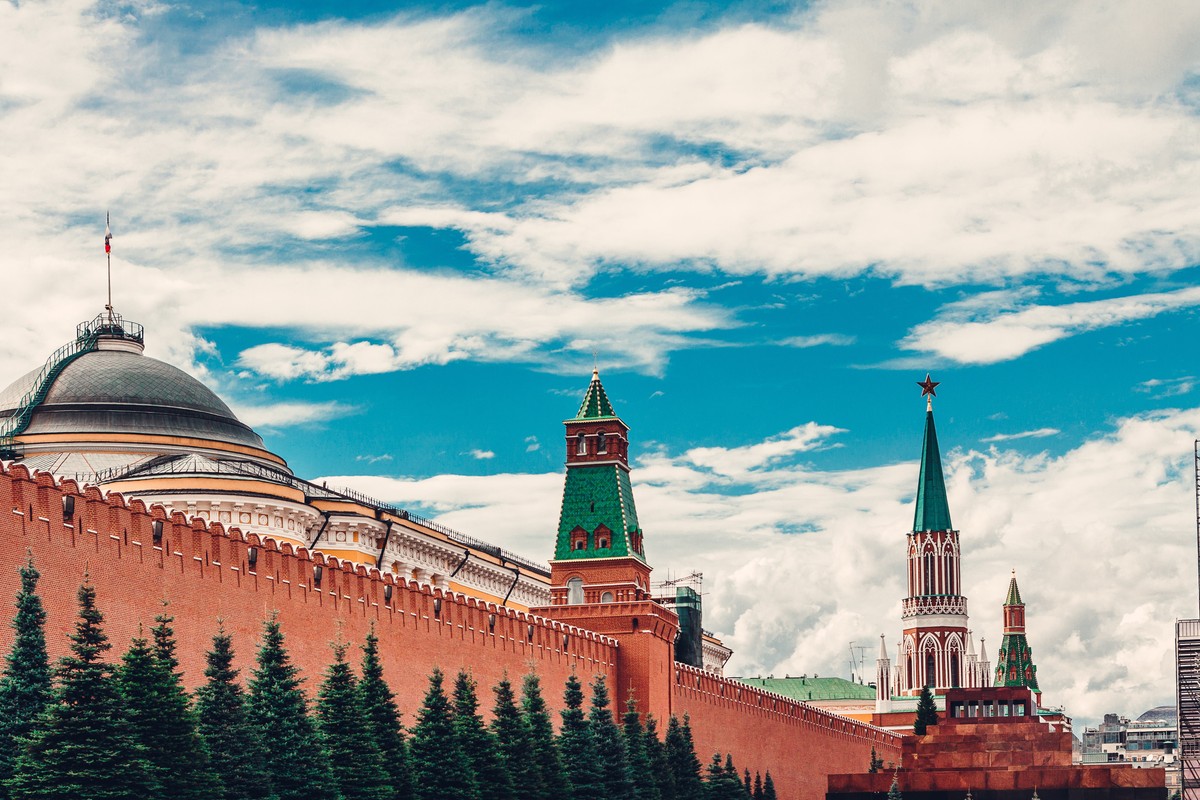
A precipitous end to the Putin regime would almost certainly trigger a period – perhaps an extended period – of crisis and uncertainty in Russia. Even in the best-case scenario – such as a decision by Putin to name a successor or wield power from behind-the-scenes as he did with Medvedev - it is likely that a contest among aspirants to his purple would follow. In addition to the character, worldview and policy goals of any new man in the Kremlin, the key determinants in any transition will be how it comes about and strength of support for that new leader. Putin has not allowed any subordinate to become an alternative center of power and the Russian political system is deliberately opaque with respect to any political matter, much less an issue as sensitive as leadership transition.
According to the Russian constitution, in the event of a president’s death, resignation, incapacity, or impeachment, the prime minister - currently Mikhail V. Mishustin - would serve as acting president pending a presidential election within three months. In practice, however, succession would likely be less about constitutional procedure than about who can best ensure elite status, security, property and de facto immunity from any legal accountability. The presidential administration, security services, state corporations, courts, political parties, media, and regional governors all look to the Kremlin for direction and sustenance.
Consequently, a decision on who would succeed Putin would involve bargaining among elites with roots in those sectors. While Mishustin would temporarily fill in as president in a sudden constitutional transition, he lacks the charisma, nationalist credentials, independent public backing, and security-service connections to become a permanent successor to Putin. That said, because the prime minister is the formal acting president in extremis, replacing Mishustin with another figure would be a clear signal that the person named is being positioned to succeed Putin.
Any change in leadership in the Kremlin, however it comes about, will - if only because Russia is a major nuclear power – engender worries about the nature of any regime following that of Putin. This was also the case after Stalin’s death when then-Vice President Richard Nixon voiced concern that his successor “might very well prove more difficult to deal with than Stalin himself.” As the recklessness Khrushchev displayed in deploying missiles to Cuba attested, Nixon was right to be worried. The Russian leadership itself probably understands such concerns and wants to avoid fueling them. That is one reason that the next Russian president is less likely to be an advocate of change than a continuity figure. Domestically, any successor would likely concentrate on consolidating his rule and avoiding anything that looks like defeat in Ukraine. Even if the next leader is less personally ideological than Putin, the governing structure he inherits will inevitably push him toward continuity. This would mean repression of any opposition, or perceived opposition, at home; deep suspicion of the West; protection of elite wealth; and management of the Ukraine war and its consequences.
In any transition scenario, but particularly in the case of an unexpected transition, the security services - the best organized and most powerful internal organizations supporting and enforcing Putin’s rule - will play a key role in determining who will follow him. Not surprisingly, then, several of those thought best positioned to succeed Putin have deep security service roots. Most prominent among them is ex-Putin bodyguard and former governor of Tula oblast Alexei Dyumin. He was given a position in the Kremlin and subsequently made secretary of the State Council, actions seen by many as signs he is seen by Putin as a possible successor. Another leading candidate, Deputy Prime Minister Dmitry Patrushev, is the son of the hard-line former Director of the FSB and Secretary of the Russian Security Council Nikolai Patrushev. Even potential candidates seen as technocrats or managers, such as First Deputy Chief of the Presidential Administration Sergei Kiriyenko and Moscow Mayor Sergei Sobyanin, will have to account for the pervasive influence of the security services should they aspire to succeed Putin.
As Mark Galeotti, an expert on organized crime and the security state in Russia has noted, that country “is effectively a state with a nationalized mafia.” Officers and contacts of those services have leveraged their authorities and connections not only to the benefit of the Putin regime but also to line their own pockets. And there is no reason to suppose that the end of Putin’s rule - however it comes about - and the inevitable departure from the scene of Ivanov and other aging KGB veterans such as Nikolai Patrushev and FSB Director Alexander V. Bortnikov will herald an end to the Chekist State. Moreover, any idea that the new generation of security-state linked ‘siloviki’(strongmen) will willingly cede their sway on the most senior levels of Russian leadership is, to put it mildly, improbable.
On the contrary, for as long as the Ukraine war goes on the security services’ sway over the Russian state will almost certainly grow. Indeed, anyone succeeding Putin is likely to rely heavily on those same services to monitor and suppress any extant opposition to the war and his establishment of control over the levers of power. The impact of the security services on the Russian state after Putin will be much like their central role under him only more so. On becoming Prime Minster in 1999, Putin quipped that “a group of FSB colleagues dispatched to work undercover in the government has successfully completed its first mission.” Sadly for Russia, its people and the people of Ukraine in particular, that mission continues with no end in sight.
The Cipher Brief is committed to publishing a range of perspectives on national security issues submitted by deeply experienced national security professionals. Opinions expressed are those of the author and do not represent the views or opinions of The Cipher Brief.
Have a perspective to share based on your experience in the national security field? Send it to Editor@thecipherbrief.com for publication consideration.
Read more expert-driven national security insights, perspective and analysis in The Cipher Brief