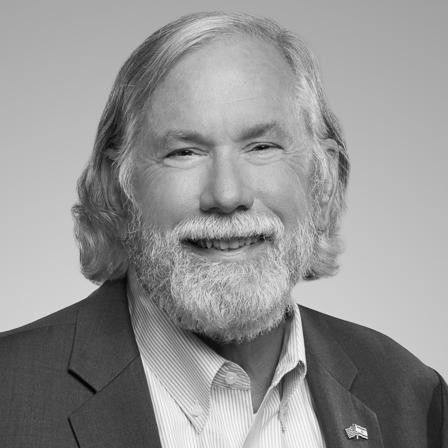


“We are facing a pretty historic drop in retention of our [Navy] pilots [for] our advanced fighter aircraft. We're looking at possibly 15 percent or more draw down, actually people just leaving to go to industry. My Chief of Naval Personnel, Vice Admiral [Jeffrey J.] Czerewko, has come up with basically a 27-point plan in order to mitigate that -- everything from splitting the squadrons for the Navy aircraft from both East Coast and West Coast so they have better opportunities for the families to live, to increasing the hiring rates for the family members out in California.”
That was Acting Navy Secretary Hung Cao speaking last Tuesday during his confirmation hearing before the Senate Armed Services Committee.
During the two-and-a-half-hour session, Cao ran into trouble with several Senators, putting his eventual confirmation in trouble. But Cao outlined a number of Navy problems and other issues I believe worth focusing on.
For example, it was Sen. Ted Budd (R-N.C.) who asked Cao about pilot retention saying, “Both the Marine Corps and the Navy have regular shortfalls in keeping these aviators in service, most critically for the F-35 and the F-18 communities.”
A July U.S. Naval Institute article further explained, “Today, the Navy’s strike-fighter (VFA) community faces a significant retention challenge at a time when tactical complexity and operational demands continue to increase. Historically, naval aviation has relied on experienced department heads to carry out squadron commanders’ guidance, lead strike teams, and train and mentor junior aviators. Department heads provide tactical expertise and develop the next generation of aviators and leaders. But with fewer pilots choosing to stay in the Navy beyond their minimum service requirement, the model that has helped build and maintain U.S. power projection capability is at risk…In 2025, the VFA community required 52 department heads, yet only 31 aviators accepted orders.”
Senior Navy and Marine Corps pilots with 15 or more years of experience can earn $180,000 to $230,000 with retention bonuses currently offered. A senior pilot with a major U.S. commercial airline can earn $350,000 to over $550,000.
Cao told the Senators last week that one of Vice Adm. Czerewko’s plans calls for “working with some of these airlines to say, ‘Hey, don't take our pilots now. Give them a deferment.’ And having commercial airlines telling Navy and Marine pilots ‘in five or 10 years when you retire, you can come work for us.’”
Cao said, “It basically guarantees them [Navy/Marine pilots] a job after they leave the military after they retire. So, they don't feel like, ‘Oh, now's the time for me to get out or else I won't get a job anymore.’”
Asked by Sen. Rick Scott (R-Fla.) about whether all Navy ships should be built in the U.S., Cao gave an interesting summary of the American shipbuilding situation.
“We are a maritime nation,” Cao said, “We depend on the sea lanes for between 60 percent and 80 percent of our trade. And right now we only have 155 flagged U.S. merchant ships, 105 Military Sea Lift Command ships, and as of today I have 286 warships that I can use. And so we need to look at new entrants [foreign shipbuilding companies] to bring the ability to build more things [ships] in the United States right now. And so when you're looking at Korea, for example, they're building 230 seagoing vessels this year alone. We're only building less than 20 in our country, and this [Korea] is a country that's 99 times smaller than the United States.”
Cao continued, “China has 11,000 merchant ships. We only have 155. And this is a problem for our nation and I want to be able to accelerate this [shipbuilding], not just for the United States Navy, but our also our merchant fleet as well.”
While Cao repeated that new foreign entrants to American shipbuilding was an answer to the problem, Sen. Angus King (I-Maine) intervened saying, “All of the comments out of the administration have been about revitalizing shipbuilding in the U.S. The problem is in your [Trump administration defense] budget, you wanted to build warships in Korea and Japan, and in your budget, there was only one destroyer [to be built in the U.S.].”
King went on, “And finally, in your budget, you abandon the DDX, which is the next generation [guided-missile destroyer] of service combatants. So my concern is that the whole idea of revitalizing shipbuilding is inconsistent with the budget and the budget is policy. So I hope that you will commit to recommit to the American ship building base…giving our ship builders the demand signal that they need in order to invest and rebuild the industrial base in terms of ship building in the United States.”
Cao admitted there was only one destroyer in the [Trump] budget before Congress, but he pointed out, “One has been added by the [Senate] committee and I understand that's been accepted in the House and is in the recently put forth mark of the [Senate] Appropriation Committee.”
Sen. Jeanne Sheehan (D-N.H.) raised a different issue – government bureaucracy -- which she said tested Cao’s “willingness to stand up to your superiors and make clear your views… and about your ability to be transparent with Congress.”
She said, “During your last testimony in May, I asked you about the $65 million dollar budget shortfalls that are facing the Portsmouth Naval Shipyard. At the end of 2025, you required installations to give bonuses to top performing…civilian employees, and you did that -- without providing the additional funds that forced Portsmouth to take $32 million out of its
operations and maintenance budget.”
Shaheen added, “You also pulled back another $33 million from the shipyard for under-execution of hiring which doesn't make any sense because they were prevented from hiring workers by the personnel office and by the [Defense] Department until Congress stepped in and exempted them from the [Trump administration] civilian hiring freeze. This shortfall has had a real tangible impact on the ability of the shipyard to do its job.”
She continued, “Your office response, when we raised these issues, provided no commitment or path forward to mitigate this. They even you even acknowledged that there is, and I'm quoting, ‘There is a real impact to Virginia class submarine availabilities, specifically the USS Virginia and the USS South Dakota.’ So, why was there no budgeting for a hiring thaw? Why was there no acknowledgement that the shipyard would be unable to hire on schedule because of the freeze that had been put on by the administration? And how can you now hold the shipyard accountable for that and refuse the $65 million budget shortfall that they need?”
A somewhat diminished Cao first responded, “Senator, thank you for that question,” and then went on to explain, “I came in this job in April 22nd of 2026…I know that in May when I just had taken over and we did the posture hearings, you asked me about this. And I'm going to tell you right now that I failed you. I was supposed to bring you back the answers and I didn't do that. And I commit to you right now that within a week of us finishing this, I will find out the answer and we will way to work together. And again, if confirmed, I will work with you to make sure that we free up the $33 million in order to adequately pay for that.”
Sen. Mike Rounds (R-S.D.), raised another issue asking Cao “Are you aware that on multiple occasions where there have been classified discussions, my Democrat colleagues weren't invited. And when you don't invite our Democrat colleagues to join in on these high-end specific, top secret and above threats that means that it limits us to basically using Republican votes only to pick up on a reconciliation [bill]. And if that doesn't work, a supplemental [bill which] would require a 60 votes, which requires bipartisan support -- pretty tough to ask all of my colleagues to support that if they're not even invited in to hear the information in the first place.”
Rounds went on, “I want a commitment from you, and we'll ask it from others, that we move this back to a bipartisan basis when it comes to sharing critical information in the defense of this country.”
Cao responded, “Senator, if confirmed, I will I commit to being open and honest with the entire Senate and the Congress also. I mean, this is a bipartisan issue. National defense is not a partisan issue. This is a bipartisan issue. And so, I give you my commitment that I will work with both sides.”
An unusual subject was brought up by Sen. Banks (R-Ind.), who told Cao, “You have shown more interest in Crane Navy Base [in southwestern Indiana] than any Secretary of the Navy before you and I greatly appreciate that, not just because I represent it but because of the important role that it plays to our nation's defense…More than anybody else, you made something happen that makes Crane bigger, better, more influential than it's ever been before.”
What Cao had done was bring in Rear Adm. Patrick Finney last month to lead Crane’s new program management office focused on advancing the integration of the Navy’s nuclear Sea Launched Cruise Missile (SLCM-N) and hypersonic Conventional Prompt Strike (CPS) weapons systems onto surface vessels and submarines.
“The admiral going up there [to Crane],” Cao said, “will be able to work between the office down here [Washington] and all your engineers up there in Crane to accelerate the SLCM-N program, to accelerate hypersonics. Imagine a weapon that can go from here to California in 17 minutes, and that's what the hypersonics can do from ships or submarines that can't be seen
anywhere. And that's exactly why we need to accelerate these weapon systems and these programs. And no better place than Crane, Indiana.”
Sen. Tim Kaine brought up another kind of problem facing the Navy.
“On August 13th,” Kaine told Cao, “the President [Trump] released a memorandum that included language directing the Secretary of Defense and Secretary of the Navy to provide a plan for replacing the current electromagnetic launch system for aircraft carriers with steam and hydraulic systems. I recently visited the [aircraft carrier USS] Ford and I went on the flight deck and I talked to the sailors on that flight deck, many of whom had worked on carriers that both had steam and hydraulic launch systems and the EMA[electromagnetic] system and they were very complimentary.”
Kaine then asked Cao, “Should the U.S. return to steam systems to launch aircraft off aircraft
carriers?” Cao responded that the Navy was having problems with the “electromagnetic elevators. It's delaying our carriers by seven years.”
When Kaine responded, “Does that mean that you're considering return to steam launches?”
Cao responded, “No, No,” but went back to discussing issues with the electromagnetic elevators.
Kaine said, “The EMA system works very, very, well and to retrofit existing carriers or change the design… causes problems and to go back to an old way of doing it is going to have an increased cost with diminished capacity and so just because the President directed it I do hope you'll consider the experience of those who've been operating these launches on the [Ford] in deciding before you decide to go down a path that will be more expensive and also less capable.”
Final word on the subject came after Kaine yielded back to Armed Services Committee Chairman Sen. Roger Wicker (R-Miss), who said, “Secretary Cao, returning to steam is a non-starter and everybody needs to understand that.”
Cao said nothing.