

EXPERT Q&A — In the flurry of executive orders President Donald Trump signed in the first hours of his second term, one of them set in motion the U.S. withdrawal from the World Health Organization (WHO). The action halts U.S. payments and other “support or resources” to the WHO, which is the largest global health institution; it also orders the reassignment of U.S. government employees working at the global health agency.
According to the 1948 U.N. resolution on WHO membership, the U.S. can withdraw if it gives one year’s notice and fulfills financial obligations to the organization for that year. There is ongoing debate as to whether Trump needs congressional approval for the withdrawal, and whether his order can – as it directs – immediately stop payments to WHO.
Trump has long sought a U.S. exit from WHO. He started the process in July 2020, accusing the organization of mishandling the Covid-19 pandemic, acting at the behest of China and demanding too much from the U.S. Nearly every nation on earth is a member of the WHO, and many American public health officials believe that the pullout poses a risk to the U.S. ability to respond to global pandemics and other health issues.
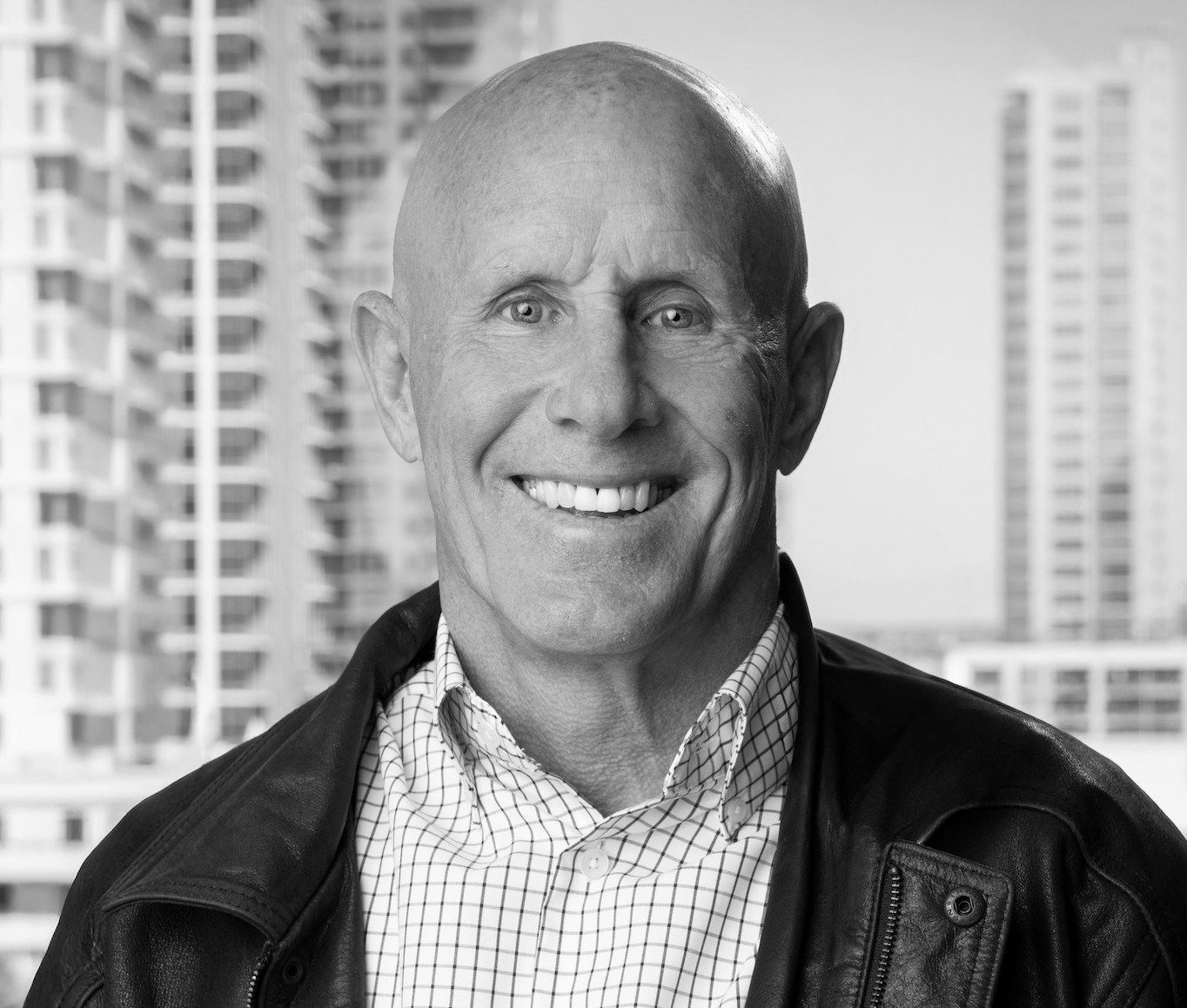
The Cipher Brief turned to Professor Lawrence Gostin, Faculty Director of the O’Neill Institute for National and Global Health Law at Georgetown University, to discuss Trump’s problem with the WHO and what the withdrawal may mean. Gostin warned that without access to the WHO, the U.S. may be less equipped to deal with major health crises. “The United States population is used to being first in line for life-saving medical technologies,” Gostin told us. “We might find that we're last in line on the outside looking in.”
“President Trump might be able to try to close the southern border against immigrants, but you can't close the border against a pathogen,” Gostin said. “Germs don't understand borders. And we need a global network of surveillance, monitoring of novel dangerous viruses…So we badly need the early warning, rapid response that WHO brings.”
Gostin spoke with Cipher Brief Managing Editor Tom Nagorski. Their conversation has been edited for length and clarity. You can also watch their full discussion on our YouTube channel.
Nagorski: You said in the wake of President Trump's decision to withdraw from the WHO that it would not only be bad for public health but an “even deeper wound to American national interests and national security.” Can you tell us what you meant by that?
Gostin: I can't think of a single way that withdrawing from the World Health Organization would advance our national interests or national security. I think it would make us isolated in the world, vulnerable and alone. Taiwan is not a member of WHO and Liechtenstein is not a member. And we would now be in that exclusive club. In my mind, this is really a deep wound to American security.
President Trump might be able to try to close the southern border against immigrants, but you can't close the border against a pathogen. Germs don't understand borders. And we need a global network of surveillance, monitoring of novel dangerous viruses. We're only a mutation or two away from the next pandemic — it might even be the avian influenza pandemic circulating here in the United States now. So we badly need the early warning, rapid response that WHO brings. And we also need exchange of scientific data like pathogen samples, genomic sequencing data, data about mutations and variants that enable our public health agencies like NIH (National Institutes of Health) and CDC (Centers for Disease Control and Prevention) to respond and our pharmaceutical industry to innovate with effective vaccines and treatments.
Nagorski: For public health data beyond our shores, is the WHO the main storehouse of that?
Gostin: It's housed at WHO. WHO hosts a vast network of government agencies, laboratories, and scientists that are constantly feeding it information about circulating viruses around the world and providing updated information. Our public health agencies like NIH and CDC need that information. They exchange it regularly. Our pharmaceutical companies rely on it for up-to-date vaccines and treatments. Even our seasonal influenza vaccine, which changes every year, is all based upon WHO data. If there were a novel avian influenza, we would need that information to be able to rapidly develop a vaccine.
The United States population is used to being first in line for life-saving medical technologies. We might find that we're last in line on the outside looking in. So it's really important for us to be at the table, to have rapid and comprehensive access to this data, and to help our companies and our public health agencies to protect us. We can't do that alone.
Everyone needs a good nightcap. Ours happens to come in the form of a M-F newsletter that provides the best way to unwind while staying up to speed on national security. (And this Nightcap promises no hangover or weight gain.) Sign up today.
Nagorski: Practically, let's say tomorrow the U.S. were not in the WHO. What happens when you are not? It's uncharted territory for the U.S.
Gostin: Yes, it is uncharted territory. What does that look like? I'm not going to say that the U.S. is completely helpless. It's not. We have a very strong and capable pharmaceutical industry; the CDC, NIH, and FDA (Food and Drug Administration) are world beaters. But it does mean that we will not have the full, rapid access to the kind of scientific information we need to innovate, to be resilient and flexible and to respond. And I think this makes America alone and fragile and it hardly makes us strong.
Nagorski: As for some of the complaints that President Trump and others in the Republican Party have levied, for some time now, against the WHO: that it had mishandled the COVID-19 pandemic; Trump said it failed to “adopt urgently needed reforms” and that it had demanded “unfairly onerous payments” from the United States; there was also the charge that the WHO is “owned and controlled by China” and that it has”ripped us off.”
Gostin: It's true that the WHO is not perfect. They didn't make every right call during COVID-19. But I have to remind us that neither did the NIH or CDC. This was a rapidly evolving pandemic. And they made mistakes on masking, on aerosolized spread of the virus, just like our agencies did, and the White House did. In fact, the White House was touting really phony and dangerous treatments that had no scientific evidence behind them. So we can't lay the blame on the door of the WHO. The WHO needs to learn lessons, and it has. And it does need reform.
Would I like to see WHO funded better? Yes. I'd like to see the United States continue its payments, but I'd like to see China, Russia, India and other countries pay their fair share, pay more. WHO has a budget of roughly one quarter of the CDC, but it has a global mandate. It's not a bloated, overfunded organization.
As far as China is concerned, I've worked with WHO for more than 30 years. And I can tell you unequivocally that the U.S. has had far more influence over WHO than China ever has. But the irony is that if we withdraw, that we will cede leadership and influence to our adversaries, especially China. So I think this achieves the exact opposite of what the president wants it to achieve.
Nagorski: It does seem a little bit like the sort of approach taken to NATO, where President Trump – and he's gotten some credit since then – warned that the United States might even withdraw from NATO, saying that the member states had to pay more. Do you think that there's some element of that here, to get other countries to pay their share of WHO funding?
Gostin: I hope it's a ploy. I would much rather that President Trump did a deal engaged in diplomacy and negotiation rather than just taking his marbles home and going away. It's not going to serve the world's interests. It's not going to serve American interests. WHO can reform. It can be stronger. It can be more nimble and resilient. If Trump can work cooperatively with WHO, that would be a win-win for everybody. But that's not what he said. He said he's withdrawing and he's going to try to set up something on his own. Well, that's fantasy land. The WHO is the only global health organization, and it has been for over 75 years. The U.S. helped create it, and it is literally impossible for the United States to try to replicate it. If we withdraw, it doesn't make us stronger. It makes us more fragile. It makes us alone when we need the world around us.
The Cipher Brief is committed to publishing a range of perspectives on national security issues submitted by deeply experienced national security professionals. Opinions expressed are those of the author and do not represent the views or opinions of The Cipher Brief.
Have a perspective to share based on your experience in the national security field? Send it to Editor@thecipherbrief.com for publication consideration.
Read more expert-driven national security insights, perspective and analysis in The Cipher Brief