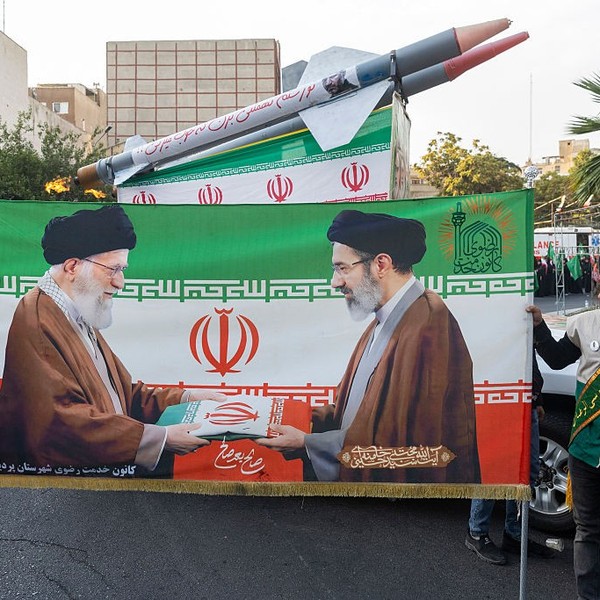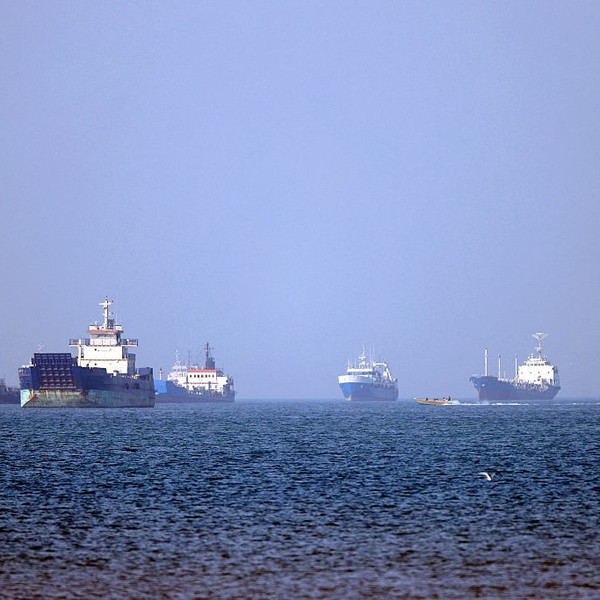


CIPHER BRIEF EXPERT INTERVIEW -- Economic grievances in Iran have sparked demonstrations for a fifth straight day, with protests surfacing in Tehran and multiple provincial cities as inflation, a collapsing currency, and worsening living conditions fuel public anger.
Reports from state-linked media, local officials, and rights groups confirm new clashes and at least one additional death, though accounts differ over whether the deceased was a member of a pro-government militia or a protester. Several other incidents of violence were reported in western and southern regions, but independent verification remains difficult.
President Masoud Pezeshkian, traveling in southwestern and eastern Iran, has acknowledged mounting public dissatisfaction and urged officials to address the population’s concerns, calling mismanagement - not foreign adversaries - the primary cause of the crisis. His remarks contrasted with harder-line figures who continue to blame unnamed “enemies” for the unrest.
The latest protests began after the Iranian rial plunged to record lows, prompting the resignation of Central Bank Governor Mohammad Reza Farzin.
The broader economic backdrop is bleak: inflation remains above 40 percent, food and household costs have surged, and nearly every major sector outside oil is contracting.
“The ongoing, still relatively small, economic protests now unfolding in several cities in Iran are the latest indicator of the Islamic Republic's fragility,” Middle East Expert and former National Security Manager for Iran at ODNI, Norm Roule tells The Cipher Brief.
Roule explains in this exclusive Cipher Brief analysis, why he believes the latest protests are likely a sign of what could be waiting for Tehran in the new year.
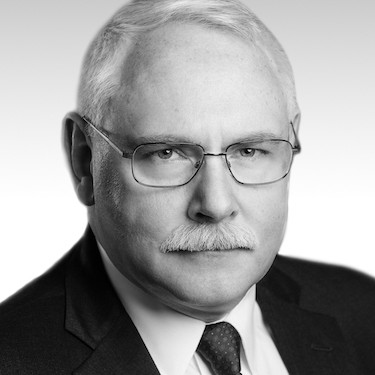
Norman T. Roule
Norman Roule is a geopolitical and energy consultant who served for 34 years in the Central Intelligence Agency, managing numerous programs relating to Iran and the Middle East. He also served as the National Intelligence Manager for Iran (NIM-I)\n at ODNI, where he was responsible for all aspects of national intelligence policy related to Iran.
ANALYSIS -- “Since 2017, Tehran’s domestic oppression, persistent inflation, declining standards of living, international isolation, and weak domestic policy credibility have produced periods of sharp and widespread unrest. Iran’s security forces have responded brutally. But the protests have shattered the Islamic Republic’s political self-confidence. Tehran’s response to the ongoing demonstrations reflects that mood.
A regime that once boasted that its high national election turnout reflected the support of its people is now unable to hide historic low voter turnout and accepts the threat of destabilizing national unrest as an inevitable consequence of life in modern-day Iran. Economic challenges are not the regime’s only concern. Iran’s historic drought and other environmental problems persist. Winter saw a sharp decline in air quality in large areas of Tehran, Khuzestan, and Isfahan provinces. In early December, Iran’s health minister announced that ongoing air pollution problems had sent more than 170,000 Iranians to emergency wards with heart and respiratory problems.
Whether the current unrest expands or dissipates - like prior waves of protest - remains uncertain. What is clearer is that the underlying drivers are durable, making future episodes virtually certain. The more consequential question is whether disillusionment will remain confined to civilians or will begin to test the cohesion and confidence of the security forces the Islamic Republic has relied upon for so many years to contain dissent.
The ongoing collapse of Iran’s currency, the rial, ignited the protests this week. After the currency fell as low as 1.42 million per dollar, Central Bank Governor Mohammad Reza Farzin resigned. The magnitude of the slide is best understood with some history: In 1979, the Iranian rial stood at 72 to the dollar. On July 14, 2015, the day the Iran nuclear deal was signed in Vienna, the Iranian rial was at 29,500 per dollar. When Farzin entered office in December 2022, the rial traded at about 430,000 to the dollar. Whatever the precise benchmarks, the trend is unmistakable: the rial’s weakness has become both a symbol of policy failure and a driver of unrest.
The currency’s decline has coincided with bleak economic signals. Except for anemic growth in the oil sector, every key sector of Iran’s economy is entering recession, foreshadowing higher unemployment. Industry and mining declined by 3.4%, construction by 12.9% and agriculture contracted by 2.9%. At the same time, inflation is growing. The Statistical Center of Iran (SCI) reported that Iran’s average annual inflation reached 42.2% in December. A close examination of this number indicates the significant impact of inflation on Iranian consumers. Food, tobacco, and beverages rose 72% year over year. This persistent high inflation erodes the purchasing power of Iranians and drives an increasing number into poverty.
Tehran’s options are few. Iran’s problems are deep and structural, and durable improvement would require political and ideological shifts beyond what the Pezeshkian administration is likely able to deliver. Even so, the government will be compelled to act on three fronts.
First, Farzin’s resignation provides the president with a convenient focal point for public anger, but it does nothing to address the issues that precipitated the crisis: fiscal mismanagement, sanctions pressure, and chronic credibility deficits. President Pezeshkian has reportedly selected 64-year-old former economy minister Abdolnaser Hemmati as Farzin’s successor.
Hemmati may at first seem a counterintuitive choice, given that the Iranian Parliament impeached him in March for failing in similar circumstances. However, he has a background that offers potential for stability. First, he is experienced. He led the Central Bank of Iran (CBI) from 2018 until late May 2021, during the Trump administration's earlier sanctions, and his work helped stabilize the foreign exchange market under similar difficult circumstances. He also qualifies as a regime insider with decades of experience with hardliners and more pragmatic conservatives. After beginning his career as an agricultural economist, he moved to Iran’s broadcasting organization, where he rose to become its political deputy and director general of news broadcasting. He then became the Director of Iran’s Central Insurance Corporation. Between 2006 and 2016, Hemmati led Sina Bank and Bank Mellat, banks with close ties to the Revolutionary Guard's Qods Force, to the extent that the U.S. and the European Union designated each. Hemmati attempted to enter the 2024 presidential election on a platform offering economic stabilization, but the Guardian Council rejected his candidacy. He instead became Pezeshkian’s economy minister, a position he held until his impeachment on 2 March 2024, following a spike in inflation and the rial's fall to 950,000 to the dollar. Ironically, that value would be seen as a significant improvement in its status today.
Hemmati will need to work quickly with Pezeshkian to propose measures to decelerate inflation, with an emphasis on protecting low-income and rural households. In the medium term, Hemmati will need to target Iran’s banking sector to strengthen balance sheets and prevent further failures. The downside of this last step is that it will inevitably involve some recognition of bad loans and credit tightening to prevent additional poor loan issuance.
Next, Pezeshkian will focus on budget reform. Details on his latest budget are limited, but we know that security and military entities remain well-resourced, which will constrain his options on the civilian side. He has proposed a 20% salary increase for public workers, but it will not keep up with inflation, and even here, he will struggle to find the funds. The budget debate will continue until 20 March 2026, and will likely remain contentious, given its emphasis on tax collection and subsidy cuts rather than oil revenues as a source of income.
Last, foreign policy will remain the most complicated aspect of Pezeshkian’s economic challenges. His government will do whatever it can to mitigate the impact of sanctions through engagement with Russia, China, and Africa, and will continue to seek talks with Washington. Initiating negotiations with the U.S., even without a prospect of an outcome, has in the past strengthened the rial. But if Pezeshkian would welcome talks with the West, the hardline actors within the regime responsible for Iran’s foreign policy remain focused on aggressive goals that remain one of the primary obstacles to peace in the region. The Quds Force shows every sign of seeking to rebuild its shattered proxies and establish new relationships with the Khartoum and other actors in Africa. The Trump administration’s approach to Tehran has been consistent. It will not waste time on talks that offer sanctions relief without seismic changes in the regime’s approach to nuclear, missiles, and regional issues. Gulf Arabs are willing to maintain a strategy of détente but will not consider rapprochement without an end to Qods Force activity in the region. Absent political rapprochement and a belief that capital invested in Iran will not be subject to terrorism or human rights sanctions, foreign investment for Iran will remain impossible.
Last, Iran’s leaders will inevitably recognize that this unrest is unfolding amid several hallmarks of a pre-revolutionary situation: institutional failure, fragmentation among the ruling elites, generational alienation, persistent fiscal crisis, widespread economic suffering, class antagonism, escalating and chronic protests, and the absence of a unifying state narrative. President Pezeshkian recently stated that his country was “in a full-fledged war with America, Israel, and Europe.” Such rhetoric will play to domestic hardline audiences while reinforcing Iran’s aggressive reputation abroad. During this sensitive period, Iran is unlikely to take actions that would further exacerbate its domestic fragility and instead seeks to gradually test Western red lines while navigating the Islamic Republic through what remains the regime's most sensitive and challenging economic and political period since the 1980s.”
Are you Subscribed to The Cipher Brief’s Digital Channel on YouTube? There is no better place to get clear perspectives from deeply experienced national security experts.
Read more expert-driven national security insights, perspective and analysis in The Cipher Brief because National Security is Everyone’s Business.