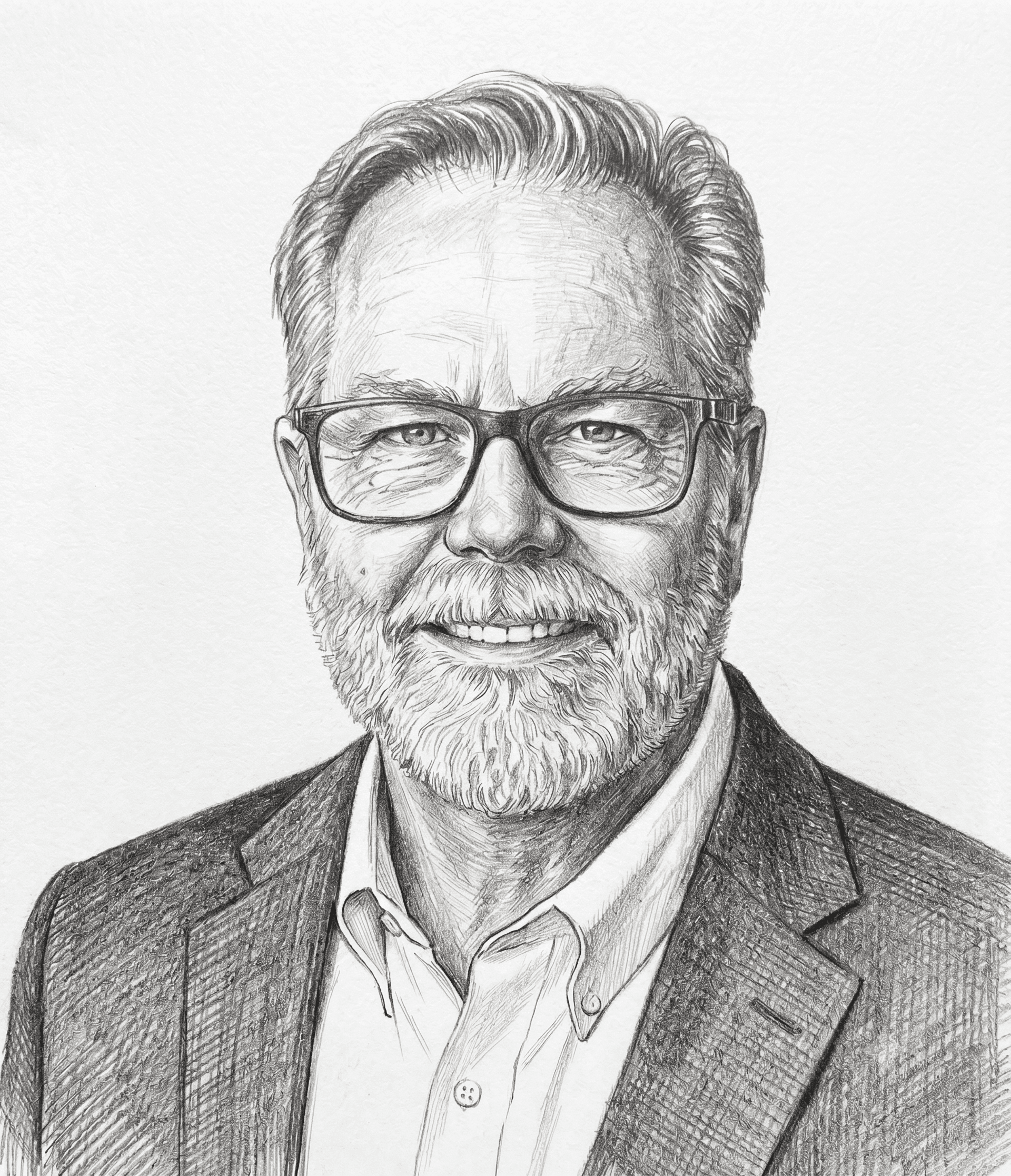


“We [the Joint Chiefs of Staff] often times in the national security decision-making process or White House meetings -- outside of the Pentagon process -- will go back and forth between military issues and political issues. And I think it's incumbent upon us to kind of stay in, you know, what the current [Joint Chiefs] Chairman [Air Force Gen. Dan] Caine describes as ‘the midfield’ in that regard. So we have to be aware of the political environment within which we're operating, but we have to be nonpartisan. And as long as we stick to addressing the military dimension of the problem, and not fall to the temptation to start participating and waxing eloquently about issues that are not in our purview, I think we can maintain that character.”
That was ret.-Marine Gen. Joseph Dunford, former-Joint Chiefs Chairman during the second Obama and first Trump administrations, speaking last Tuesday on a panel entitled Inside the Pentagon: The Chairman, Congress & Combatant Commands, as part of the Center for Strategic and International Studies’ (CSIS) 2026 Global Security Forum.
Also on the panel were ret.-Navy Adm. John Aqualino, former-Commander of Indo-Pacific Command and former-Rep. Mac Thornberry (R-Texas), a one-time Chairman of the House Armed Services Committee.
The panel’s hour-long discussion covered a variety of current issues and also at times provided a behind-the-scenes look at past Pentagon leaders’ thinking.
For example, Dunford said at one point, “I can't think of a time when I was participating in the National Security Council where I was dealing with a military problem. We were dealing with strategic problems that had a military dimension. And that's really important because in that capacity, you are providing advice about the military dimension and how the military dimension can best support the political objective that's been articulated by the President.”
Dunford further explained, “It's not the [Joint Chief] Chairman's role to go to the National Security Council and advocate for a particular policy that involves much more than just the military dimension. It's the Chairman's role to represent the other Joint Chiefs and provide military advice, again in a way that's integrated with all the other elements of national power to accomplish a particular objective.” And he repeated, “I think it's really important both in public and private that we be seen as advisors and not advocates.”
In Dunford’s view, discussions at the National Security Council “ought to remain private and most often they're very highly classified.” He added, “Even today, I don't feel at liberty to discuss what went on inside the National Security Council or what I specifically recommended.”
I quote these Dunford views because these days, for example. many Trump critics who disagree with the President’s decision last February to attack Iran, have wondered why no top military commander has yet to publicly voice opposition to that decision.
As Dunford explained his view, “Number one, it's the elected official who gets to decide. And number two, the best military option, in other words, the option that I might have offered that would provide the best military outcome may in fact not be the best option for the President when he looks at it from a broader strategic perspective."
He went on that his military option “may or may not be in a broader strategic context when you take into account our diplomatic, our economic interests and the other competing demands that the President may have at a given time strategically, whether they be in the security realm or elsewhere”
Dunford continued: “As I used to say, the President looks through this with a much bigger soda straw than those of us in uniform. And we need to be attentive to that in the public space and not put pressure on the Executive Branch to make a decision one way or another because of what military advice may be out there in the public domain.”
However, when Dunford went to see a Chairman of the House or Senate Armed Services Committee, he said, “Obviously you know the Legislative Branch of our government has a need to be informed about these issues and so the way I would approach it is less would I address specifically the advice I gave to the President, or again advocate a specific military option to be adopted. More often than not, what I would try to do is highlight the interdependent variables that went into the recommendation; talk about the risks; perhaps walk through each of the options that might be available from military perspective and the pros and cons of each, but then not be in a position publicly to say it should be this option or that option.”
As a former Committee Chairman, Thornberry said, “One branch [the Legislative] is responsible for raising and supporting; providing and maintaining; approving all the money, declaring war; and the other branch [the Executive] for the operations of the military. So we divide the authority. We have civilian control of the military, which is an important principle, but we make sure that it's a professional [military], nonpartisan, not taking sides.”
Thornberry also said, “It's important for Congress to hear from that professional military and to hear directly. Now, sometimes that'll need to be behind closed doors in classified sessions and some you can get franker that way, but it's not just Congress hearing. It's the American people hearing from the chairman or the combatant commanders or whoever.”
When it comes to congressional hearings, Adm. Aqualino spoke of a suggestion he had made that’s worth repeating.
He said, “I made a request of the chairman [of the Armed Services Committee] on the House side and the Senate side that said, ‘Hey, let's have a classified session first. Let me answer everything that I can in the classified space that will give you the understanding and oh, by the way, I think it'll help shape your questions for the public side.’ That ended up being very, very, I think effective both for Congress and certainly for me because it really made sure they understood where we were, why we were doing what we were doing and how it was going to deliver. And again, I thank all of the members of Congress for accepting that position because I found it very helpful.”
Actually, however, most closed-session hearings of those Armed Services Committees are still held after the public ones, although Aqualino’s approach is much more rational.
Dunford talked about how warfare has been changing.
“If you think about conflict,” he said, “this go back to the 1990s, you could assume that a conflict would be isolated to particular geographic area. It didn't involve largely sea, air, and space, and the homeland was protected. We didn't have the homeland issues…So, when you think about managing risk, you could manage risk within a specific geographic area. As the character of war began to change, threats to the homeland increased. We're now operating in sea, air, land, space, and cyberspace. We know now that there's no conflict that can be isolated to a specific geographic area.”
These days, Dunford said, “We can see the conflict in Iran and Ukraine and the global implications of those two conflicts. There needed to be somebody that could help the Secretary of Defense think about risk across all geographic combatant commands and in all of those domains and in the context of broader strategic issues like service readiness and being prepared for the conflict or crisis that that was going to come even as we were dealing with one that may be ongoing.”
Planning has also changed.
“When it came to planning,” Dunford said, “we used to have single numbered plans. You'd be familiar with those, where plans were focused on the Korea plan or the Iran plan. Well, there's again if you agree with me that there's no conflict [now] that doesn't have broad global implications. Planning needs to be done, not in a geographic combatant commander’s region, it needs to be done globally. Certainly informed by the supported combatant commander if it's a Indo-Pacom (India-Pacific) or not Pacom (Pacific) commander perspective. But while he's fighting the fight against China, there are certainly things happening globally that are going to require the prioritization and allocation of resources again back to foundationally defense of the homeland.”
Adm. Aqualino’s views of the Joint Chiefs system are worth repeating.
“When you talk about the [military] service chiefs as members of the Joint Chiefs,” he said, “that is an incredible thoughtful bunch to help the Chairman shape best military advice to remove blind spots that may be missing, and to get an incredibly broad perspective. So he [also] gets it from the Combatant Commander operational required to provide options through the lens of a single theater.”
Aqualino added, “Then the Joint Chiefs are able to put a layer on top of that and say, ‘Hey, more broadly, here's what I think it looks like globally. Here's what it looks like through the [separate military] service lens.’ And all that information informed the chairman to ultimately take the best option to the President. And then whenever I brief the [Service] Secretary, the [Joint Chiefs] Chairman was sitting in the room and sometimes we agreed, sometimes we disagreed…My advice was taken sometimes, and other times I got thanked for my interest in national defense. That's just the way it works.”
Looking back, Aqualino said, “I do think it has worked pretty well to have the [Joint Chiefs] Chairman speak for the whole military and yet not be directly in the chain-of-command. So far it has given him an objectivity where he didn't have to necessarily defend a decision, because they are political decisions, but he [the Chairman] can look at that broader picture about the state of our military, about the threats that we face, and I think those discussions for Congress to understand have been really important.”
One other point came up from former-Congressman Thornberry that also needs to be recorded, because neither Dunford nor Aqualino mentioned it.
“I got to say I think today there's a strain on between civil military relations,” Thornberry said, adding, “Part of the professionalism of the military is that it's a meritocracy. It's based on who does their job well, who can excel. And there have been some universally respected officers who've been fired recently with no explanation. And I think that leads to questions about what's really going on here. Is it still a meritocracy?”
At another point Thornberry said, “We were concerned…about using the military for law enforcement responsibilities, especially on the border during my time and now it's more broadly. I think that creates tensions, too. And so maybe this 250th anniversary is a good time for us to kind of remember, okay, what are the protections in our Constitution and in our system? And do we need to remember and maybe refresh some of them to make sure that the military continues the sort of respect that it has.”
With that background, I want to close with something Dunford pointed out early in his remarks that I think is worth consideration.
“Through most my career,” Dunford said, “polling said that about 80% of the American people had confidence in the U.S. military -- and that's 62% plus or minus today. Just in 2016 and 2017, Republicans had an over 90% favorability rating of the U.S. military. It's now somewhere in the 60s, overall about 62 percent. So we can put aside what our own personal judgments are. The data would tell us that there is a decline in the confidence U.S. military which reflects challenging times overall. We live in an incredibly hyper-partisan environment…[and] there is in many corners a declining trust in institutions broadly and one of those institutions has been the U.S. military. I think we can't be complacent about that.”
Dunford went on, “Why is it important: Number one, for recruiting and retention. The American people need to see the U.S. military as their military. It can't be partisan. Number two, when we're sending men and women in this harm's way, they have to have the support of the American people. And it can't be seen as a Republican or a Democrat decision to send people to war. These are Americans that got to be supported by the American people at home.”
We all should agree with that.
The Cipher Brief is committed to publishing a range of perspectives on national security issues submitted by deeply experienced national security professionals. Opinions expressed are those of the author and do not represent the views or opinions of The Cipher Brief.
Have a perspective to share based on your experience in the national security field? Send it to Editor@thecipherbrief.com for publication consideration.
Read more expert-driven national security insights, perspective and analysis in The Cipher Brief