
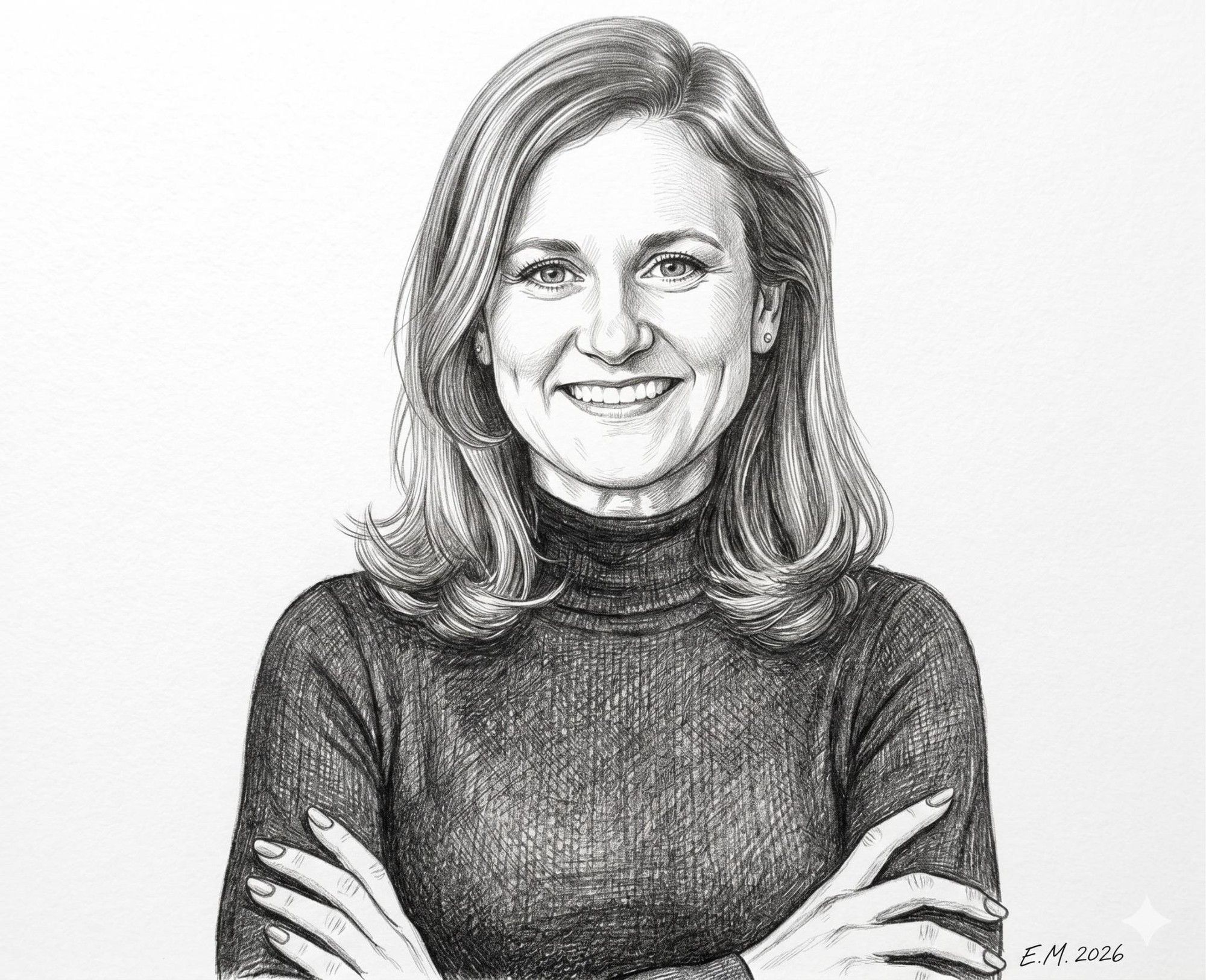
When I was three years old, I fell in love with the violin thanks to an unlikely duet between Itzhak Perlman and a grumpy green Muppet. Watching Perlman’s bow dance across the strings on Sesame Street, I was transfixed. I turned to my parents and announced with all the gravity a toddler can muster, “I want to do that.”
After months of pleading, they relented. That decision didn't just set me on a musical path; it quietly forged my philosophy on joy, participation, and what it means to keep a passion alive for the long haul.
I grew up in a large Irish Catholic family I’d lovingly describe as having “no talent and no shame.” We sang off-key with fervor and staged wildly uncoordinated talent shows every Thanksgiving. While my classmates practiced scales with laser focus, eyeing the first chair in elite orchestras, I played jigs because I liked the way they felt. In my high school orchestra, I sat deep in the second violin section, a world away from the concertmaster’s chair. I wasn’t the best player—far from it—but I loved the sound and being part of a group playing something beautiful, together. That love kept me playing long after others burned out chasing perfection.
After college, I drifted away from the rigid lines of classical music and found my way into the warmth of folk. Dimly lit pub sessions replaced formal concert halls. In that world, you have to listen—to the melody, to the room, to the person across from you—and find your place in the collective sound. I didn't have the fastest fingers or the flashiest solos, but I discovered something vital, I was a great second fiddle.
In folk music, "second fiddle" isn’t a demotion; it’s an art form. It is the realm of harmony, texture, and support. It is the work of making a song richer without needing to be the center of gravity. Without sheet music to guide you, you must listen closely, respond in real time, and improvise. It is collaborative and intuitive—and, for me, far more satisfying than any solo.
Somewhere along the way, I also became the person who started bands. Most recently, I founded the DC-based Irish folk group Celtic Underground, but the spark was lit years earlier at Camp Lejeune. While our husbands were stationed there, I convinced three other Marine wives on my street to join me on my deck for some St. Patrick’s Day music. We lived in officer housing in a neighborhood called Paradise Point, so we jokingly called ourselves The Paradise Pints.
Our skills were ramshackle at best, but we ended up anchoring the neighborhood. The community of Marine officers didn't realize they needed an Irish pub band until they had one. Before long, we had generals singing songs about whiskey at the Officers’ Club on Friday nights. It has been more than five years since I moved away, but the band I started on that front porch is still going strong with a whole new crew of Pints.
I didn't start these bands because I had a grand vision or because I was the most talented person in the room. I did it because I wanted to play music with people, for people (and, selfishly, if I started the band, no one could cut me). I set the tone, picked the tunes, and booked the gigs.
Many of the musicians I gathered were extraordinarily talented—often much more so than me—but they were busy adults with full lives. They were parents and professionals who weren’t going to spontaneously join an Irish band unless someone made it easy and welcoming. When invited into something joyful and low-pressure, they said yes. They were happy to improvise through a new song or learn the bodhrán by watching a YouTube video.
Even in the bands I led, I stayed in the supporting parts. I played second fiddle, sang harmonies, and occasionally moonlighted on the tin whistle. I gravitated toward the background not because I lacked ability, but because that’s where I added the most value. Musically, I wasn't the star, but the band existed because I made it exist.
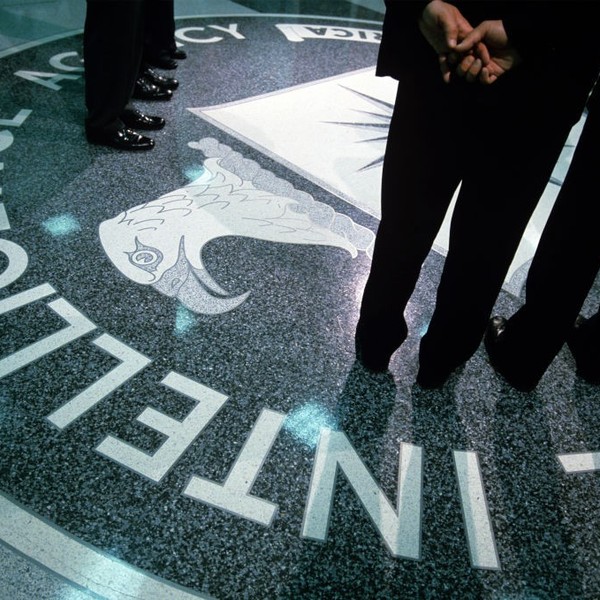
I noticed this pattern repeating in the most unlikely of places: my professional life. In that world, I was a planner, an overachiever, a list-maker. Up until last year, I was a senior executive at the Central Intelligence Agency, doing hard, complex work and running a large office. I had a seat at the table for key national security decisions, the opportunity to travel the world, brief Presidents. For a long time, I thought I was striving to be the first violin—the concertmaster of a very different kind of orchestra.
Yet, as I reflect on that career, I realize I was rarely the smartest person in the room, nor the one with the deepest technical proficiency. I was "good enough" at the core tasks, but I never truly stood out for my expertise alone. I was "just Meredith." But I kept getting promoted.
It made me wonder: did I achieve what I did because I followed the rules and plowed through to-do lists? Or did the success come from the more intangible things? Just as in a folk session, I thrived because I was the "natural glue." I found joy in stressful situations, understood the changing dynamics of a room, and looked for ways to empower colleagues whose strengths differed from my own. I brought in talented people to work for me and then let them shine. I focused on creating a result that was more than the sum of its parts, and I did it without losing the joy or taking myself too seriously.
Now, as a mother of three in my mid-forties, I play the fiddle several times a week. We tune up in living rooms and Irish pubs around Washington, on small stages and at regional folk festivals. Last year, playing the Takoma Park Folk Festival felt like my biggest career highlight of 2025—a metric that would have baffled my ambitious younger self.
This year, our band is recording our first album. We didn't do it because we suddenly felt "ready" or found a surplus of extra time. We did it because we put it on the calendar, booked the studio, and decided to make it happen.
We live in a culture that prizes being first: first place, first chair, first to speak. But many meaningful parts of adult life don’t disappear because we aren’t "good enough" to continue. They disappear because no one makes room for them anymore.
Sometimes I think about the concertmaster from my high school orchestra—the virtuoso who practiced for hours every day. I wonder if he still plays, or if music became just another achievement to measure, another obligation that eventually fell away. I don’t know the answer. But I know why I’m still here.
Music stayed in my life because I chose participation over perfection. I valued continuity and community over virtuosity. I was willing to start something, show up consistently, and take a supporting role if that’s what kept the group going. I was never the flashiest player, but decades later, I’m still here—still finding the joy in the harmony.
Second fiddle, it turns out, was exactly the right place to be.
The Cipher Brief is committed to publishing a range of perspectives on national security issues submitted by deeply experienced national security professionals. Opinions expressed are those of the author and do not represent the views or opinions of The Cipher Brief.
Have a perspective to share based on your experience in the national security field? Send it to Editor@thecipherbrief.com for publication consideration.
Read more expert-driven national security insights, perspective and analysis in The Cipher Brief