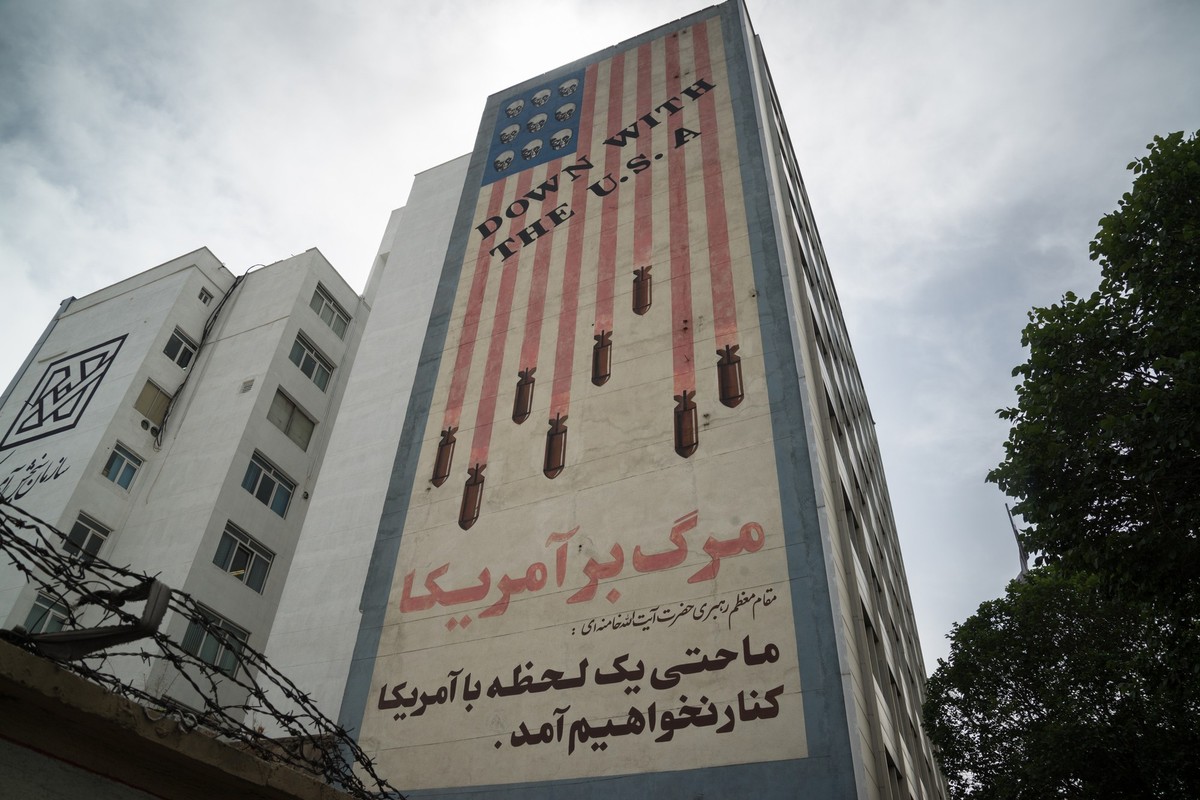


Ayatollah Ali Khamenei’s death led to greater decentralization of the regime and a more collective, securitized decision-making system. In Iran today, authority is distributed across several actors and groups, in which the military-security network has gained disproportionate agenda-setting power.
There has been much speculation about how decisions are made in Iran following the death of Supreme Leader Ali Khamenei. There has been a diffusion of power since his demise and the elevation of his son Mojtaba Khamenei as his successor. To understand current leadership dynamics in Tehran, there are three overlapping levels to consider: individuals, institutions, and networks. Increasingly, they all operate around one overriding concern: regime survival.
The result is the transformation of the Islamic Republic from a more personalized leadership at the end of Ali Khamenei’s rule to a more security- and military-centered form of collective leadership. While certain individuals are on display, institutions still organize and implement decisions. Crucially, a network of power shapes and provides policy choices for decision-making. Because of war and instability, the security and military network has ultimately become the most powerful among others.
At the first level of decision-making stands individuals. When Ali Khamenei was alive, he was the final arbiter on matters of strategy and policy. After his death, power has become more diffuse. This is especially true given that his son and successor Mojtaba Khamenei has been neither seen nor heard from since his elevation as supreme leader. This has left the Iranian system releasing old archival images of Mojtaba Khamenei, written statements, and in one case a purportedly handwritten note to the commander of the Islamic Revolutionary Guard Corps (IRGC) Aerospace Force to create the impression that he is in charge.
Additionally, Iranian officials like President Masoud Pezeshkian have recounted only a few hours-long meetings with the new supreme leader, which are hard to verify. Other regime figures like Mojtaba Khamenei’s mother-in-law have insisted he was present at the burial of his father despite no videographic or photographic evidence that he was there. A clerical speaker at one recent nighttime rally in Tehran recently suggested the new supreme leader was at the rally just 30 minutes before he spoke.
Despite these attempts to portray Mojtaba as in command, already, reports have circulated of demoralization among the Islamic Republic’s core base in Iran with a supreme leader who is absent from public view. This is a sea change in the way Iran has operated since 1979. An accessible and visible supreme leader always served as the glue which held the Iranian establishment together. Ali Khamenei was a regular presence on state television—and Iranian officials often interpreted his public remarks as directives. Today with Mojtaba Khamenei absent, this is growing more difficult and has added confusion. As one former IRGC officer recently told Iran Wire, “now, if Mr. Mojtaba issues an order, it reaches officials through intermediaries, leaving everyone uncertain whether the message was distorted along the way. Officials trust one another even less than before; small cliques based on family or personal ties have formed.”
Today the individuals comprising key decision-making and shaping include Secretary of the Supreme National Security Council (SNSC) Mohsen Rezaei; Chief Justice Gholamhossein Mohseni-Ejei, IRGC Commander-in-Chief Ahmad Vahidi, President Masoud Pezeshkian, Speaker of Parliament Mohammad Bagher Ghalibaf, and Chief of Staff of Iran’s Armed Forces Ali Abdollahi. Within this circle of power, the IRGC plays an outsized role. This group also has interpersonal dynamics which impact strategy. Rezaei and Ghalibaf are both outsized personalities who have harbored competing political ambitions. Ghalibaf and Abdollahi are longtime associates, with Abdollahi having been promoted to a variety of state positions under Ghalibaf’s tutelage. Vahidi served under Rezaei when he headed the IRGC. Pezeshkian and Foreign Minister Abbas Araghchi are likely more eager for an immediate diplomatic settlement given their roles in day-to-day state administration than the IRGC’s top brass like Vahidi, who may believe time is on the Islamic Republic’s side and is more interested in reestablishing deterrence.
After the individuals, come the institutions that administer the country and make strategic decisions. The presidency and ministries remain important for daily governance and implementing state strategy. But when it comes to matters of national security and regime survival, the center of gravity shifts towards the military-security establishment. The SNSC connects the political, military, intelligence, and bureaucratic institutions.
Behind these institutions lay informal networks based on family, personal, and professional ties, especially those who fought wars together like veterans of the Iran-Iraq War. Within the military-security establishment, these ties are embedded in the IRGC, the Intelligence Ministry, and among military commanders. Within the economic and political class, these networks prevail among state-linked companies, parastatal foundations, contractors, oil traders, financial intermediaries, and sanctions evaders.
The clerical elite also maintains significant ideological and religious networks, especially within seminaries, among Friday Prayer leaders, and the many overlapping propaganda institutions of the Islamic Republic. Bureaucratic-technical elites also have networks, among diplomats, economists, engineers, nuclear experts, and administrators who make the government run.
These networks matter because they shape what information reaches the decisionmakers in Iran, how threats are defined, and which policy options are considered palatable. Disagreements do exist, but they, for now, remain concentrated on tactics, not grand strategy. All are committed to the founding principles of the Islamic Republic. For example, diplomats may favor negotiation. Economic officials will emphasize the costs of war. Military commanders will prioritize deterrence. Ideological actors will resist compromise and fear infiltration of American and Western mores. These factors are weighed by the Islamic Republic through the lens how best to preserve the system. Likewise, while disagreement is genuine, the actors do not all have equal influence.
The war with the United States and Israel has accelerated securitization. Economic unrest, social protests, information, foreign policy, and nuclear policy are all viewed as security issues. As threats increase, security institutions gain influence over areas previously dominated by civilian institutions.
In this mix, Iran’s national interests and the survival of the Islamic Republic are not always identical. A policy may appear economically irrational but still be political rational if leaders believe it protects the regime. The central paradox confronting Iranian leaders is that Tehran has incentives to end a costly conflict, but also incentives to avoid an agreement that looks like surrender or demonstrates weakness. The late Supreme Leader Ali Khamenei often looked to the example of the collapse of the Soviet Union and the reforms undertaken by Mikhail Gorbachev like perestroika and glasnost as mistakes. The lesson Khamenei took away from these experiences is such reforms invite weakness, which the West preys upon and this could facilitate the end of the Islamic Republic. Such logic likely continues to animate Iranian decisions.
Whether Mojtaba shares his father's ideology is not as important as Khamenei’s institutional legacy that his worldview has left behind. This is the logic of what we call the Islamic Republic 3.0. In the Islamic Republic 3.0, there is a greater diffusion of power where individuals decide, institutions organize and implement, and networks shape the choices. Power is increasingly shifting toward the security establishment.
For policymakers in Washington, this has important implications; who makes decisions in Iran no longer has a simple answer. When the bombs hit the Office of the Supreme Leader in February 2026, Araghchi was briefing Khamenei’s security advisor Ali Asghar Mir Hejazi on recent talks with Washington. But today, Araghchi admitted over the summer that he had never had a personal interaction with the new supreme leader and Mojtaba Khamenei has not announced advisors to replace Hejazi, whom was reportedly opposed to his ascension as supreme leader.
If President Trump were to renew military action against Iran after the midterm elections, U.S. policymakers would need to confront these new layers of decision-making to further weaken the regime. Should decapitations form part of these operations—as was the case during Operation Epic Fury—solely striking Supreme Leader Mojtaba Khamenei would not suffice to weaken the regime even more. U.S. bombing would need a more expansive approach, targeting entire institutions like the SNSC.
Araghchi himself signaled this vulnerability in the regime during an interview in July with journalist Javad Mogooyi. He said, “The regime would collapse if all members of the SNSC are hit, which is why they never met at once during the war.” This would entail precise intelligence and targeted killings of individuals like the SNSC secretary, president, foreign minister, intelligence minister, chief justice, speaker of parliament, chief of staff of the armed forces, and the commanders-in-chief of the IRGC and Artesh. Additionally, aiming at the second and third layers beneath each of these figures would be required.
This is because not only would individuals on the SNSC be eliminated, but an entire institution would be decapitated. And the networks that fed into those members would be severed.
Saeid Golkar is the UC Foundation associate professor of political science at the University of Tennessee at Chattanooga and a senior advisor at United Against Nuclear Iran. Jason M. Brodsky is the policy director at United Against Nuclear Iran.
The Cipher Brief is committed to publishing a range of perspectives on national security issues submitted by deeply experienced national security professionals. Opinions expressed are those of the author and do not represent the views or opinions of The Cipher Brief.
Have a perspective to share based on your experience in the national security field? Send it to Editor@thecipherbrief.com for publication consideration.
Read more expert-driven national security insights, perspective and analysis in The Cipher Brief