

The Houthis have significantly escalated their airstrike campaign targeting civilian infrastructure in Saudi Arabia, with two consecutive attacks at Riyadh’s international airport, killing 12 and injuring 300 others between October 10 and 11. The Houthis’ deadly strike campaign has exposed an uncomfortable truth that Saudi Arabia’s newest defense alliance cannot yet guarantee its security. Saudi, Turkish, and Pakistani leaders activated the Mecca Pact on October 5, but the Riyadh airport attacks demonstrated how little a collective-defense declaration means to an adversary willing to keep firing. Riyadh needs more than diplomatic solidarity and bare-minimum defense support, which are not willing to undertake kinetic engagements with the Houthis. Washington should expand military assistance to Saudi Arabia and Yemen’s internationally recognized government without rushing into another open-ended bombing campaign. The United States has greater strategic interests at stake than either Ankara or Islamabad, and capabilities the new pact cannot quickly replicate.
Saudi Energy Security Is American Security
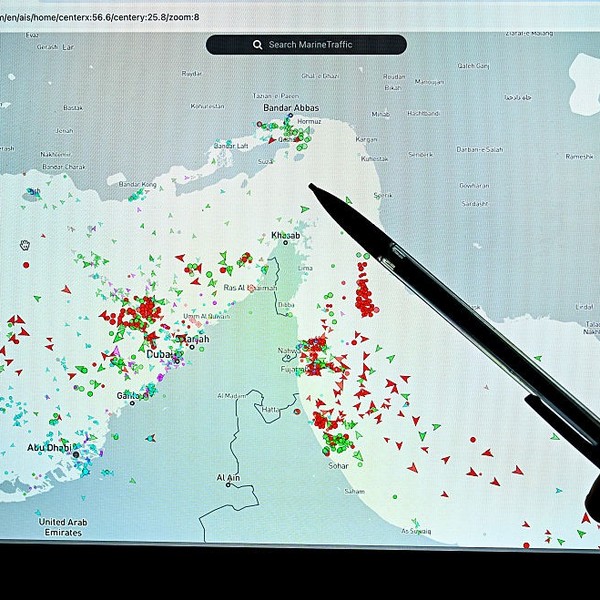
Saudi Arabia remains a central American security partner and an indispensable player in global energy markets. With Iranian attacks and disruptions around the Strait of Hormuz, the kingdom’s East-West Pipeline has become a critical alternative for moving crude to the Red Sea port of Yanbu. The pipeline throughput reportedly reached approximately 5.8 million barrels per day in early October, while roughly four million barrels per day have been rerouted around Hormuz.
This arrangement, however, remains vulnerable to external attacks that can disrupt the flow of energy from the Middle East. Drone attacks forced a temporary pipeline shutdown in late September, although Saudi Arabia attributed those strikes to Iran-backed Iraqi militias. The Houthis have separately attacked and threatened Saudi energy facilities. And despite a September rebound to 16.3 million barrels per day, Middle Eastern crude exports remained below their prewar level of 19.5 million. A prolonged Saudi-Houthi war could jeopardize the infrastructure and confidence sustaining that fragile recovery.
Security threats to Saudi Arabia also complicate ongoing and future diplomatic gains with Riyadh, especially considering President Donald Trump’s vision to have Saudi Arabia join the Abraham Accords. The US-Saudi civilian nuclear cooperation agreement, signed in July and submitted for congressional review in August, promises a long-term economic and strategic relationship. While its proliferation safeguards deserve rigorous scrutiny, escalating security threats could complicate implementation and diminish Washington’s influence over Saudi nuclear choices. Pakistan and Turkey have interests in Saudi stability; the United States has energy, maritime, defense-industrial, and nonproliferation interests simultaneously.
Pakistan Has Too Many Fronts of Its Own
The pact’s most acute capacity problem lies in Pakistan. Islamabad must contain the Tehrik-e-Taliban Pakistan insurgency in Khyber Pakhtunkhwa and Baloch separatist violence while guarding a contested frontier with Afghanistan and maintaining forces opposite India. These are not hypothetical distractions but serious battlefield challenges for Islamabad, which is fighting on multiple fronts simultaneously. Pakistan conducted airstrikes inside Afghanistan on October 1, amid recurring border clashes. On October 11, Islamabad imposed emergency rule in Khyber Pakhtunkhwa, citing worsening militancy, although the opposition disputes the justification. Additionally, the India frontier remains an enduring contingency that Pakistani planners cannot discount. This threat landscape will create serious bandwidth issues for Pakistan’s military in the immediate to near term, further limiting Islamabad’s support for Riyadh.
Pakistan’s armed forces can provide specialized assistance abroad, but sustained expeditionary commitments require personnel, logistics, and strategic attention. Pakistani officials have dismissed Western media reports of its troop presence in government-controlled territories of Yemen. Still, the death of a Pakistani driver in a Houthi drone strike in Marib, Yemen, has brought Pakistan’s actual role within the defense pact under scrutiny—whether Islamabad is taking up a direct combat role alongside the Saudi-backed Yemeni government forces on the ground. On the other hand, Turkey has formidable drones, electronic-warfare expertise, and NATO experience, but its priorities extend from Syria and Iraq to the Eastern Mediterranean. Neither country should be dismissed as a partner, and neither should be treated as an unlimited strategic reserve for a war with no clear end date.
Bab al-Mandeb Is Washington’s Problem Too
The constant threat of disrupting commercial vessel traffic in the Red Sea makes American restraint increasingly difficult. Washington and the Houthis have recently reached an understanding that the group will not target non-Saudi ships in the Red Sea given that the United States does not undertake kinetic strikes targeting Houthi infrastructure in Yemen. This is a non-binding understanding and dangerously shortsighted, which offers no permanent guarantee that the Houthis would never threaten Bab al-Mandeb again. If the Houthis begin losing territory rapidly to the government forces, they are highly likely to use every means possible to threaten commercial vessels in the Red Sea. This is right out of their counterpart Iran’s coercion playbook around Hormuz, illustrating the leverage a regional actor can extract from a chokepoint without maintaining a total blockade.
Saudi-backed Yemeni forces have made meaningful gains along the western coast of Yemen over the past week. The anti-Houthi coalition of Yemeni forces reportedly retook Perim Island and al Aradi after securing Jabal Kahbub, an operationally significant hilltop which overlooks the frontlines between the Houthi rebels and government forces. Saudi Close Air Support helped enable the counteroffensive, which was partially successful because Houthi positions elsewhere on the Red Sea coast still pose threats against commercial shipping. Bottom line is that the loss of terrain nearest the strait does not eliminate the maritime risk.
Conclusion
Limited tactical success to the credit of Saudi-backed Yemeni government forces should not be conflated with larger operational achievements against the Houthis. Washington should therefore expand real-time targeting support, aerial refueling, integrated air and missile defense, counter-drone capabilities, and maritime surveillance. It should help Saudi and Yemeni forces protect infrastructure and hold recovered ground, while keeping the threshold for direct US strikes explicit: demonstrable threats to American forces, international navigation, or sustained attacks that overwhelm partner defenses. Any strikes must be narrowly targeted, legally justified, and paired with a diplomatic off-ramp.
There is precedent, but also a warning. During Operation Rough Rider, US forces struck more than 1,000 Houthi targets between March and May 2025. The campaign ended in May without destroying the movement but severely degraded the group’s missile production infrastructure. Washington knows how to hit Houthi infrastructure, a task which Turkey and Pakistan are hesitant to and most likely incapable of undertaking. Bipartisan backing for Saudi defense would strengthen this approach, but it cannot compensate for strategic passivity. The Mecca partners can share the burden, but they cannot yet carry it alone. America should neither outsource Saudi security to an untested pact nor inherit Yemen’s entire war. Washington must provide the military support necessary to safeguard its strategic interests while making clear that further Houthi escalation will invite a more forceful, direct US military response.
The Cipher Brief is committed to publishing a range of perspectives on national security issues submitted by deeply experienced national security professionals. Opinions expressed are those of the author and do not represent the views or opinions of The Cipher Brief.
Have a perspective to share based on your experience in the national security field? Send it to Editor@thecipherbrief.com for publication consideration.
Read more expert-driven national security insights, perspective and analysis in The Cipher Brief