

Book Review of Operation Wrath of God: The Secret History of European Intelligence and Mossad's Assassination Campaign
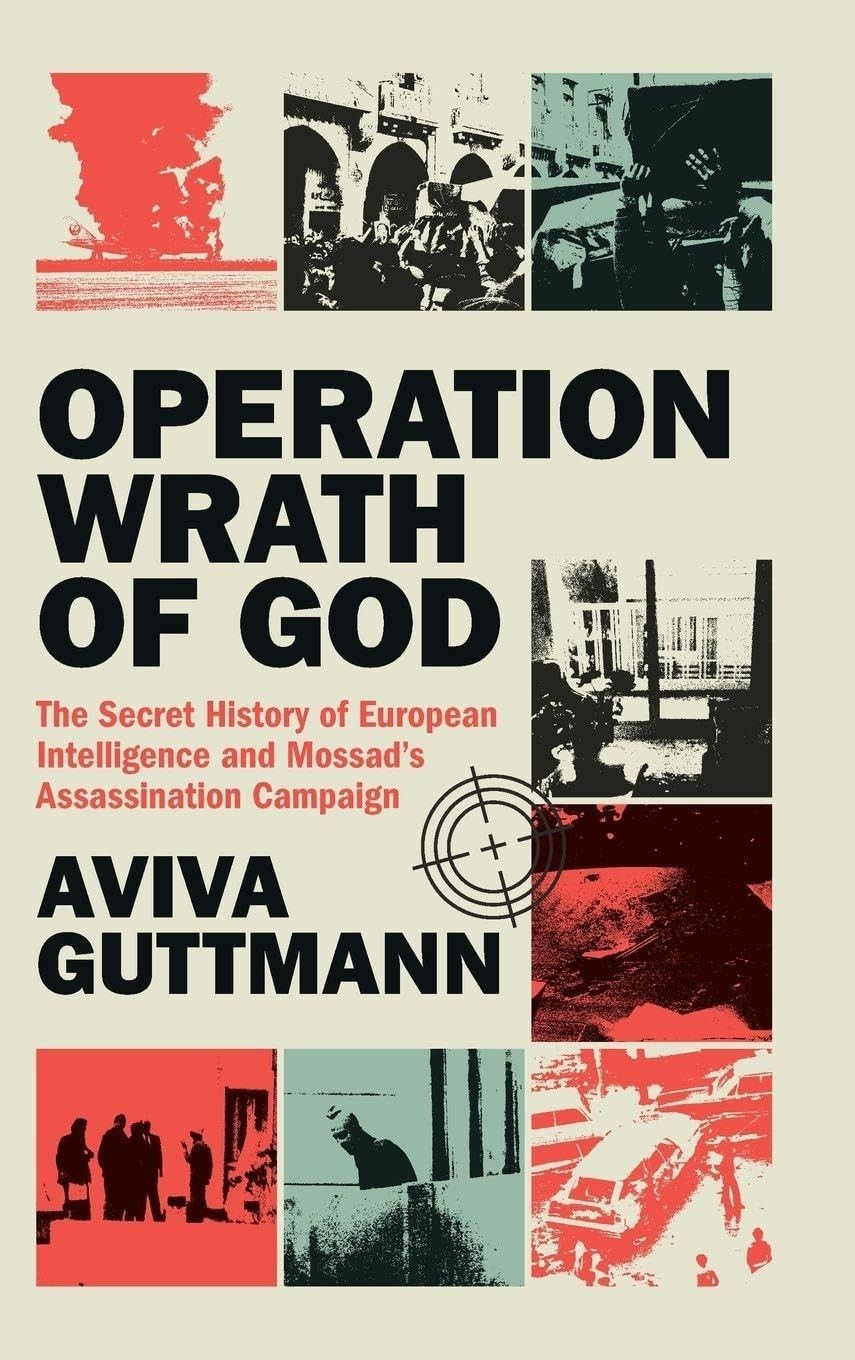
By Aviva Guttmann / Cambridge University Press
Reviewed by: Jean-Thomas Nicole
The Reviewer — Jean-Thomas Nicole is a Policy Advisor with Public Safety Canada. The opinions expressed are those of the author and do not reflect the official policies or positions of Public Safety Canada or the Canadian government.
Review — Aviva Guttmann is a historian of intelligence and international security whose work lifts the lid on the secret liaisons that have shaped counterterrorism since the Cold War. She teaches as Lecturer in Strategy and Intelligence at Aberystwyth University, after posts as a Visiting Researcher in War Studies at King’s College London and a Marie Skłodowska‑Curie Senior Researcher in Denmark; she also founded the Women’s Intelligence Network (WIN) to connect scholars and practitioners in the field.
Trained across Europe—she notably holds a PhD in contemporary history at the University of Bern—she pairs archival rigor with policy experience from roles at the Swiss Embassy in Nigeria and the Geneva Centre for the Democratic Control of Armed Forces (DCAF).
Guttmann is a widely published expert on the hidden machinery of international security. Her research sheds light on "Kilowatt," the encrypted network used by a secretive group of European intelligence agencies known as the Club de Berne. In addition to her work on Libyan covert actions and post-Munich diplomacy, she co-edited a 2022 volume on how European governments use intelligence to shape foreign policy.
Her most recent book, Operation Wrath of God, turns newly accessible Club de Berne cables into a narrative of Euro‑Israeli intelligence cooperation that quietly enabled Mossad’s campaign of revenge following the tragic 1972 Munich Olympics massacre.
Guttmann opens her history with a quiet, lethal moment: a poet pauses at the threshold of his apartment in Rome; two men step from the shadows; eleven shots crack the stairwell air. From that first scene—the killing of Wael Zwaiter in October 1972—Operation Wrath of God unfolds as a tautly constructed narrative of vengeance and realpolitik, but it is also something rarer: a documentary excavation of the hidden plumbing that fed and steered those events.
What we think we know about Mossad’s post‑Munich assassination campaign—its ferocity, its professionalism, its lonely ruthlessness—is recast once Guttmann turns the light onto Europe’s intelligence community and the secret circuits through which information, favors, and tacit approvals flowed.
Who’s Reading this? More than 500K of the most influential national security experts in the world. Need full access to what the Experts are reading?
The book’s animating claim is bold and, on the strength of Guttmann’s evidence, persuasive: Mossad did not operate in splendid isolation. It worked within, and benefited from, a dense lattice of European services connected through the Club de Berne and its encrypted Kilowatt telex network. These relationships—born of a shared fear of escalating Palestinian terrorism—gave Israel names, routes, hotel registers, passport numbers, and the kind of minute, procedural intelligence that makes a kill team’s job brutally efficient. More importantly, they gave feedback. After each assassination, local services shared police reports and investigative updates across the network, effectively telling the killers what the authorities had (and had not) discovered. The result, Guttmann shows, was a macabre loop: the murderers learned from the investigation of their own murders.
What allows her to tell this story with uncommon granularity is unprecedented access to a trove of more than forty thousand unredacted cables exchanged from 1971 to 1979. With that archive—meticulously mined, cross‑referenced, and narrated—she reconstructs not only the famous set pieces (the Munich massacre, the Lufthansa “Kiel” hijacking, the Bangkok embassy siege, the Lillehammer fiasco) but also the overlooked mechanics and the thwarted near‑misses that usually dissolve into footnotes.
We watch Italian authorities trace a getaway Fiat to a rental counter and transmit the cover identity that fooled the clerk. We see Dutch investigators piece together a Yugoslavian cell by following the trail of two unsuspecting young women seduced into carrying explosives. We learn how a cache of Soviet SA‑7 Strela missiles in an Ostia apartment—close enough to Rome’s runway for a handheld strike—was discovered just weeks after Mossad, fearing a surface‑to‑air attack on Golda Meir’s plane, warned partners that hijacking had given way to more lethal innovations.
Guttmann’s narrative gains momentum in the middle chapters, where the book becomes a choreography of action and reaction. Mossad’s kills—Mahmoud al‑Hamshari by a bomb wired into his telephone stand; Hussein Abu‑Khair in Nicosia, obliterated by charges packed beneath his bed—prompt hurried conclaves among Fatah representatives and the circulation of urgent cables weighting rumor against actionable intelligence. European services relay names with phonetic hesitations; they swap lists of deportees and watchlists; they pass warnings about Lufthansa and El Al flights so frequently that the alerts begin to feel like a grim drumbeat.
The book is equally attentive to the innovations on the terrorist side: letter bombs with thinner detonators and, chillingly, poisons; forged uniforms and manuals stolen from airline crews; weapons concealed inside a car’s ventilation channels, then married to a shipping route that culminates, almost theatrically, in Haifa.
What elevates the work beyond a compendium of operations is Guttmann’s analysis of the “secret security order” that undergirded these exchanges. Intelligence services, she argues, pursued their own foreign policies—sometimes in quiet defiance of their governments’ public stances—and sustained cooperation even when political optics demanded anger or censure.
The Lillehammer blunder, in which Mossad killed an innocent man and several officers were caught, should have snapped the system; it did not. Official condemnations ricocheted across chancelleries, yet Kilowatt traffic scarcely wavered. The liaison persisted, its code name later reborn as Phoenix, and the habit hardened: do not ask if you suspect the truth; do not tell if you know it. Guttmann treats this not as conspiracy but as the organic logic of services that privilege operational continuity over diplomatic decorum.
Her prose is lucid and unshowy, the pacing confident, the tone resolutely empirical. She has a gift for the revealing detail—a Swiss office that “observed strict business hours” for receiving cables, apologies from MI5 that arrive close to closing time; the precision of the Germans’ source ratings; the quietly comic granularity of Interpol notices suddenly enlivened by a partner’s marginalia about a suspect’s “proclivity for girls.”
Yet she never loses sight of stakes or scale. When the Saudi embassy in Khartoum becomes a killing ground and the bodies of diplomats lie mutilated, the book allows the horror to stand without embellishment, then returns to the network—to the cables that shaped the response and, inevitably, to the way those cables widened the next channel for information.
If there is a limitation, it is one that flows from the project’s strength. The archival record is a lens, and like any lens it refracts. The book’s ethical argument—about extrajudicial killing, sovereignty, and the long tail of tacit complicity—remains mostly implicit, emerging in flashes rather than formal debate. Some readers will wish for a more extended reckoning with law and morality. Others may find that the rich detail presumes a baseline familiarity with the alphabet soup of agencies and the factions inside the Palestinian movement; the narrative is patient with newcomers, but it does not slow to explain every acronym.
Even so, Operation Wrath of God lands as a definitive account—original in its sources, judicious in its judgments, and quietly revisionist in its conclusion about who, exactly, helped make the operation possible. For scholars of intelligence, it offers a granular map of multilateral cooperation at a time when many insisted such cooperation did not exist. For practitioners, it offers case studies in how information moves—and how the movement of information, as much as the movement of operatives, shapes outcomes. For readers captivated by the cold steel of clandestine history, it offers a narrative that never forgets the humans inside the abstractions: the anxious clerk, the careless cover, the frightened hostage, the investigator writing late into the evening to send “urgent” across a telex line.
Guttmann closes by glancing toward the present, reminding us that the logic of targeted killing has not disappeared and that intelligence alliances remain the quiet architecture upon which dramatic events are built. That reminder—delivered with restraint rather than alarmingly gives her history a contemporary hum. The book is not a call to arms; it is a call to clarity. In the shadows she surveys, the most dangerous illusions are the ones we choose to keep.
The Cipher Brief participates in the Amazon Affiliate program and may make a small commission from purchases made via links.
Sign up for our free Undercover newsletter to make sure you stay on top of all of the new releases and expert reviews.
Read more expert-driven national security insights, perspective and analysis in The Cipher Brief because National Security is Everyone’s Business
Operation Wrath of God: The Secret History of European Intelligence and Mossad's Assassination Campa earns a prestigious 4 out of 4 trench coats