Latest Stories

Welcome! Log in to stay connected and make the most of your experience.
Your membership has expired. Renew now to continue enjoying exclusive benefits and uninterrupted access.
Couldn’t find an account with that email address, please sign up.
Profile
Popular
A Profile of the New Taliban Leader
Dr. Kenneth Dekleva served as a Regional Medical Officer/Psychiatrist (including 5 years at the U.S. Embassy Moscow, Russian Federation and 2 years at the US Embassy New Delhi) with the U.S. Dept. of State during 2002-2016, and is currently Associate Professor of Psychiatry and Director, Psychiatry-Medicine Integration, UT Southwestern Medical Center, Dallas, TX; he is also a Senior Fellow at the George HW Bush Foundation for US-China Relations. The views expressed in this paper are entirely his own and do not represent the official views of the U.S. Government, the U.S. Dept. of State, or UT Southwestern Medical Center.
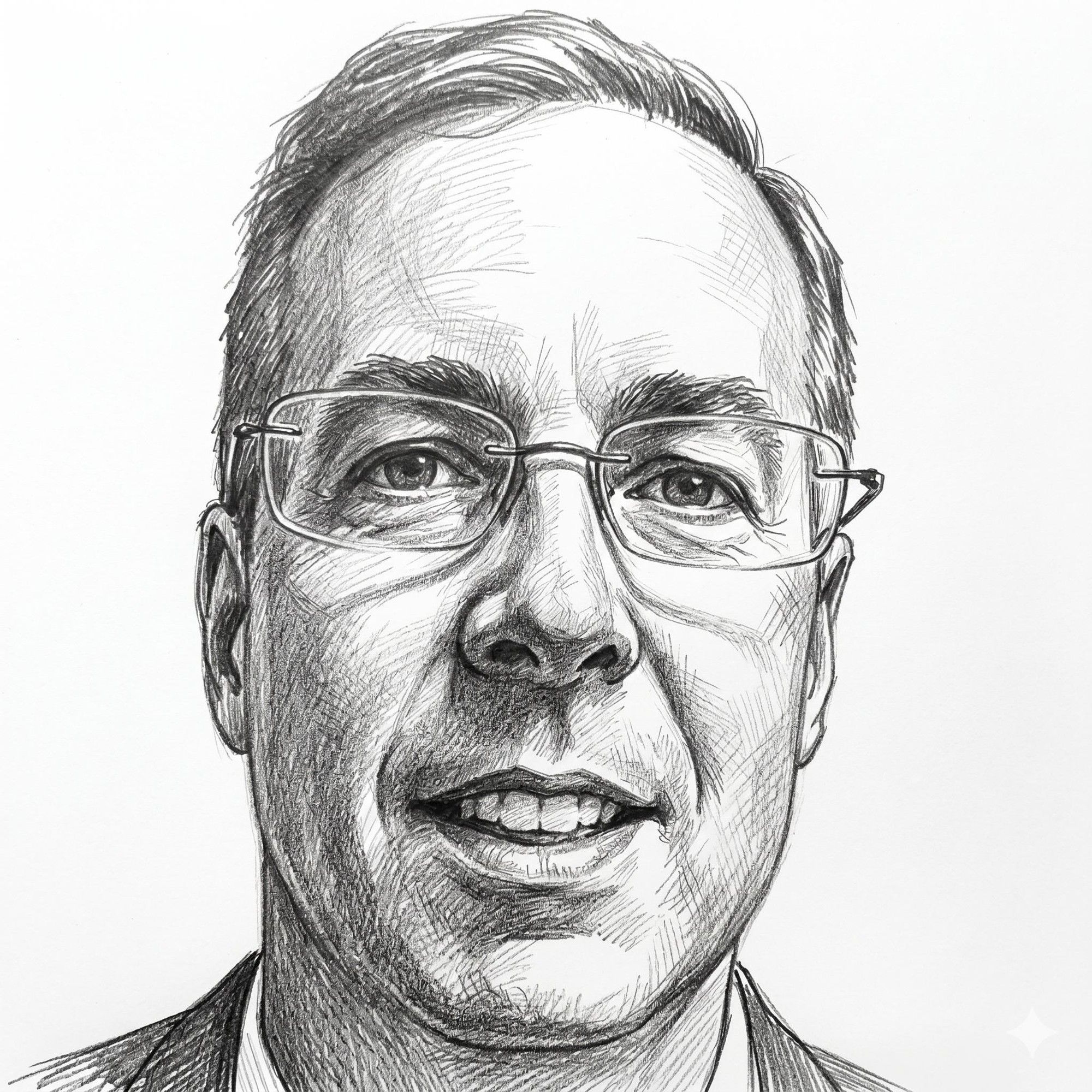
The recent triumphant return to power of the Taliban in Afghanistan has highlighted the long-running and increasingly important role of its de facto leader (and likely future President) Mullah Abdul Ghani Baradar. Nothing captures the symbolism, irony, and political changes in the region better than Baradar’s secret meeting this week with America’s CIA Director (and former Deputy Secretary of State) William Burns in Kabul where the two reportedly discussed matters related to security and the safe evacuation of thousands of Americans and their Afghan allies. But while Baradar is well-known to Afghan, Pakistani, Russian, Chinese, Iranian, and yes, even American officials, he remains an enigma. It is critical for policy-makers and national security experts to understand what shapes Baradar, to anticipate what kind of a leadership he will bring.
Baradar’s road to power has been, like that of many leaders in south Asia and the Middle East, shaped by war, insurgency, Sharia Islam, ruthlessness, imprisonment, single-minded dedication to the Taliban’s cause, and most remarkably, resilience.
He is thought to have been born in Uruzgan province, Afghanistan, in 1968, and hails from a Durrani Pashtun tribe. He attended religious schools as a youth, and fought with the Mujahedin against the Soviets in the late 1980s. During this time, he became close friends with the late Mullah Omar, with whom he taught at a madrassa in the early 1990s and co-founded the Taliban in 1994.
After the Taliban’s takeover of power in 1996, Baradar served in a variety of high-level government roles, including as deputy chief of staff and deputy defense minister, as well as several gubernatorial assignments. He is said to have played a role in the brutal massacres of Taliban opponents during the time and was listed on the UN Security Council’s sanctions list thereafter.
After 9/11, he escaped and became a leader among the Taliban insurgency, both militarily, financially, and politically. He served as a key member of the Quetta Shura Council, a leading decision-making authority, and has been described in past media reports as “patient, one who listens, a consensus builder, deferential, moderate, an old-fashioned tribal leader, and as a useful facilitator” in peace talks. But other descriptions have referred to him as “cunning and dangerous.” In this sense, he may more closely resemble another charismatic, formidable, and highly-successful terrorist leader/politician, Hezbollah’s leader, Sheikh Hassan Nasrallah.
Baradar was captured – in a joint ISI-CIA operation – and was imprisoned in 2010. Many radical Islamic leaders share such experiences, and it begs the question of how their imprisonment psychologically shapes and hardens their psyches. He was released in 2018 – allegedly at the instigation of American special envoy (and former US Ambassador to Afghanistan) Zalmay Khalilzad – to participate in the Doha peace talks, which led to the signing of an agreement between the US and the Taliban in February 2020.
The Cipher Brief delivers trusted expert perspective on national security issues. Become a member for just $10 / month and get full access to expert-level briefings that help put global events in perspective.
The Latest
For general inquiries please email info@thecipherbrief.com