
BOOK REVIEW: Sea Change: America’s New Great Game in the Arctic Circle
By Rana Foroohar / CROWN
Reviewed by: Heidi Vierow
The Reviewer — Heidi Vierow, PhD, is a retired CIA Clandestine Service officer, currently an Intelligence Strategy and Policy Advisor at MITRE.
REVIEW: In the sixteenth-century, the Dutch explorer William Barents and his crew were drawn north by the lure of a passage through the Arctic, only to become trapped by the ice. As Andrea Pitzer relates in her 2021 book, Icebound: Shipwrecked at the Edge of the World, this dangerous region has a timeless pull for explorers seeking economic and political gain and adventure.
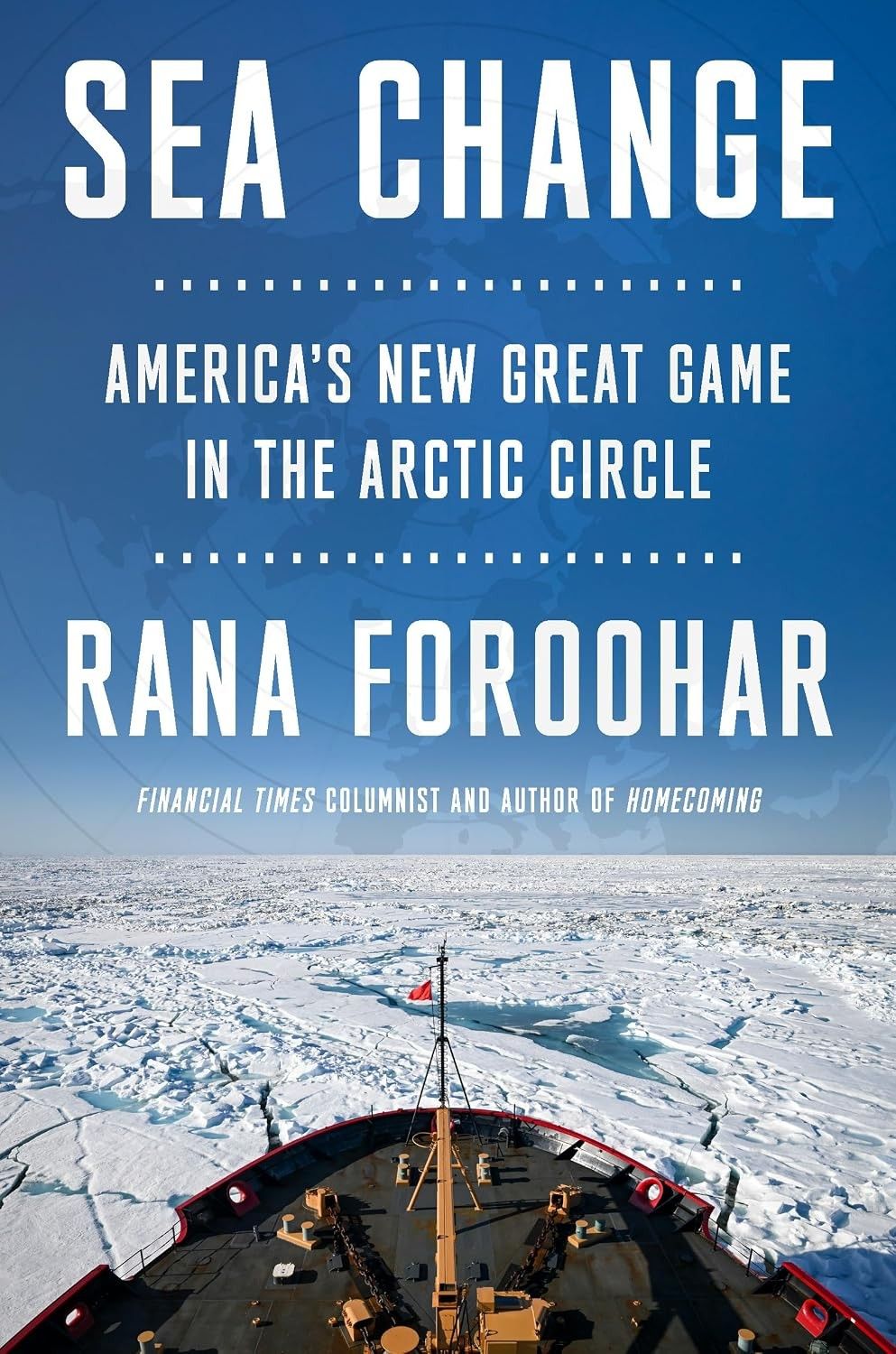
Now Sea Change: America’s New Great Game in the Arctic Circle, Rana Foroohar, global business columnist and associate editor for the Financial Times and the global economic analyst for CNN, explains why “shipbuilding still matters in our digital age.” In October 2024 she joined a ten-day voyage of the Healy, one of only three operational U.S. icebreakers and the only one in the Arctic. Built more than a quarter century ago, this is a workhorse of a ship. With a crew of 85 Coast Guard members and 50 scientists, the ship conducts military training and patrols and scientific research. She interlaces lessons learned on her voyage with the story of how the U.S. came to be in a shipbuilding crisis and the geopolitical impacts of neglecting this industry.
While the U.S. was a naval power in the nineteenth and twentieth centuries, it has let its shipbuilding industry wither, which has long-term impacts on the country’s economic and national security. Shipbuilding matters because 50% of American goods and 90% of global trade is done via ship. In 1975 the U.S. had the largest shipbuilding capacity in the world; today it ranks nineteenth. China, on the other hand, has invested in this field, and it now has a well-established infrastructure. It produces three warships to every one that the U.S. does. One Chinese shipyard produces more than all the U.S. yards combined. In 2025 China produced 1,000 sea vessels, and the U.S. only 10. China could weaponize this advantage to influence supply chains, oil prices, and military transport.
The Arctic region influences economic, political, and national security issues. It is not only rich in natural resources, but also, with the melting ice, it provides a faster route for ship traffic, shaving off days of passage and providing tremendous cost savings. Quicker passage makes supply chains more resilient, allows for faster military movements, and gives access to undersea cables. Currently only 25% of the Arctic floor is mapped, and countries—including the U.S.—want to lay more undersea cables, which carry 95% of the global data flow along this route. Russia, China, and the Houthis routinely cut cables around the world, so many countries are keen to lay and secure more cables. Like the U.S., China, and Russia, many nations have a keen interest in the Arctic region, including Canada and the European countries, particularly the Scandinavian ones. Despite the region’s criticality, Hillary Clinton was the first U.S. secretary of state to attend the Arctic Council, an intergovernmental forum promoting cooperation and interaction in the region. The U.S., with three borders on water, has not focused on this region the way it should.
Foroohar explains how the Biden and Trump administrations laid the groundwork to rebuild the U.S. shipbuilding industry. Treasury Secretary Janet Yellen first used the term friendshoring to describe the process of working with trusted allies to decouple strategic supply chains from China and strategic adversaries. Under President Trump the Department of Defense has undertaken to reform its procurement processes to expedite acquisitions; to reinvest in shipbuilding infrastructure, such as through steel production; and to forge ties with the Korean, Canadian, and Finnish shipbuilding industries. Foroohar explains how these actions affect U.S. policy, the labor force, energy, and international relations.
Foroohar provides context for how the U.S. created and then let wither its shipbuilding expertise. Her breadth of knowledge includes the history of shipbuilding in America in the twentieth century, the nineteenth-century military strategist Alfred Thayer Mahan, the origin of the Great Game, and the neo-liberal era. Her sources run from former National Security Advisor Jake Sullivan to the Healy’s crew and scientists on board and on land. As a journalist, she kept rewriting her copy until her the last deadline. Her coverage includes reference to the Iran War. While this may sound unwieldy, the historical explanations support Foroohar’s narrative.
Sea Change should be read with Kenneth R. Rosen’s Polar War: Submarines, Spies, and the Struggle for Power in a Melting Arctic (which I reviewed for The Cipher Brief earlier this year.) Rosen spent three years investigating the region, and his book provides an on-the-ground view of the environment and the national and regional issues at play. Foroohar’s approach focuses more on the geopolitical issues through the lens of shipbuilding. These complementary books provide a wealth of knowledge and insightful analysis on the region. In addition, both contain useful bibliographies.
The Cipher Brief participates in the Amazon Affiliate program and may make a small commission from purchases made via links.
All statements of fact, opinion, or analysis expressed are those of the author and do not reflect the official positions or views of the US Government. Nothing in the contents should be construed as asserting or implying US Government authentication of information or endorsement of the author’s views.