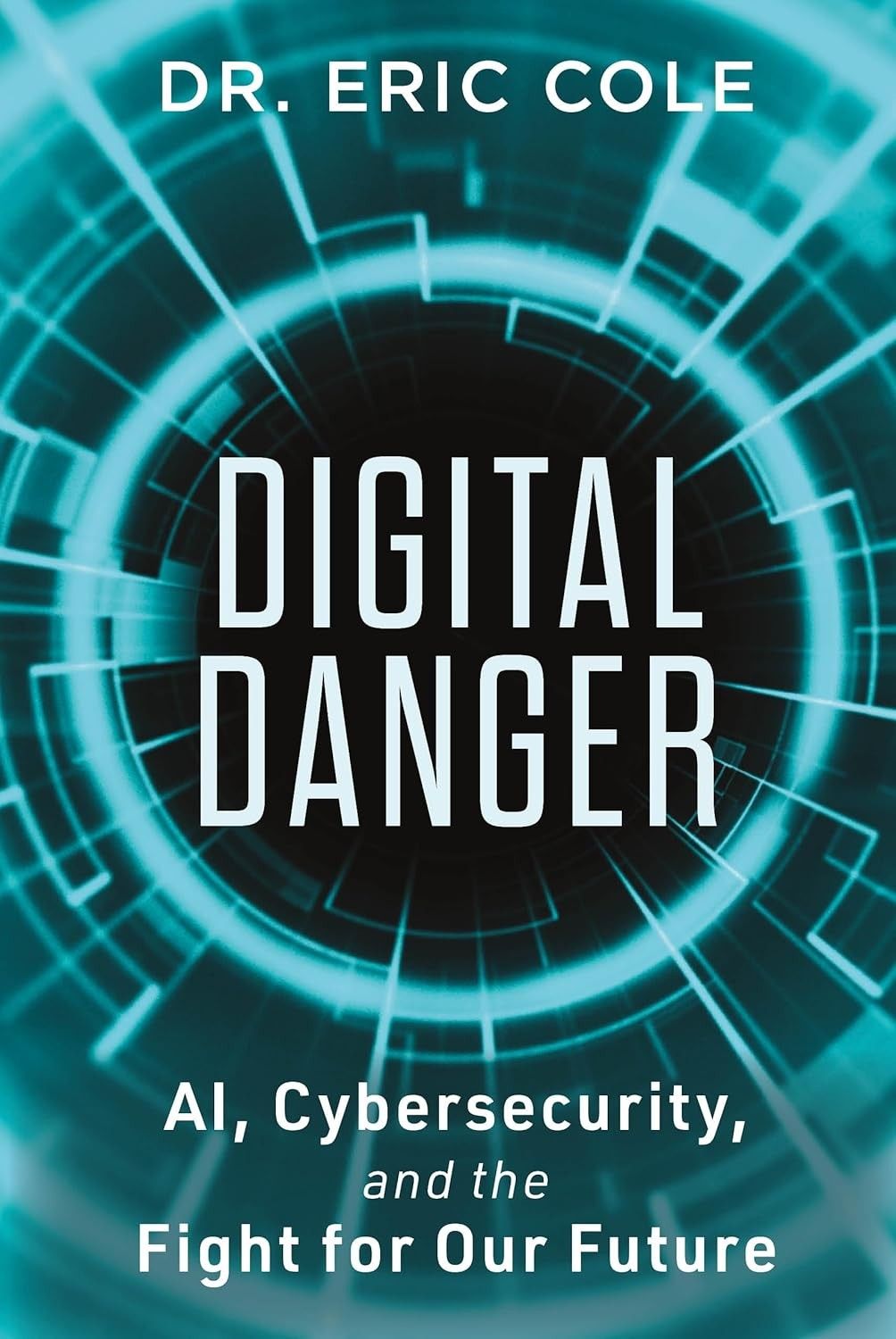

BOOK REVIEW: Digital Danger: AI, Cybersecurity and the Fight for our Future
By Dr. Eric Cole / Amplify Publishing,
Reviewed by: Glenn S. Gerstell
The Reviewer: Cipher Brief Expert Glenn S. Gerstell is a Principal with the Cyber Initiatives Group and Senior Adviser at the Center for Strategic & International Studies. He served as General Counsel of the National Security Agency and Central Security Service from 2015 to 2020 and writes and speaks about the intersection of technology, national security and privacy.
REVIEW: In 2018, well-known cybersecurity expert Eric Cole wrote Online Danger: How to Protect Yourself and Your Loved Ones From the Evil Side of the Internet, which was a layman’s guide to staying safe online. At the time, it was relatively novel in presenting straightforward, practical, book-length advice for operating in a digital world, which in the space of the prior decade had turned both ubiquitous and risky.
Eight years later, cyber threats from foreign countries and cybercriminals have metastasized, becoming far more sophisticated, with AI now threatening to make cybersecurity a mirage. Cole’s newest book, Digital Danger, doesn’t live up to its subtitle AI, Cybersecurity and the Fight for our Future, given that it’s mostly an update of his earlier volume rather than a substantive attempt to address this newer and more dangerous landscape.
Admittedly, it’s an excellent update, consisting of ten chapters covering all the right topics — from cell phone security to social media protection to the risks of cloud computing, with useful checklists at the end of each chapter explaining in simple terms what steps a consumer can take to stay safe. The advice isn’t different from what you’d find in the consumer tech columns of The New York Times or The Wall Street Journal or Consumer Reports, and is written in a similar accessible tone. Thus, it’s a worthwhile compendium of helpful suggestions, and in reading it, it’s easy to see why Cole is a popular speaker and adviser on cybersecurity. Cole clearly is familiar with the topic, having served in cybersecurity roles at McAfee and Lockheed Martin after starting his career as a CIA hacker.
It’s not obvious, however, that the person the book is aimed at will be a reader. Most Cipher Brief subscribers are digitally literate and would find that the book doesn’t tell them much they didn’t already know. Their less digitally experienced children and parents or grandparents would, however, find it truly useful. But are they really going to read over 200 pages of practical tips? Maybe that’s why this kind of advice is more often dispensed in an informal talk or in short, single-topic columns.
Disappointingly, the best part of the book is the most abbreviated — simple explanations of why our federal government isn’t organized to effectively address cyber threats and how AI amplifies the power of cybercriminals and state-sponsored cyber malevolence. The chapter on these more substantive issues is thoughtful even if it simply restates observations that are now well-accepted and the subject of richer treatment elsewhere. Given that it presumably must have been written within the past year, it would have been far more interesting if Cole drew on his experience and talent to address in depth the danger that everyone talks about now — the almost incomprehensible threat that ever more capable AI frontier models present to cyber defense. The evolution of these new platforms has occurred at unprecedented speed, promptly rendering any detailed discussion of the situation insufficient or inaccurate. It’s no surprise that there hasn’t been a comprehensive update on the implications of AI for cybersecurity arising from a model like Anthropic’s Mythos — thus refreshing such excellent volumes as David Sanger’s The Perfect Weapon or Nicole Perlroth’s This Is How They Tell Me The World Ends, or even Bruce Schneier’s more recent A Hacker’s Mind (which does discuss AI but which already needs an update in that area).
In the absence of an insightful analysis of where AI will take us, Cole’s Digital Danger is a clear and accessible guide to digital self-protection — exactly the kind of book you’d want to give to someone who requires help in this area. The irony, of course, is that the people who most need it are unlikely to read it, while the people most interested in the topic are the ones least likely to need it.
The Cipher Brief participates in the Amazon Affiliate program and may make a small commission from purchases made via links.